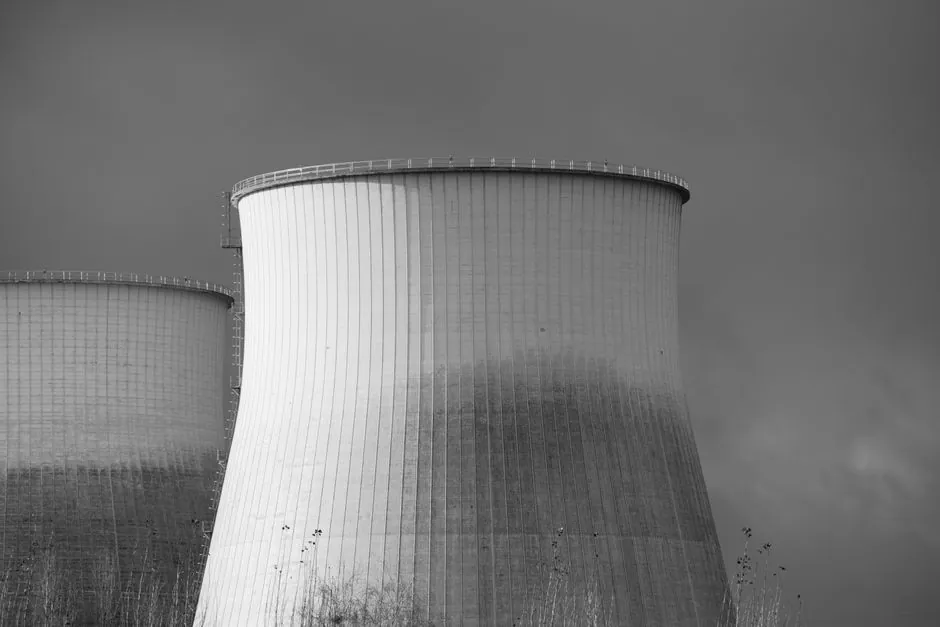
Cooling tower procurement in 2026 runs on two clocks: a 10- to 14-week industrial rhythm for standard open-circuit and closed-circuit units [S1][S2], and a 52- to 100-week hyperscale data-center clock for chiller and tower packages tied to MV switchgear and transformer deliveries [S4].
The split is driving project engineers to separate the cooling scope from the electrical scope in the CPM schedule, because a tower that arrives in 12 weeks still sits on a critical path blocked by a 60-week transformer [S4]. For operators running process plants, refineries, or commercial HVAC, the working number is the lower band; for hyperscale and colocation builds, it is the upper band, and that gap of 9 to 12 months reshapes the entire procurement sequence [S4].
Industrial-Replacement Band: 8 to 14 Weeks on Standard Builds
A typical cooling tower replacement project runs 8 to 14 weeks, gated by tower size, manufacturing lead time, permitting, and rigging access [S2]. FRP open-circuit units up to about 500 tons, the workhorse of HVAC and light-industrial service, generally sit at the low end of that range when the manufacturer holds standard fill, fan stack, and drift eliminator in inventory. Tower Tech, a US fabricator, was holding 10- to 12-week lead times for its TTXL and TTXR open-circuit lines as of mid-2024, a figure the company describes as "substantial delays" but still well inside the 16- to 30-week window some competitors are quoting [S1].
For replacement work in the $65,000 to $185,000 small-commercial band, the 8- to 10-week end of the spectrum is realistic if the structural basin is reusable and no crane upgrade is needed; the 12- to 14-week end applies when crane mobilization, FRP basin patching, or controls integration with an existing flow meter array stretches the schedule [S2]. Engineers planning a 2027 outage should anchor the tower purchase order to the rigging date, not to the heat-load study, because lead time is now the binding constraint on standard builds.
Data-Center Band: 52 to 100 Weeks for Chillers and Towers
On hyperscale data-center projects, cooling towers, AHUs, and CRACs are tracked in the same long-lead bucket as chillers, and the aggregate delivery window runs 52 to 100 weeks from PO to site [S4]. The number is not a tower fabricator's backlog alone; it is the tail of the chiller-and-cooling package constrained by the same 52- to 65-week MV switchgear and 60+ week transformer queues that gate first energization [S4].
Chillers themselves are quoting 16 to 24 weeks in the data-center segment, and UPS systems 20 to 40 weeks [S4]. A project manager who treats the cooling tower as a standalone line item rather than a coupled package with the chiller and the electrical room will miss the 6- to 12-week IST (Integrated Systems Test) window that follows mechanical completion, and that slip cascades into the power-on date [S4]. Late design changes during submittal review add 4 to 8 weeks on top of an already stretched schedule, so locking the heat-load and the pressure transmitter setpoints before release is a hard rule, not a nice-to-have [S4].
Material and Design Choices That Compress or Stretch the Clock
Material selection moves the lead time clock more than most buyers expect. FRP (fiberglass reinforced plastic) holds 40% of the material segment in 2026 and is the default choice for capacity reasons: FRP shops run continuous laminate lines and can stage basin, casing, and fill in parallel [S3]. Concrete and galvanized-steel field-erected towers sit at the long end, often 20 to 30 weeks, because they depend on civil crews and field welding windows that cannot be parallelised the way a factory floor can.
Design type matters as well. Open-circuit cooling towers account for 65% of the 2026 design-type segment, with closed-circuit and hybrid evaporative fluid coolers making up most of the balance [S3]. Closed-circuit units, where the process fluid stays inside a coil and only the spray water sees atmosphere, add coil-fabrication time and typically push a quote 2 to 4 weeks beyond an equivalent open-circuit unit of the same thermal duty. Dry and hybrid configurations, the smaller slices of the mix, carry the longest lead times because they depend on air-side coil sourcing and, in hybrid cases, dual-path controls integration. Buyers specifying signal tower light stacks for status indication on hybrid units should fold that electrical submittal into the same release window, since late changes on the controls package are the single most common source of the 4- to 8-week slip [S4].
Market Size and Demand Pressure Behind the Queue
Three independent 2026 market sizings frame why the lead-time queue is structural, not a one-off. Fact.MR puts the global cooling tower market at USD 5.10 billion in 2026, with a 6.4% CAGR to USD 9.48 billion by 2036, and notes that India (8.4%) and China (7.9%) are the fastest-growing national markets [S3]. Fortune Business Insights sees a smaller base: USD 4.58 billion in 2026 growing to USD 6.98 billion by 2034 at 5.40% CAGR [S6]. Mordor Intelligence sits in between, at USD 4.59 billion in 2026 reaching USD 5.89 billion by 2031 at 5.09% CAGR [S7].
Wet cooling towers hold 60% of the product-type segment in 2026, and that dominance translates into concentrated factory load at the FRP shops already running near capacity [S3]. The data-center build cycle is the single largest pull on that capacity, and a related analysis tracks the same pressure on connector lines and other long-lead electrical gear, where the connector lead time squeeze in 2026 is reinforcing the same "release on day one" rule that governs tower procurement. When three credible analysts converge on USD 4.58 to 5.10 billion for 2026 with CAGRs between 5.09% and 6.4%, the procurement signal is unambiguous: factory slots will not loosen materially before 2027.
Manufacturer Selection and the Eight-Shop US Field
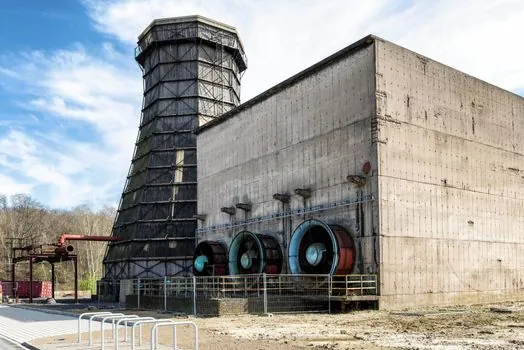
Engineering teams sourcing US-built towers in 2026 are working from a relatively concentrated field. SPX Marley, BAC, Evapco, and a handful of independents anchor the high-capacity end, while specialists like Mach Cooling focus on custom and replacement work with a stated emphasis on "competitive pricing and lead times" alongside aftermarket support [S5]. The independent shops are the lever when a standard OEM quotes 20+ weeks: a custom shop with in-house FRP layup and a stocked fan stack can often cut 4 to 6 weeks off a like-for-like duty, at the cost of accepting a non-OEM fill pattern and matching it against the existing basin geometry [S5].
Selection criteria that actually move the schedule, in order of weight: in-house FRP fabrication capacity (cuts 4 to 6 weeks on most quotes), stocked standard fills for the required thermal duty (cuts another 2 to 3 weeks), and field-service crews who can commission without a separate OEM trip (saves 1 to 2 weeks at the back end) [S5]. A buyer who weighs manufacturers only on name-recognition and published thermal curves will over-pay on schedule; a buyer who asks each shop for the FAT date of the specific cell bundle, not the generic catalog lead time, will get the real number. The CTI (Cooling Technology Institute) commercial cooling tower programs remain the credentialing reference, with the next CTI Expo scheduled for May 18 to 19, 2027, in Kuala Lumpur, a useful venue for locking in 2027 capacity allocations [S8].
Procurement Tactics That Survive a 100-Week Tail
Three tactics consistently close the gap between a 12-week industrial quote and a 100-week data-center queue. First, release the long-lead submittal on the same day the purchase order is signed: late design changes during submittal review add 4 to 8 weeks to equipment already on the critical path [S4]. Second, track each package as a chain of submittal, approval, fabrication, FAT, shipping, receipt, setting, installation, startup, and IST support activities, not as a single line item; visibility at that granularity is what lets a project manager recover a slip instead of discovering it at the rigging window [S4]. Third, keep a second-source quotation warm for every long-lead item, including the tower crane that will set the cells, because a vendor slip in 2026 is the rule, not the exception.
For 2027 planning, the watch items are: CTI Expo 2027 (May 18 to 19, Kuala Lumpur) for capacity-allocation conversations [S8], the Fact.MR forecast of a USD 4.38 billion absolute-dollar opportunity created between 2026 and 2036 as a proxy for how much new factory capacity the supply chain will need to add [S3], and the divergence between the 8- to 14-week industrial band and the 52- to 100-week data-center band as the single most important split to model in the CPM baseline [S2][S4].