
Alumina (Al2O3) is the default general-fabrication ceramic across electronics, semiconductor, medical, and wear-parts work, with commercially sintered grades running from 70% to 99.9% Al2O3 content [S1]. Higher purity raises hardness, dielectric strength, and tolerance capability; lower purity cuts cost and is the workhorse for general-purpose parts [S1].
Selection is driven by five gates: operating temperature, mechanical load, dielectric requirement, geometry/volume (which dictates whether the part can be diamond-ground or must be machined from a machinable stock), and total lifecycle cost.
Grade Map: From 70% to 99.9% Al2O3
Sintered alumina is not one material but a family split by Al2O3 content, and the grade shift changes the numbers meaningfully rather than just the price [S3]. 96% alumina is the most common electronics-grade substrate baseline, while 99.5% and 99.9% grades are used where dielectric strength, wear resistance, or purity matter more than cost [S1][S4].
On the mechanical axis, the flexural-strength jump from a machinable glass-ceramic to 99.5% alumina is the clearest signal: Corning rates Macor at a minimum 94 MPa flexural strength, against roughly 379 MPa for 99.5% alumina tested per ASTM C1161 [S3]. That gap, around 4x, is what pushes load-bearing wear parts, semiconductor wafer handlers, and cutting tooling toward high-purity alumina instead of machinable alternatives [S2][S3].
Purity also moves density and stiffness. Macor sits at 2.52 g/cm³ with a Young's modulus of 66.9 GPa; sintered 99.5% alumina runs materially higher on both, which is why high-purity alumina is the default for industrial ceramic parts that need dimensional stability under load and thermal cycling [S3].
Decision Gates: Temperature, Load, Volume, Geometry
Temperature and load are the two fastest qualifying filters for any alumina ceramic callout, and they are the first questions a fabricator should answer before comparing machinable glass-ceramic, alumina, or zirconia [S3]. Macor is rated for continuous use to 800°C with a 1000°C no-load ceiling; alumina's rated ceiling is grade-dependent and runs substantially higher, so any application above 800°C continuous or carrying mechanical load defaults to alumina rather than a machinable stock [S3].
Volume and geometry are the second gate, and they dictate manufacturing route. Macor is a 55% fluorophlogopite mica / 45% borosilicate glass matrix cut directly with carbide or HSS tooling, requiring no post-firing, which makes it the faster path for low-volume complex geometry [S3]. Alumina is formed, sintered at high temperature, and finished by diamond grinding; the tooling and lead-time cost only amortize once volumes justify sintering, which is why prototyping and one-offs often start in machinable stock and migrate to alumina for production [S3][S5].
Thermal-shock behaviour is a separate axis from steady-state temperature rating. Macor is commonly reported as more vulnerable to thermal shock than sintered oxides, so a part that sees rapid heating and cooling cycles, even within Macor's 800°C continuous rating, may still need to move to alumina or another sintered ceramic bearing class substrate for survival [S3].
CTE and PCB Substrate Selection
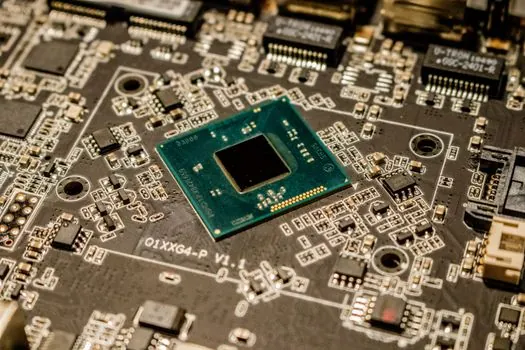
For ceramic PCB and electronic packaging use, alumina's coefficient of thermal expansion sits in the mid-to-high single-digit ppm/°C range, with one common electronics-grade reference at 7.4 ppm/K between 50°C and 100°C [S4]. That value is a screening number tied to grade, purity, thickness, copper area, and the materials bonded to the ceramic; a single room-temperature CTE quoted off a generic table is not enough for design release [S4].
Alumina sits between low-expansion semiconductor materials and higher-expansion metals or organic laminates, which is why it is a practical baseline but rarely the best CTE match for direct silicon attach [S4]. Copper, FR4, and most device packages expand faster than alumina, so large copper pads, wide temperature swings, and big packages all push stress into the substrate even when the CTE number itself looks comfortable [S4].
For ceramic PCB quotes, specify the grade (96%, 99.6%, metallized), the test standard, the temperature interval, and the copper thickness, because post-fire metallization, lapping, and copper processing can shift behaviour away from the as-fired datasheet [S4]. A quote reviewed against a single CTE number, without those qualifiers, is one of the most common ways an alumina ceramic PCB callout gets released on incomplete data.
Alumina vs Zirconia, AlN, and Machinable Glass-Ceramic
Alumina is the cost-to-performance baseline; the alternatives win only on specific axes. Zirconia (ZrO2) offers higher fracture toughness and is preferred where impact or stress concentrations dominate; aluminum nitride (AlN) wins on thermal conductivity for high-heat-dissipation PCB and power electronics; silicon carbide pushes the temperature ceiling further still; and Macor/MGC wins on low-volume complex geometry and fast turnaround [S1][S3][S4].
The practical comparison, on the four criteria most buyers actually quote against, looks like this. Cost: alumina lowest among sintered technical ceramics, Macor higher per kg but cheaper to shape in small volumes. Temperature: Macor 800°C continuous / 1000°C no-load; alumina grade-dependent and substantially higher; AlN and SiC higher again [S3][S4]. Mechanical strength: 99.5% alumina roughly 379 MPa flexural vs Macor 94 MPa minimum, a ~4x gap that rules machinable stock out of any loaded part [S3]. Manufacturability: Macor carves on HSS, alumina needs diamond grinding, AlN is even harder to finish and drives tooling cost up another step [S3].
For general fabrication where none of those axes is extreme, alumina is the rational default. For high-thermal-load PCB work, the comparison usually shifts to zirconia ceramic (for toughness) or AlN (for conductivity), and the same selection logic that drives alumina ceramic substrate choices in marine work, see this alumina ceramic selection for marine engineering spec map, applies once corrosion and salt-spray exposure are added to the load case.
Fabrication Routes and Sourcing Notes
Standard forming routes for alumina include injection molding, die pressing, isostatic pressing, slip casting, diamond machining, and extrusion, with the choice driven by part geometry, tolerance, and volume rather than by material grade alone [S1]. For general-purpose wear parts, valve seats, seals, and pump components, die pressing and isostatic pressing are the workhorse routes; for complex semiconductor chamber components, injection molding and diamond machining dominate [S1][S2].
On the sourcing side, cost-sensitive general-purpose applications still favor alumina as the best balance between performance and price among the technical ceramics, with 96% alumina the common electronics-and-wear baseline and 99.5% to 99.9% reserved for higher-purity semiconductor, medical, and electrical-insulation use [S5].
Standards to anchor any quote: ASTM C1161 for flexural strength testing of advanced ceramics, used as the reference method for 99.5% alumina datasheet values, and ISO 9001:2015 quality systems, which most major alumina fabricators list on their published capability pages [S3][S5]. Pull both onto any RFQ before comparing prices on like-for-like grades.
Failure Modes and Limits to Watch
The first limit is grade confusion: treating 85%, 96%, and 99.5% alumina as interchangeable is the most common spec error, because purity shifts hardness, dielectric strength, and CTE in directions that matter at the system level [S1][S4]. The second is machining assumption: specifying tight tolerances on a sintered alumina part without budgeting for diamond grinding adds cost and lead time that the drawing never captured [S3].
The third is thermal-shock versus steady-state temperature: a part rated to 1000°C steady-state can still crack under rapid ramp, and alumina, while better than Macor, is not as forgiving as some metal alternatives on thermal cycling [S3]. The fourth is CTE mismatch at interfaces: copper, FR4, and silicon all expand differently from alumina, so a ceramic PCB that survives reflow can still fail in field cycling if the copper layout and package size were not co-optimized [S4].
Track these signals on the next sourcing cycle: published grade-by-grade CTE curves for 96% versus 99.6% alumina (currently inconsistent across vendor datasheets, which is why screening numbers should not be released without the test interval [S4]), and any update to ASTM C1161 flexural testing practice for thin-section alumina substrates used in advanced PCB work.