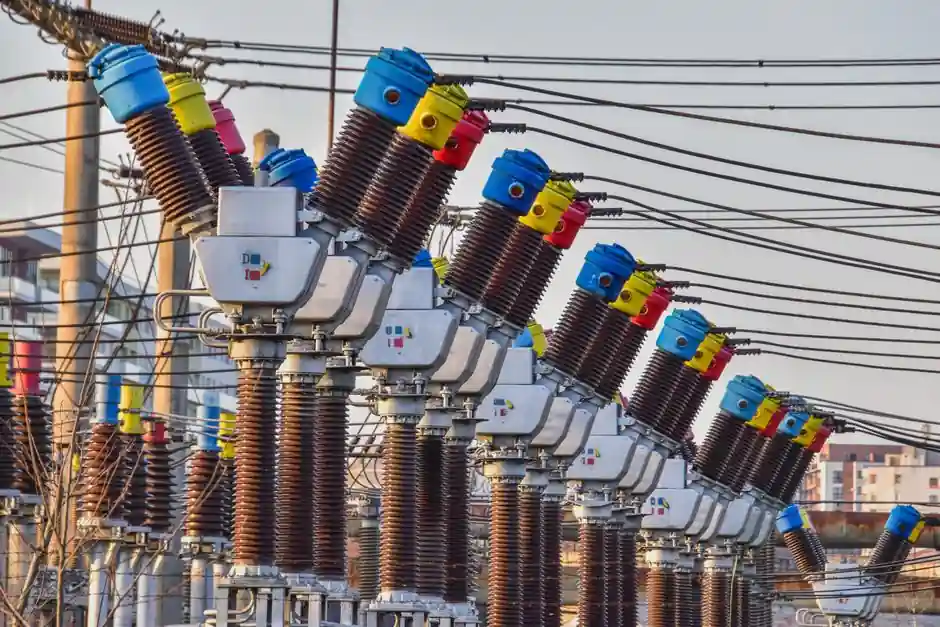
Alumina purity, expressed as Al2O3 content between 70% and 99.9%, is the first selector for any energy-equipment ceramic, because hardness, dielectric strength, and thermal-shock resistance all scale with it [S2].
Pure 99.5% dense alumina holds a critical thermal-shock differential (ΔT_c) of 180–220°C by water-quench testing, anchored by a tensile strength around 400 MPa, which sets a hard ceiling on how fast a part can be heated or cooled in service [S5]. For energy equipment, those two numbers, purity and ΔT_c, are usually the gating constraints before any mechanical or electrical spec is even written.
Grade-to-Property Map for Energy-Service Alumina
Alumina ceramics are graded by Al2O3 content, with each tier trading cost against performance in a predictable way for energy systems [S2]:
70–85% alumina: lowest cost, lowest dielectric strength, used where the part is mainly a structural or wear piece such as a seal face, pump sleeve, or valve seat in non-critical insulation zones. Alumina ceramics are used for mechanical wear parts, insulating substrates, and general-purpose industrial applications, with the IQS Directory providing data on alumina ceramic properties and uses and 96% alumina specifically cited by INNOVACERA for high-voltage circuit breaker applications [S1][S2][S4]. 96% alumina: the de-facto standard for high-voltage circuit-breaker internals, vacuum switches, and high-voltage relays, and is normally paired with Mo-Mn metallization plus nickel plating for brazed ceramic-to-metal seals [S4]. 99.0–99.9% alumina: reserved for semiconductor process chambers, high-purity medical and laboratory components, and the most demanding electrical insulation, where the extra purity buys tighter tolerances and better corrosion resistance, not a step-change in mechanical strength [S2].
Thermal-Shock Limit: Why ΔT_c 180–220°C Matters in Energy Hardware
The water-quench ΔT_c for dense 99.5% alumina is 180–220°C, limited by the material's moderate tensile strength near 400 MPa rather than by its conductivity, and that value is the practical ceiling any design should engineer against [S5].
The thermal-shock parameter R = σ(1−ν) / (Eα) explains why this ceiling exists: alumina's combination of moderate strength, relatively high elastic modulus, and α in the 7–8 × 10⁻⁶/K range keeps R well below silicon nitride or partially stabilized zirconia [S5]. Real consequences in energy equipment: a 96% alumina insulator in a circuit breaker sees thermal cycling from load-current swings, and the Innovacera source flags that plastic and resin alternatives deform, age, and crack under that same load, while 96% alumina "retains intact structural performance" because its ΔT_c envelope is large enough to absorb normal switching transients [S4]. Water-quench testing per ASTM C1300, with specimens typically 3 × 4 × 50 mm bars quenched from a furnace set-point into water whose heat-transfer coefficient sits near 10,000 W/m²·K, remains the standardized worst-case for ranking candidate aluminas against more exotic ceramics [S5]. For anything hotter than 99.5% alumina's ΔT_c window, design must move up to silicon nitride or PSZ, not up the alumina purity scale.
Electrical Insulation Targets: 96% Alumina for Circuit Breakers
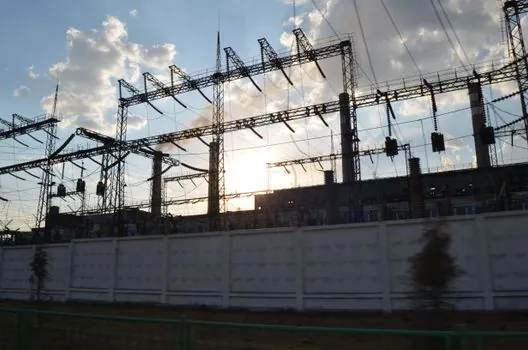
96% alumina ceramic delivers high volume resistivity, high dielectric strength, and low dielectric loss, which is why it is the specified material for high-voltage circuit-breaker internals, vacuum switches, and high-voltage relays [S4].
These parts do triple duty: they provide electrical isolation between live conductors, they carry mechanical shock from frequent switching, and they survive repeated thermal cycling caused by fluctuating load current [S4]. Direct ceramic-to-metal bonding is the weak link in any such assembly, because alumina is chemically inert and resists solder wetting, so the industry default is Mo-Mn metallization plus nickel plating, applied as a sintered metallic transition layer that allows brazing and hermetic sealing to conductors and support structures [S4]. For designers mapping a distribution cabinet's insulation stack, the practical chain is: 96% alumina body → Mo-Mn layer → Ni plating → brazed joint → metal conductor, and any deviation from that chain needs justification. A related reference on distribution cabinet selection for power generation walks through how those insulation choices feed back into the wider switchgear spec, including creepage, CTI, and busbar clearances.
Selection Criteria Comparison: 96% vs 99.5% Alumina for Energy Use
Comparing the two grades most often shortlisted for energy equipment, against four decision criteria, the trade-off is clean and consistent with the source data: [S1]
Cost: 96% alumina is materially cheaper per kg and easier to source in large electrical-grade blanks; 99.5% alumina carries a premium driven by finer powder and tighter sintering control [S2]. Dielectric performance: 96% already meets the high-volume-resistivity and low-dielectric-loss bar for HV switchgear [S4]; 99.5% offers marginal improvement that rarely matters below 10 kV class. Thermal-shock tolerance: both grades sit in roughly the same 180–220°C ΔT_c band when dense, because ΔT_c is governed more by microstructure and elastic modulus than by the last few percent of Al2O3 [S5]. Manufacturability: 96% is the proven substrate for Mo-Mn + Ni metallization used in circuit-breaker brazed seals, while 99.5% is more often specified in metallized form for semiconductor and high-purity laboratory hardware [S2][S4]. For most energy-equipment builds, 96% is the right starting point; 99.5% only earns its premium in clean-room or medical-grade service.
Who Should Specify Alumina, and Who Should Walk Away
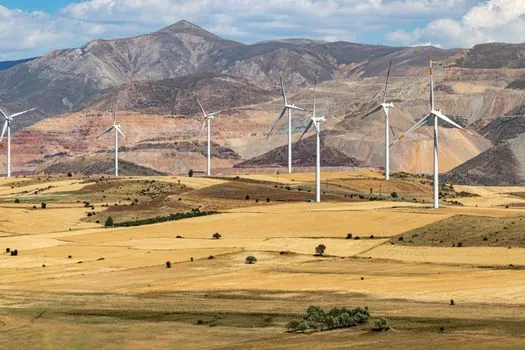
Alumina is the right call for HV circuit-breaker internals, vacuum-switch envelopes, insulating sleeves, wear guides, pump and valve seats, LED and power-electronic substrates, and any structural ceramic where cost-per-part drives the decision and operating temperature stays below about 1500°C [S1][S2][S4]. It is the wrong call for parts that need tensile super-plasticity or localized strain above a few percent, where a 2026 Nature Communications study on Al2O3 meta-fibers with a [AlO5]-dominated network reported local tensile strain up to 194% and toughness of 128.4 MJ/m³, but only at the meta-fiber research scale, not in commercial bulk blanks [S3]. Walk away from alumina when the application demands ΔT_c well above 220°C, when it will see heavy impact loading (alumina is brittle, with K_IC far below zirconia), or when the part must conduct electricity or heat at a level alumina cannot reach. For higher thermal-shock service, silicon nitride and partially stabilized zirconia score higher on the R = σ(1−ν) / (Eα) ranking, with PSZ adding transformation toughening on top [S5].
Standards, Sourcing, and Verification Trail
ASTM C1300 is the standardized water-quench test used to rank alumina against other advanced ceramics on thermal-shock resistance, and it is the only widely cited severe-shock benchmark for the 180–220°C ΔT_c numbers quoted in vendor data sheets [S5].
For dielectric and mechanical verification of metallized 96% alumina insulators, buyers should request ASTM C1300 shock data, volume-resistivity and dielectric-loss figures per relevant ASTM dielectric methods, and a metallization cross-section showing a continuous Mo-Mn layer with a sound Ni plating on top, which is the schematic the Innovacera source describes as the mature, widely adopted ceramic-to-metal bond [S4]. Powder-grade selection starts from the three primary alumina types: hydrated, calcined, and tabular, with soda (Na2O), iron (Fe2O3), and silica (SiO2) content driving the choice of forming method, whether that is die pressing, isostatic pressing, injection molding, slip casting, diamond machining, or extrusion [S2]. Alumina's broader role in industrial ceramics, including the way it sits between plastics, FR4, and metals on the price-to-performance curve, is mapped in the alumina ceramic properties reference and in the related alumina selection guide for mold and die making, both of which complement the energy-equipment angle covered here. Watch for two trackable signals through the rest of 2026: wider commercial availability of [AlO5]-dominated Al2O3 meta-fibres beyond the current research scale [S3], and any vendor 96% alumina data sheet quoting a ΔT_c materially above 220°C, which would imply a microstructure or sintering route worth independent verification against ASTM C1300 [S5].
Detailed specification references: energy management, and energy meter.