
Carbon fiber is graded along four independent axes — precursor chemistry, tensile modulus, tow size, and fabric architecture — and the four-axis matrix is what determines cost, drapability, and mechanical performance on any given part [S3].
Supplier catalogs in 2026 list standard-modulus 3K twill alongside unidirectional, spread-tow, multi-axis, satin/harness, sleeving, and chopped/forged variants, with PAN-based fiber dominating the merchant market and mesophase pitch fibers reserved for ultra-high-modulus space-grade applications [S3].
Precursor Route: PAN vs Pitch vs Rayon
Polyacrylonitrile (PAN) is the dominant precursor for the global merchant carbon fiber supply chain because it converts to fiber with the best balance of tensile strength, process yield, and cost [S3]. Mesophase pitch precursor yields a graphitized fiber with a higher Young's modulus than PAN-based grades, at the expense of tensile strength and price, and is reserved for stiffness-driven applications such as space structures and precision instruments. Rayon-based carbon fiber is a legacy route used for ablative thermal-protection components and is rarely encountered outside that niche. The precursor choice fixes the achievable modulus ceiling, the carbon yield, and the resulting fiber density before any weaving or resin step is considered.
Modulus Tiers and the Trade-Off Curve
Standard-modulus PAN-based fiber is the workhorse of sporting goods, automotive panels, and consumer tripods because it pairs a tensile modulus around 230–240 GPa with elongation to failure in the 1.5–2.0% range [S6]. Intermediate-modulus grades raise stiffness roughly 30% for the same diameter, at a price premium that compounds with every subsequent processing step. High-modulus and ultra-high-modulus pitch-based fibers push modulus into the 400–900 GPa territory but drop elongation below 1%, making them brittle and demanding tight radius-of-curvature control during layup. The modulus-versus-elongation curve is the most important selection gate: higher modulus always costs toughness.
Tow Size: 1K, 3K, 6K, 12K, 24K, 50K
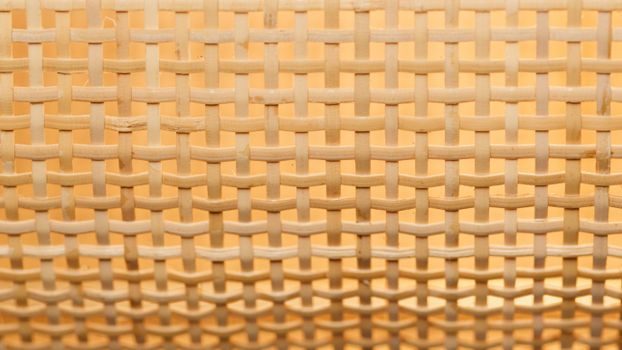
Tow size counts the number of filaments per roving — 1K = 1,000 filaments, 3K = 3,000, up to 50K for heavy industrial tows [S3]. Smaller tows (1K, 3K) drape over tight compound curves and produce cosmetically smooth laminates, which is why 3K twill is the visual default for visible carbon panels and aftermarket aero parts [S1][S3]. Larger tows (12K, 24K, 50K) cut material cost and lay down faster, but they resist draping into sharp radii and show the tow pattern through the cosmetic surface. Spread-tow variants replace large round tows with thin, flat tape-like spreads to combine large-tow economics with small-tow surface quality.
Fabric Architecture: Weave, Uni, Multi-Axis, Chopped
Composite Envisions lists plain weave, twill, multi-axis, satin/harness, unidirectional, spread-tow, sleeving, and chopped/forged fabric as the merchant architectural options on a single 2026 catalog page [S3]. Plain weave gives the most balanced bidirectional strength and the highest crimp; twill (2×2, 4×4) trades a small amount of stability for a smoother drape and the diagonal cosmetic pattern consumers associate with carbon. Unidirectional fabric concentrates all fibers along one axis for maximum directional stiffness and is the default for structural spars, pressure vessels, and rifle barrel wraps where the load path is known. Multi-axis (±45, 0/90/±45) fabrics carry shear and torsional loads that unidirectional stacks cannot, while chopped and forged-mat variants provide bulk, conformability, and conductive filler at the lowest cost.
End-Use Mapping: Rifle Barrels, Tripods, Aero, and Sporting Goods

Carbon Six builds custom rifle barrels around a 416R match-grade stainless core wrapped in a filament-wound high-modulus carbon outer, and advertises up to 60% weight reduction versus an all-steel contour with a 1/2 MOA accuracy guarantee backed by electro-chemical machining (ECM) rifling [S2]. The choice of high-modulus fiber for that wrap is deliberate: longitudinal stiffness reduces barrel whip, while the steel core absorbs the thermal and pressure cycle that would crack a monolithic carbon tube. The same trade-off shows up in 2026 carbon-fiber tripod rankings, where standard-modulus 3K or unidirectional tubes paired with aluminum or magnesium joints give the best stiffness-to-weight ratio for the under-2 kg segment [S6]. The pattern repeats across aftermarket automotive aero parts, where cosmetic-grade twill dominates the visible weave and structural load paths migrate to multi-axial or unidirectional plies behind it [S1][S3].
What Carbon Fiber Is Not For
Monolithic carbon fiber is the wrong choice for any application that combines a hard impact surface with no compressive core — the fiber fails in compression and shear long before the user notices any warning deformation. It is also a poor pick for ultra-high-temperature service above the glass-transition temperature of the matrix resin, typically in the 120–200 °C range for standard epoxies, where the polymer matrix softens and the laminate loses its load path. Designers who need both high stiffness and high impact toughness in one laminate are better served by hybrid aramid/carbon stacks or by a metal-core design as Carbon Six uses in its rifle barrels [S2].
Verification Checklist and 2026 Signal

Spec sheets should at minimum state precursor (PAN or pitch), tensile modulus in GPa, tensile strength in MPa, tow size (K count), filament diameter in microns, sizing chemistry, and fabric areal weight in g/m² — anything less is not engineer-actionable [S3]. CompositesWorld's Carbon Fiber 2026 conference is scheduled for November 10–12, 2026, in Huntsville, Alabama, and is the primary North American venue to track precursor pricing, recycled-fiber roadmaps, and large-tow capacity announcements through the rest of 2026 [S5]. For more on how composite hybrids sit alongside other industrial spec decisions, see this engineering map of crane-scale cost tiers and this foundry-duty spec map for sand mixers, both of which use the same precursor-versus-application logic applied to different material systems. A background read on the engineering map of total-station advantages is also useful for the spec-driven selection discipline that drives carbon-fiber part design.
Spec-level background on the components involved: carbon fiber, carbon steel, and concrete fiber.