The Aluminum Association 4-digit designation system is the universal key to aluminum alloy selection: the first digit (1xxx–8xxx) identifies the primary alloying element family, and the second digit tracks modifications to the original composition limit [S1]. This taxonomy governs over 300 wrought grades, of which roughly 50 are routinely specified in structural, automotive, aerospace and packaging work [S1].
Wrought and cast alloys use different numbering conventions — wrought in North America is 4-digit (prepended with "EN AW-" in European standards), casting uses a 5-digit system in North America and a distinct EN AC- scheme in Europe [S3]. Pure aluminum (≥99% Al) sits in the 1xxx series and is reserved for foil, conductor cable and chemical-process applications where formability and corrosion resistance outweigh strength [S1].
The 4-Digit Wrought Designation Decoded
The first digit of an Aluminum Association wrought number is fixed by the dominant alloying element, which directly controls the alloy's metallurgical behavior and the heat-treatable/non-heat-treatable split [S1]. The second digit tracks alloy modifications — zero means the original composition, and integers 1–9 flag consecutive modifications; the last two digits identify the specific alloy within the family, or, for 1xxx grades, the purity to the nearest 0.01% (e.g. 1050 = 99.50% Al minimum) [S1].
This clean convention lets a process engineer read a grade like 7075-T6 and immediately know it is a zinc-based (7xxx), modification zero (0), alloy 75 (75), in the T6 temper (solution heat-treated and artificially aged) [S1]. The Aluminum Association temper designation (T-tempers for thermally treated, H-tempers for strain-hardened, O for annealed, F for as-fabricated) layers on top of the alloy number to fully define the mechanical condition [S1].
Alloy Family Comparison: 2xxx Through 8xxx
Selection of the right series is driven by a few dominant trade-offs: heat-treatability, weldability, corrosion resistance, machinability and strength ceiling. The 2xxx (Cu) and 7xxx (Zn) families are the highest-strength aluminum alloys and are heat-treatable; the 5xxx (Mg) and 3xxx (Mn) families are non-heat-treatable but weldable and dominate marine and sheet-form work [S1]. The 6xxx (Mg+Si) family is the most widely extruded grade, prized for its combination of extrudability, moderate strength, and T6 response — making it the default architectural and structural-extrusion choice as detailed in this aluminum window and door reference [S1].
A compact, criteria-based comparison for the eight wrought series:
- 1xxx (≥99% Al): non-heat-treatable, best corrosion resistance, electrical conductivity and formability, lowest strength — used for foil, busbar, chemical tanks [S1].
- 2xxx (Cu): heat-treatable, highest machinability, lowest corrosion resistance — fuselage skins, 2024-T3 is the workhorse, sacrificial cladding (Alclad) applied to fight corrosion [S1][S5].
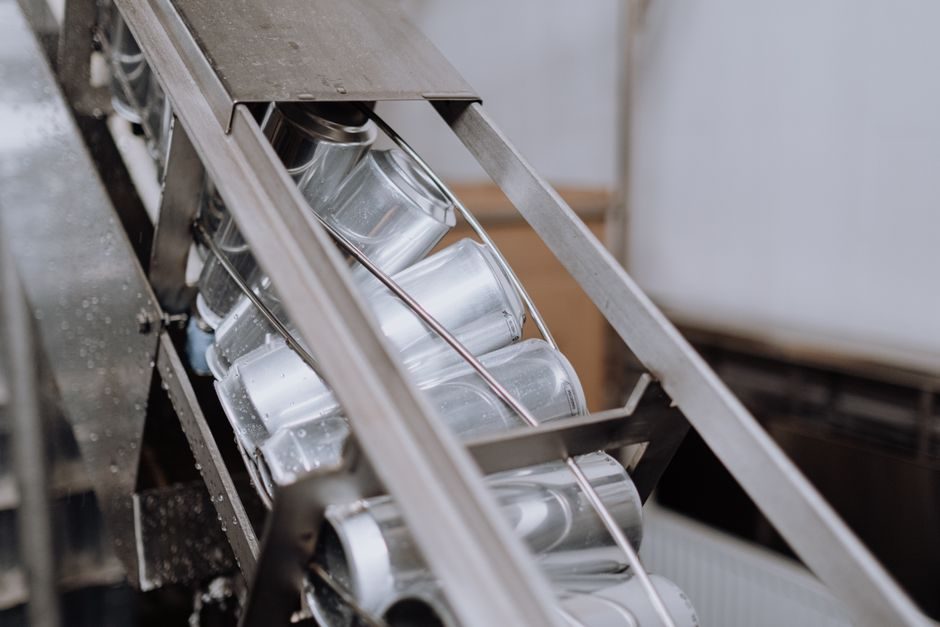
- 3xxx (Mn): non-heat-treatable, moderate strength (~110–200 MPa UTS), excellent formability — beverage can body stock, roofing sheet, heat-exchanger fins [S1].
- 4xxx (Si): low melting point, used as welding filler and brazing sheet, also for forged pistons [S1].
- 5xxx (Mg): non-heat-treatable, moderate-to-high strength, best marine-corrosion performance, weldable — hulls, pressure vessels, automotive inner panels [S1].
- 6xxx (Mg+Si): heat-treatable, very good extrudability, T6 UTS typically 260–310 MPa — architectural extrusions, automotive crash components, aluminum veneer panels [S1].
- 7xxx (Zn): heat-treatable, highest static strength of any aluminum series (7075-T6 UTS ~570 MPa) — aerospace primary structure, high-stress fittings [S1].
- 8xxx (Li): aluminum-lithium, lower density, higher elastic modulus — aerospace weight-saving sheet and plate [S1].
Wrought vs Cast: Why the Split Matters
Wrought alloys (rolled, extruded, forged) carry a 4-digit Aluminum Association designation and are what most spec sheets call out [S3]. Cast alloys, because they are poured into a mold rather than mechanically worked, follow a different 5-digit system in North America (e.g. A356, A380) and a separate EN AC- system in Europe, and they tolerate higher silicon content because the molten-metal flow into the die is the limiting factor, not rolling reduction [S3].
An as-cast aluminum alloy (铸态铝合金) typically receives solution treatment and artificial aging only after the casting operation — the T6 temper on a cast A356 wheel, for example, is what brings the UTS above ~260 MPa [S3]. Casting alloys also accommodate higher Fe and Cu contamination than wrought grades, which is why A380 (the dominant die-casting alloy) would be unsuitable as a rolled sheet but is the default for high-pressure die-cast housings made on equipment like that catalogued in this aluminum die casting machine reference [S3].
Alloying Additives, Impurities and Recyclability
Common alloying elements in commercial grades are copper, zinc, magnesium, silicon, manganese and lithium; small additions of chromium, titanium, zirconium, lead, bismuth and nickel are used to grain-refine, aid machinability or improve corrosion resistance, and iron is almost always present as a residual impurity [S1]. This means a spec sheet's "Fe max" line is a real selection criterion — high Fe hurts ductility and surface finish in sheet products [S1].
Recyclability is structural to aluminum's economics: worldwide demand sits around 29 million tonnes per year, of which ~22 Mt is new aluminum and ~7 Mt is recycled scrap, and remelting requires only about 5% of the energy (14,000 kWh/t for primary aluminum from the Bayer + Hall–Héroult route) needed for primary production — with no quality loss between virgin and recycled material, provided alloy sorting is correct [S1]. The same recyclability story is why aluminum body sheet is increasingly specified in automotive mass-deployed programs, as covered in this automotive aluminum plate overview [S4].
Coated and Clad Aluminum: ASTM A875 as a Reference

Not every "aluminum alloy" is a bulk structural grade — hot-dip Zn-5%Al coatings on steel sheet (GALFAN-type) are themselves a zinc-base alloy containing 5% aluminum, supplied under ASTM A875/A875M in two coating types: Type I (zinc-5% aluminum-mischmetal) and Type II (zinc-5% aluminum-0.1% magnesium), and in multiple coating weight designations [S2]. The base sheet is governed by ASTM A924/A924M and the GALFAN ingot chemistry by ASTM B750, with the international counterpart ISO 14788 covering continuous hot-dip Zn-5%Al coated coils [S2].
For a specifier this means a callout of "A875 Type I, G60 coating" is precise: Type I is the mischmetal-bearing variant for formability and paintability, G60 is ~0.60 oz/ft² (~183 g/m²) of total coating mass — and the same discipline (alloy family → temper → coating designation) that drives wrought selection is the pattern to follow [S2].
Selection Gates and Limitations by Series
Each wrought family has a hard limit that determines whether to use it. 2xxx alloys (e.g. 2024) cannot be fusion-welded by conventional arc processes without cracking risk — they are joined by riveting or friction stir welding, and 2024 is the subject of ongoing CMT-P additive manufacturing research aimed at improving forming quality and corrosion behavior of AM deposits [S5]. 7xxx grades in the T6 temper are also generally considered unweldable and are susceptible to stress-corrosion cracking above ~3.5% Mg equivalent, so tempers T73 or T76 are specified where SCC resistance matters [S1].
5xxx alloys are weldable and corrosion-resistant but cannot be hardened beyond about H116/H321 by cold work alone — for higher strength in marine service, designers move to 6xxx-T6 or, where strength is critical, to 7xxx-T73 [S1]. 6xxx is the workhorse extrudability grade, but welding a T6 6xxx drops the HAZ strength by 30–50%, so post-weld artificial aging is often specified [S1]. Pure 1xxx cannot be strengthened at all — its UTS is fixed near 90 MPa in annealed temper and is the reason 1xxx stays in foil and electrical conductor service [S1].
Standards and Reference Documents

The Aluminum Association designation, ISO 209 wrought-chemical-composition standards, and EN 573 (wrought) / EN 1706 (cast) form the global backbone for alloy nomenclature; ASTM B209 covers aluminum sheet and plate, ASTM B221 covers extruded bar/rod/wire, and ASTM B26/B108 cover sand and permanent-mold castings [S3]. For coated products, ASTM A875/A875M (with ISO 14788) and ASTM A924/A924M as the umbrella specification define coating types, classes and masses, while ASTM B750 governs GALFAN (Zn-5%Al-Mischmetal) ingot composition [S2].
The next trackable signals to watch are (a) growth in 5xxx and 6xxx automotive body sheet per the 2026-06-09 aluminum-plate market update [S4], (b) ongoing qualification of CMT-P + laser-assisted additive manufacturing of 2024 Al for aerospace repairs [S5], and (c) tightening of recycled-content and traceability requirements in EN 573 and the Aluminum Association's voluntary registration system as 7 Mt/year of scrap continues to flow back into the 29 Mt/year demand pool [S1].