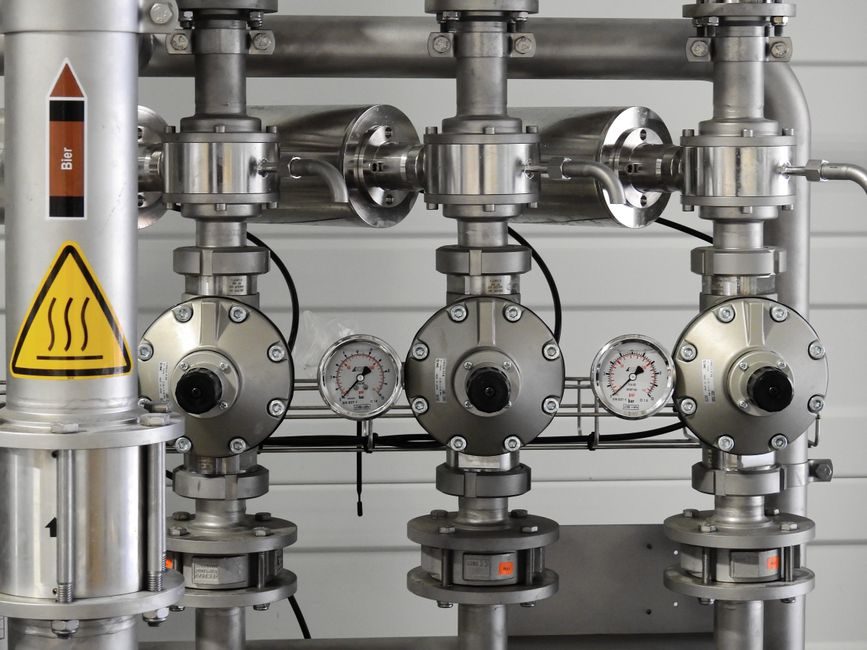
Specifying stainless for a mechanical or fluid-handling install is not a single decision but a stack of them — material grade, surface finish, fastener couple, load envelope, and the support structure it bolts into. The Nadella GLA guide roller family, for example, ships in stainless steel with outer diameters from 17 mm to 52 mm, four inside-diameter options (6/10/12/16 mm), and load ratings from 200 N up to 19,000 N, with a 60° pressure angle for load calculation [S1].
Companion C-series guide rails extend to 6,000 mm (236.22 in) lengths, available in steel, aluminium-bodied/steel-shaft, or full stainless variants, with stainless shafts (NX) and chromium-plated shafts (CH) listed as factory options for the same catalogue part number [S2]. For water-heating service, Energie 18-8 builds the pressure vessel and piping in 18-8 stainless with Incoloy 800 heating elements, certified to UL 174 (11th ed., 2015) and CSA C22.2 No. 110-94 (R2014) [S3].
Pick the grade by environment, not by habit
Three austenitic workhorses cover roughly 90% of plant install work: 304 for general indoor/dry, 316 for chloride-bearing wash-down or coastal atmospheres, and 321/347 where welded joints sit in the 400–800 °C sensitization band. Energie 18-8's electric water-heater vessels are built from 18-8 stainless (the classic 18% Cr / 8% Ni chemistry, functionally 304-family) with Incoloy 800 sheathed elements, and the manufacturer advertises a 40-year tank warranty tied to that material choice [S3].
For moving mechanical components, Nadella's stainless GLA series uses a double-row ball arrangement with gothic-arch contact geometry and a 60° pressure angle; the standard ZZ shield is fitted on most sizes, while the largest 52.16 variant is supplied with RS-type contact seals for harsher service [S1]. When the rail needs to match a stainless wheel, the C-series guide rail option code NX substitutes a stainless shaft into the standard aluminium-body rail, which keeps weight down and cost below a full-stainless build [S2].
Geometry and load envelope must be locked before torque-up
Linear-motion hardware fails first at the interface, not in the rolling element. The GLA range covers a 17–52 mm OD window, four bore options (6, 10, 12, 16 mm), widths from 8 cm to 22.6 cm, and a 200 N to 19,000 N load-capacity spread — that is a 95× ratio across the catalogue, so picking by "same size as the old one" routinely mis-specs by an order of magnitude [S1]. For the linear guide system, the stainless steel bearing and shaft pair on a C-series rail must be specified together: the catalogue explicitly lists stainless shafts (NX) and chrome shafts (CH) as options on the same rail body, and the choice changes both corrosion behaviour and preload.
For a 6,000 mm maximum rail length, hole layout must be confirmed before the rail ships: catalogue-standard (SB), drawing-specific (NZ), or no holes (NF) — and end-prep options 1R, 2R, or RR (ground one or both ends) are required if multiple rails will be butted into a longer track [S2]. The linear guide selection page on our site covers the wider engineering rules for rail straightness, parallelism and mounting-surface flatness that apply here.
Galvanic and crevice risks at the bolted joint
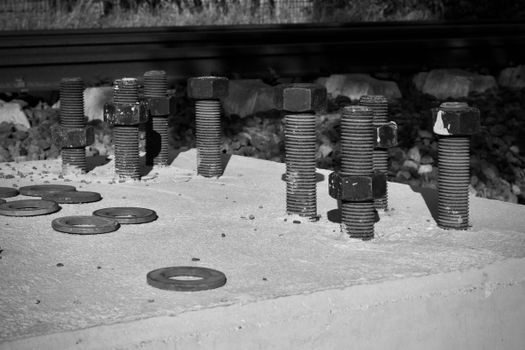
Stainless on carbon-steel supports is a textbook galvanic couple: the carbon steel becomes the anode and corrodes preferentially. The C-series catalogue sidesteps this by offering a hybrid — aluminium body with a single steel raceway — which decouples the structural mount (aluminium, near-galvanically neutral to most stainless) from the wear surface (steel or stainless shaft) [S2]. Where a stainless shaft is used (option NX), isolate it from aluminium or carbon-steel hardware with nylon or EPDM washers/sleeves; do not rely on paint or grease films.
Crevice corrosion is the other silent failure mode. GLA 52.16 ships with RS contact seals specifically because the larger wheel presents more stagnant zones where chlorides concentrate; the standard ZZ metal shield on smaller sizes is acceptable only in clean, dry, indoor service [S1]. For stainless pipework, the same logic applies: specify gasket materials (EPDM, PTFE, graphite) that are chloride-free for 316/316L service, and avoid threaded female fittings in horizontal runs where condensate collects.
Installation sequence: torque, alignment, then fluid/power
A clean install sequence is: (1) verify the foundation or frame is flat within the rail manufacturer's tolerance (typically ≤0.05 mm/m for a precision linear guide), (2) set the rail with locating pins or dowels before tightening the mounting bolts, (3) torque bolts in a star/cross pattern to the supplier's value, (4) install the guide rollers dry, hand-rotate to confirm smooth rolling, then (5) energise the system. For C-series rails, hole-pattern option SB is the default; NZ (drawing-specific) and NF (no holes, customer drills) are the alternatives when the frame does not match catalogue geometry [S2].
For fluid service, Energie 18-8 ships its stainless water heaters with a thermal-expansion tank and an installation manual; the published procedure covers dielectric connection, pressure-relief routing, and a 40-year tank warranty conditional on correct install [S3]. The alloy steel reference explains why mixing stainless and galvanised or zinc-plated carbon-steel fasteners is a common — and avoidable — cause of accelerated fastener corrosion in plant installs.
Comparison: stainless install options by service condition
Three common install profiles line up against four decision gates — environment, load, length, joint method: [S1]
Service profile A: clean indoor automation (electronics, packaging). Use GLA stainless guide rollers, 17–30 mm OD, with ZZ shields, mounted on a standard C-series steel-shaft rail (option SB holes, RR end-ground for butting) [S1][S2]. Load envelope stays inside the lower half of the 200–19,000 N catalogue range.
Service profile B: wash-down food/pharma. Step up to GLA 52.16 with RS seals, specify C-series NX stainless shaft on an aluminium body for galvanic isolation, ground both ends (RR) and use 316-grade fasteners; gasket material EPDM, not nitrile [S1][S2].
Service profile C: domestic/commercial hot water. 18-8 stainless tank with Incoloy 800 elements, UL 174 / CSA C22.2 No. 110 compliant, with a thermal-expansion tank per the supplied installation guide and a 40-year conditional warranty [S3]. Corrosion risk is internal (water chemistry) more than external, so anode-free construction is acceptable here, whereas a standard glass-lined tank would need a magnesium anode.
Who stainless install is for — and who it is not
Stainless hardware earns its premium in three settings: chloride or acidic exposure, high cycle life on moving parts, and hygienic or visible-surface service. The GLA catalogue shows the cost clearly: 200 N to 19,000 N load capacity in stainless costs more per wheel than the equivalent size in carbon steel, and the premium scales with size [S1]. For purely structural, low-cycle, indoor service, a carbon or alloy steel component will out-perform stainless on cost and on galvanic safety (because there is no galvanic mismatch to manage).
For a hot-water tank in a residential basement, the 18-8 stainless build is justified because the tank carries a 40-year warranty and replaces the sacrificial-anode maintenance cycle of a glass-lined tank [S3]. For an automotive trim accessory — such as the Mercedes-Benz G-Class "Stainless Steel" package that adds side steps, spare-wheel cover, rear bumper guard, window trim and door protection strips in stainless — the material is decorative, not structural, and the install is clip-and-bolt rather than welded [S6].
Sourcing, standards and what to verify on the docket
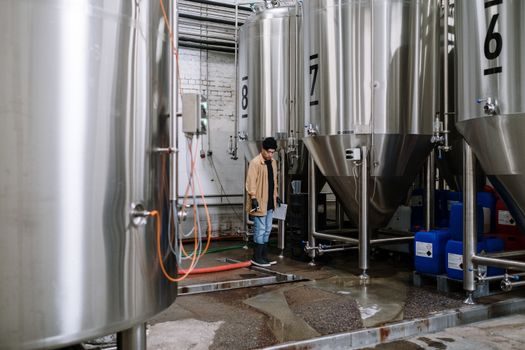
Three standards show up repeatedly on stainless install documentation. UL 174 (11th ed., 2015) and CSA C22.2 No. 110-94 (R2014) are the safety references cited on the Energie 18-8 stainless water-heater line, alongside CSA Certificates 268679 Class 2831-83 and 2831-03 [S3]. For dimensional and material traceability on linear-motion components, Nadella publishes the GLA and C-series specifications on DirectIndustry with full OD/ID/width/load tables and option codes (SB/NZ/NF hole layout, NX/CH shaft material, 1R/2R/RR end prep) [S1][S2].
For raw material sourcing, Grand Metal supplies cold-rolled stainless coil and sheet in 200/300/400 series with surface finishes NO.1, 2E, 2B, 2BB, BA, NO.4, 4K, 6K and 8K — that finish list is the one to copy onto a procurement spec when the install calls for a specific Ra or appearance [S4]. Market reference pricing and end-use demand data for 75 countries is published by the Stainless Steel Club / SMR, useful for budgeting and lead-time calls on 304 vs 316 [S5].
For deeper reading on the engineering gates that drive stainless hardware decisions — material selection, fastener pairing, and process controls — see our alloy steel trade-off brief. For the linear-motion side, the linear motor cost guide covers the spec drivers that pair with a stainless guide-rail install.
Verify on the next RFQ that the wheel OD/ID/load triad matches the application (GLA 17–52 mm OD, 6/10/12/16 mm ID, 200–19,000 N), that the C-series rail option code is fully spelled out (material, hole layout, end prep, shaft finish), and that any fluid-service install carries the relevant CSA/UL certificate number on the nameplate rather than only in the brochure [S1][S2][S3].