Aluminum coil is mill-rolled flat stock wound into rolls, produced in gauges 0.10 mm to 4.0 mm and slit widths 10 mm to 2000 mm, covering alloy series 1xxx through 8xxx per published supplier data [S5]. The form drives global throughput: Zhengzhou-based mills report 100,000-ton annual capacity with ~60% allocated to export markets [S1].
Common stock forms include bare mill-finish coil, color-coated (PE) coil, stucco-embossed coil, and CC (continuous-cast) feedstock for downstream cold-rolling, with CC coil entering at ~6-8 mm and finished down to 0.2 mm [S8]. Coating thickness on PE coil is 16-25 µm standard, max 40 µm, against GB/T 17748, ASTM, ISO, and EU reference standards [S5].
Alloy Series and Stock Forms
The 1xxx series (AA1050, AA1060, AA1070, AA1100) is commercially pure aluminum (≥99.0%) with the highest ductility and formability, used for cookware, lamp shades, and chemical equipment where strength is secondary [S5]. Formability makes it the default for circles spun into pots and for PE-coated stucco-embossed refrigeration panels [S1][S5].
The 3xxx series (AA3003, AA3004, AA3005, AA3105) adds manganese for ~10% higher strength than 1xxx and is the workhorse for roofing, siding, and HVAC components [S5]. The 5xxx series (AA5005, AA5052, AA5454, AA5754, AA5083, AA5182) carries magnesium for marine-grade corrosion resistance, with AA5083 specified where welded marine structures and pressure vessels demand higher strength and salt-water endurance [S6]. The 6xxx series (AA6061, AA6063, AA6082) and 8xxx (AA8011) round out the catalog for structural and packaging/foil applications respectively [S5][S6].
Temper Codes and Mechanical Bands
Coil temper follows the H/O/F nomenclature, with H12/H14/H16/H18 representing progressive strain-hardening, H22/H24/H26/H32 strain-hardened plus partial anneal, O fully annealed (softest), and F as-fabricated [S5]. H44 is the standard temper specified for stucco-embossed refrigeration coil at AA3105 [S2].
Practically, O-temper 1xxx is the softest and formable state for deep drawing; H18 is full-hard and used where dent resistance matters more than formability. Suppliers such as HXM Aluminum document 15+ years of mill output with ISO certification and 7-15 day delivery windows for fabricated architectural coil [S4]. Cross-reference the underlying metallurgy in our aluminum alloy entry for full designation logic.
Surface Treatments and Coatings

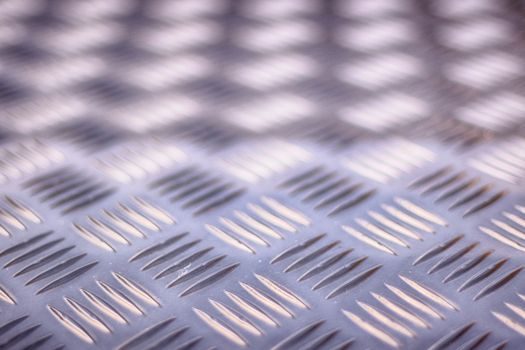
PE (polyester) coated coil ships in standard 16-25 µm film thickness, extendable to 40 µm for harsh environments, and is the most common painted coil for ACP (aluminum composite panel), wall cladding, and roofing skins [S5]. Stucco embossing adds a textured surface that hides minor oil-canning and is widely used for refrigerator liners and cold-storage panels [S2].
Mill-finish (no coating) coil is the lowest-cost form, supplied bare for downstream anodizing, painting, or fabrication. Color-coated and embossed variants are produced on dedicated lines in parallel with bare coil, and mills offer RAL color matching and custom sample matching on request [S5]. The product line overlaps architecturally with aluminum veneer panel facades, where the coil is the flat stock that gets cut, coated, and installed as the visible skin.
Application Map by Sector
Construction and architecture consume the largest volume: ACP cores, curtain walls, ceilings, wall cladding, window and door frames, kitchen cabinets, and elevator interior panels are all cut from 1xxx, 3xxx, and 5xxx coil [S1][S4]. Roofing sheet is now specified as a leading roofing material in many commercial builds, with mill widths up to 2000 mm enabling single-span coverage [S7].
Transportation uses AA5052/AA5083 coil for marine and truck/trailer skins, AA5182/AA3003 for beverage can ends and tabs, and AA5754 for chassis and fuel-tank applications [S6]. HVAC and refrigeration specify coated AA3105 H44 stucco and AA3003 stucco for thermal panel skins [S2]. Electrical and lighting use 1xxx series for lamp reflectors and transformer windings, while consumer goods draw 1xxx and 8xxx coil for cookware, cosmetics covers, and foil stock [S1][S5]. For window and door framing millwork, the same 1xxx/3xxx coil feeds the aluminum window door production lines after slitting and profiling.
Comparison: Common Alloy-Temper Choices for the Same Job
Specifying aluminum coil usually comes down to four decision criteria — strength, formability, corrosion resistance, and cost — lined up against the dominant alloy-temper for each use case. 1xxx-O is the cheapest and most formable, 3xxx-H14 is the cost-balanced default for general sheet metal, 5xxx-O/H32 carries marine-grade corrosion resistance at moderate strength, and 6xxx-T6 delivers the highest strength but requires separate heat-treatment lines. [S4]
For a 0.5-1.0 mm roofing skin in coastal exposure, AA3003-H16 is the cost-effective choice while AA5052-H32 is the corrosion-upgrade; for refrigerator liner panels, AA3105-H44 stucco embossed is the spec standard; for welded marine panels, AA5083-O/H116 is the only defensible selection [S2][S5][S6]. Cross-walked with our sourcing view of aluminum extrusion profile suppliers in 2026, the same mills often supply both flat-rolled coil and extruded profile stock from adjacent lines.
Quality, Certifications, and Sourcing Realities
Export-grade coil shipments typically ship with ISO 9001, SGS, BV, SONCAP, CTN, FDA, SASO, COI, and PVOC documentation depending on destination market [S1]. Cold-rolled coil tolerances on thickness are typically ±0.01-0.05 mm depending on gauge; CC feedstock enters downstream cold mills at 6-8 mm and is reduced to 0.2 mm minimum [S8].
Mill selection should weigh alloy-temper range, coating-line capability, slitting width range, and certifications held. Chinese mills (Zhengzhou cluster, Shanghai Metal Corporation, Flait, HXM, ChenXin Metal with warehouses in Malaysia, Vietnam, and Indonesia) dominate the export supply, with regional warehouses giving shorter lead times to Southeast Asian buyers [S3][S4][S6][S7]. When matching coil to roll-formed downstream lines, our roll-formed profile selection guide covers the tolerance bands that determine whether 0.05 mm gauge variation breaks a draw die or a roll-former. Buyers of related flat-rolled stock for casting and downstream pressure work should also review aluminum ingot sourcing in 2026 for raw-feed cost stack context.
Selection Checklist and Common Failure Modes
Start with end-use environment: indoor dry (1xxx/3xxx is fine), coastal or chemical (5xxx mandatory), structural load-bearing (6xxx-T6 or 5xxx-H32). Match temper to forming method — deep draw requires O or H32; roll-forming accepts H14/H16; brake-forming tolerates H18 in thin gauges [S5][S6]. Confirm coating thickness if painted: 16-25 µm is residential-grade, 25-40 µm is commercial/industrial [S5].
Common failure modes include stress-corrosion cracking in wrongly-tempered 5xxx (avoid H19/H26 above ~150 °C service), paint adhesion loss on improperly pre-treated coil, and gauge drift on long coil runs that exceeds downstream tooling tolerance. For applications where coil is later fabricated into ladders or scaffolding platforms, the aluminum ladder entry covers how alloy and temper translate into load rating and platform stiffness. Keep CC feedstock for in-house cold rolling, buy cold-rolled finished coil for fabrication, and use coated coil only where the coating chemistry matches the service environment.
Track these signals over the next quarter: alloy 5xxx and 6xxx spot premiums versus 1xxx at Shanghai Metal Corporation and Flait, the 16-25 µm versus 25-40 µm PE coating split, and any new AA5182 / AA5754 capacity announcements from the Zhengzhou and Malaysia clusters. These three datapoints together indicate whether marine and can-stock demand is pulling coil pricing relative to commodity 1xxx.