
Aluminum sheet is rolled into thickness bands from 0.15 mm (thin foil-grade sheet) to 200 mm+ (heavy plate) and grouped by alloy series 1xxx through 7xxx, with 3xxx (Mn), 5xxx (Mg), and 6xxx (Mg-Si) covering the majority of automotive, marine, architectural, and tooling demand [S8][S9].
Stock formats on 2026 manufacturer listings run 4x8 ft (1220x2440 mm) panels with thickness 0.10-4.0 mm and width 10-2000 mm in tempers O, H12-H32, T3-T8, and T351-T851 [S3][S5]. Color-coated building sheet is typically PE-painted at 16-25 micron dry film, with 40 micron as the upper practical limit, against standards GB/T 17748-1999, ASTM, ISO, and EU norms [S5].
Thickness and Series Classification
Aluminum sheet is split into five thickness bands per Chinese mill reference: thin sheet 0.15-2.0 mm, standard sheet 2.0-6.0 mm, medium plate 6.0-25.0 mm, thick plate 25-200 mm, and ultra-thick plate above 200 mm, with "sheet" reserved for the 0.15-6.0 mm range and "plate" for thicker gauges [S8][S9]. The aluminum alloy system itself is also tracked in our aluminum alloy encyclopedia entry, which covers the full 1xxx-7xxx designation map.
By composition, the same sources split product into high-purity (99.9%+ Al rolled stock), pure aluminum, alloy aluminum (Al-Cu 2xxx, Al-Mn 3xxx, Al-Si 4xxx, Al-Mg 5xxx, Al-Mg-Si 6xxx, Al-Zn 7xxx), composite or brazed sheet, and clad (aluminum-clad) sheet for special duty [S8][S9]. Surface finish options listed by 2026 catalog data include mill finish, anodized, polished, brushed, embossed, powder-coated, color-coated, sand-blasted, and holographic impression [S3].
Automotive Sheet Alloys and Body-in-White Map
For automotive body sheet, the working alloy set is 5182, 5754, 6016, and 6014 in O or T4 temper for outer panels and closures, while 3003, 3105, 5052, 5083, 5454, and 6061 cover structural and ancillary parts [S1][S4]. Henan Chalco's published automotive body-sheet program lists the same 5182/5754/6016/6014 set for skin panels, 5052-H32 for semi-trailer floors, and 5083/5182/5754/5454 for liquid-tank trucks [S1].
Forged automotive components (connecting rods, suspension arms, knuckles) draw on 2014, 2024, 5754, 6061, 6082, 6063, and 7075, with 7050 also offered for high-strength parts [S1]. The link between automotive sheet spec and downstream metal stamping selection is direct: stamping line tooling, draw die radii, and spring-back compensation are all driven by the 5xxx versus 6xxx yield-strength gap rather than the nominal tensile number.
Architectural, Roofing, and Cladding Sheet
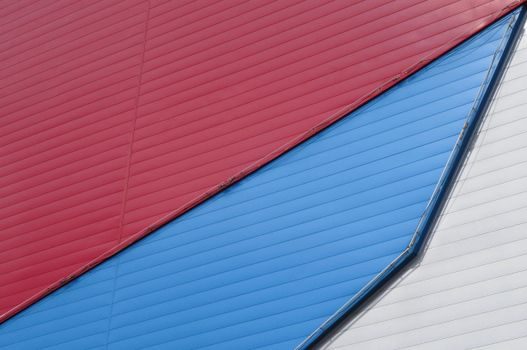
Color-coated (PE-painted) aluminum sheet is sold at 5 m.t. minimum order, 10,000 m.t./month supply capability, with applications split across interior (wall cladding, ceilings, bathrooms, kitchen cabinetry, shutters, doors) and exterior (wall cladding, facades, roofing, canopies, tunnel linings, column covers, renovations) [S2]. Advertising uses include display platforms, signboards, fascia, and shopfronts [S2].
Stucco-embossed AA3xxx sheet (alloys 1050, 1060, 1070, 1100, 3003, 3004, 3005, 3105, 5005, 5052, 5754, 5083, 8011) in tempers H12-H32, HO, and F is the standard product for refrigerator liners, freezer cabinets, and trailer skins where anti-glare and stiffness matter more than cosmetic paint [S5]. The broader use of coated sheet in facades and curtain-wall is covered in the aluminum veneer panel reference, which expands on the composite versus solid-sheet trade-off.
Tooling, Tool Cases, and 4x8 ft Stock Format
Python-embossed 4x8 ft sheet in tempers T3-T8, T351-T651, T351-T851, O-H112, plus soft, half-hard, and hard conditions is the standard product for auto tool cases, decorative panels, door/window frames, and heat sinks [S3]. Series coverage spans 1000, 2000, 3000, 4000, 5000, 6000, and 7000 with shape options flat, rectangular, round, hexagonal, T-profile, angle, and oval [S3].
Minimum order qty for these mill-direct 4x8 ft programs is 5 m.t. with monthly supply at 10,000 m.t., loading from Shanghai under TT or LC terms [S3]. For buyers comparing the aluminum extrusion profile map against flat-sheet stock, the rule of thumb is that sheet covers skins, panels, and cladding, while extrusion covers structural frames, heat sinks, and anything with a closed cross-section.
Series-by-Series Selection Criteria

Selection starts with formability versus strength. 1xxx (1050, 1060, 1070, 1100) and 3xxx (3003, 3004, 3005, 3105) are deep-draw and roofing grades with low strength but excellent corrosion resistance and weldability [S5]. 5xxx (5052, 5083, 5182, 5454, 5754) adds 2-4% Mg for marine and tank service with good weldability but limited suitability above ~65 deg C [S1].
6xxx (6061, 6063, 6082, 5A05, 5A06) gains Mg-Si precipitation hardening for T6 structural parts [S6][S7]. 2xxx (2014, 2024) and 7xxx (7050, 7075) deliver the highest strength but require corrosion protection or cladding for aerospace and forged suspension duty [S1]. Stocking distributors in 2026 carry 3003, 5052, and 6061 as their three baseline sheet grades with no minimum order quantity, with other grades on request [S7].
Temper Codes, Standards, and What Buyers Should Verify
Common temper codes on 2026 catalog data are O (annealed), H12, H14, H16, H18 (strain-hardened), H22, H24, H26, H32 (strain-hardened + partially annealed), F (as-fabricated), T3, T4, T6, T8 (solution heat-treated), and the stress-relieved T351/T651/T851 variants [S3][S5]. For PE-coated sheet the explicit paint standards are GB/T 17748-1999, with ASTM, ISO, and EU standards also called out by the mill [S5].
For window, door, and curtain-wall buyers the relevant downstream reference is our aluminum window and door spec page, which covers thermal-break versus standard frame selection. For melting and recycling capacity, the gas aluminum melting furnace entry covers charge-stock preparation for secondary smelters running 3xxx and 5xxx scrap returns.
Common Specification Pitfalls and Source Cautions
Buyers frequently confuse "sheet" (0.15-6.0 mm) and "plate" (6 mm and above); a 10 mm order should be filed as plate with mill-rolled plate tolerances, not sheet tolerances, otherwise flatness and thickness-tolerance expectations will not match [S8][S9]. Another frequent error is specifying 5xxx (e.g. 5083) for service above 65 deg C — Mg-bearing grades suffer sensitisation and should be swapped for 6xxx-T6 in elevated-temperature trim [S1].
Embossed and stucco finishes add 0.05-0.20 mm to nominal thickness versus equivalent mill-finish sheet, which matters when a tight fit against a mating extrusion or gasket is required [S3][S5]. For pricing, mill catalogs list "Ref Price" rather than fixed FOB numbers, with 5 m.t. MOQ and 10,000 m.t./month supply capability as the published baseline for both 4x8 ft and color-coated product [S2][S3].
Track for the next cycle: 5xxx versus 6xxx share in body-in-white programs across new EV platforms, and the spread between 1050/1060 pure-aluminum sheet and 3003/3004 alloy sheet for PE-coated roofing. Sources: Chalco automotive sheet program [S1], okorder color-coated spec [S2], okorder 4x8 ft embossed stock [S3], Haomei auto plate overview [S4], okorder stucco AA3xxx data sheet [S5], Mingtai product list [S6], Haomei sheet stockist page [S7], Chinese encyclopedia entries on embossed sheet and aluminum plate classification [S8][S9].