
Global aluminum extrusion demand in 2026 maps to a market valued between USD 101.48 billion and USD 108.71 billion, with forecasts landing between USD 166.65 billion and USD 218.79 billion by 2030-2034 at CAGRs of 6.37-9.14% [S2][S3][S5][S6].
Construction and infrastructure remains the single largest end-use segment, transportation is the fastest-shifting mix, and electrical/electronics plus machinery absorb the residual industrial pull; Asia Pacific alone held 75% of the global market in 2025 at USD 28.38 billion, rising to USD 30.09 billion in 2026 [S3][S4].
End-market sizing: construction, transport, electrical, machinery
Construction and infrastructure is the dominant end market, sized at USD 52.1 billion in 2021 and projected to reach USD 85.2 billion by 2030 at a 6% CAGR, a scale no other end-use category matches in the public dataset [S8]. The 6000-series alloy band (Al-Mg-Si) carries the largest share of that demand, 30% of Asia Pacific volumes in 2025, because 6xxx extrusions combine extrudability with the strength-corrosion balance that window frames, curtain walls, and structural members need [S2][S4].
Automotive and mass transport is the second structural pillar, with hollow profiles flagged as the fastest-growing product type because they deliver high bending and torsional strength at lower mass, a property that maps directly onto EV battery enclosures, chassis rails, and thermal management hardware [S2]. Aerospace and defense is a smaller-volume but high-margin slice, leveraging aluminum's paramagnetic behaviour, low maintenance burden, and corrosion resistance for airframe and structural extrusions [S3].
Electrical and electronics plus machinery and equipment round out the published segmentation from MarketsandMarkets, with extrusion demand tied to heat sinks, enclosures, busbars, and modular framing where design flexibility and surface finish tolerance matter more than raw tonnage [S2]. A side-by-side read across reports: construction anchors the volume, transport drives the mix shift toward hollow 6xxx profiles, and electrical/machinery fills the steady industrial base load [S2][S3][S4][S8].
Product mix: shapes, hollow profiles, and why 6xxx leads
By product, shapes (solid and semi-hollow profiles) held the largest 2025 share, while hollow profiles are projected to register the highest CAGR through 2030 because EV and renewable-energy applications need maximum stiffness per kilogram of metal [S2][S3]. Rod and bar is expected to grow at a notable CAGR as well, per the same segmentation, though shapes remain the volume leader [S3].
By alloy, 6xxx series is the workhorse: extrudable, heat-treatable, weldable, and corrosion-resistant enough for architectural and structural use, which is why it captures 30% of the Asia Pacific mix and the largest global value share [S2][S4]. 1xxx (commercially pure) and 5xxx (Al-Mg) grades cover niche cases where conductivity or marine-grade corrosion resistance outweighs strength, while "other" grades absorb specialty automotive and aerospace tempers [S2].
By surface finish, mill-finished product dominates Asia Pacific at 45% of 2025 volumes, reflecting cost-sensitive regional construction and OEM supply chains, with anodized and powder-coated finishes taking the architectural and premium-transport slices [S4]. For a spec-driven read on what 6xxx extrusions actually do in building skins, the aluminum veneer panel and aluminum window & door entries show how alloy choice ties back to curtain-wall and frame performance.
Regional split: Asia Pacific at 75% of 2025 demand
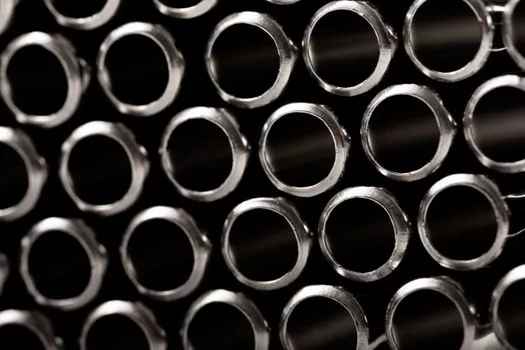
Asia Pacific captured 75% of the global aluminum extrusion market in 2025, with regional revenue stepping from USD 28.38 billion in 2025 to USD 30.09 billion in 2026 and a 6.1% CAGR through 2034, reaching USD 48.15 billion by 2034 [S3][S4]. Building and construction is 38% of that regional total, mill finish 45%, and 6000-series alloy 30%, the cleanest single-region breakdown in the public data [S4].
North America is forecast to expand at the fastest CAGR in the global dataset, but it sits on a smaller 2025 base, so absolute volume additions still come disproportionately from China, India, and Southeast Asia where urbanization, EV plants, and solar-frame fabrication are stacking up [S3][S4]. Europe and the rest of the world (Latin America, Middle East, Africa) provide steady incremental demand, particularly for transportation and machinery-grade extrusions, but the center of gravity remains Asia Pacific [S3][S4].
Government policy is reinforcing that pull: green-building standards, electrification targets, and domestic-content rules for solar and rail are all extruder-positive in the region, which is why 6xxx mill-finished shapes keep gaining share inside the Asia Pacific mix [S4]. For context on how extrusion demand stacks against adjacent processing routes, the die casting machine entry maps the competing high-volume aluminum-forming path.
Growth drivers: lightweighting, EVs, solar, and green building
Lightweighting is the unifying demand driver: 6xxx extrusions offer high strength-to-weight, corrosion resistance, and recyclability, which lets automotive OEMs hit range targets, lets architects qualify for LEED points, and lets solar-installer EPCs cut mounting-structure mass [S2][S3][S4]. EV production in particular is pulling hollow-profile demand for battery enclosures, crash management systems, and chassis rails where torsional stiffness per kilogram is the binding constraint [S2][S4].
Renewables and mass transit are the secondary accelerants: rail car body extrusions, solar panel mounting structures, and modular prefabricated construction all favor hollow 6xxx profiles because they install faster, resist atmospheric corrosion, and integrate with bolted or welded assemblies [S2]. The aluminum ladder and broader aluminum alloy references illustrate the same strength-to-weight logic in adjacent industrial product categories.
AI-driven process control is starting to bend the cost curve: real-time monitoring of die pressure, billet temperature, and run-out tolerance reduces scrap rates and lets extruders hold tighter dimensional specs on complex hollow profiles, a capability that is increasingly table-stakes for EV and aerospace tier-1 contracts [S3][S4].
Forecast dispersion and what it means for spec planning

Forecast dispersion across the public sources is wide enough to matter: MarketsandMarkets sees USD 166.65 billion by 2030 at 7.0% CAGR [S2][S5], Precedence Research sees USD 176.22 billion by 2035 at 6.37% [S3], Grand View Research sees USD 193.3 billion by 2033 at 9.0% [S1], and Fortune Business Insights sees USD 218.79 billion by 2034 at 9.14% [S6]. The volume benchmark from ResearchAndMarkets, 35.47 million metric tons by 2026 at 3.97% CAGR, sits well below those revenue CAGRs, which is consistent with mix-up toward higher-value 6xxx hollow profiles and value-added surface finishes [S7].
For procurement and capacity planning the practical read is: assume the demand curve bends toward the higher CAGR band (8-9%) if your mix is weighted to EV, solar, and Asia-Pacific construction, and toward the lower band (6-7%) if your exposure is to mature construction and industrial machinery in Europe or North America [S1][S2][S3][S6]. Compare the aluminum coil price premium by alloy and temper, 2026 read alongside this extrusion view, because the same 6xxx-driven mix shift shows up in both flat-rolled and extruded pricing.
Limitations and constraints on the 2026 demand picture
Forecast divergence between 6.37% and 9.14% CAGR is itself the main uncertainty, and it traces to different base-year market sizes (USD 93.04-111.88 billion across the dataset) and different end-use weightings between sources [S2][S3][S6][S9]. Scrap availability, primary smelter energy costs, and billet premiums (especially for 6xxx-grade feedstock) can swing effective capacity utilization, and a single regional logistics disruption can shift 1-2% off the global growth rate inside a quarter [S3][S4].
End-use mix risk is real: a slowdown in residential construction, an EV demand plateau, or a pullback in solar EPC pipelines would each hit different extruder sub-segments asymmetrically, with hollow-profile EV suppliers most exposed to automotive cyclicality and mill-finished shape suppliers most exposed to construction starts [S2][S4]. For a broader read on adjacent industrial materials, the aluminium demand 2026 solar frames, EVs, and packaging piece traces the same downstream pull on flat-rolled and billet supply.
Track three signals into late 2026 and 2027: Asia Pacific 6000-series capacity additions and their effect on regional billet premiums, EV battery-enclosure extrusion order books at the major tier-1s, and any upward revision to green-building code adoption that would push mill-finished construction extrusions above the 38% Asia Pacific share recorded in 2025 [S3][S4].