
Aluminum coil price in 2026 is not a single number: it is an LME base plus an alloy premium, a temper premium, a gauge premium, and a regional premium stacked on top [S1][S3]. Q2 2026 regional aluminum alloy averages already span USD 2,780/MT in China to USD 3,640/MT in the United States, a 31% spread driven by Section 232 tariffs and a wide Midwest premium [S5].
For a procurement engineer quoting a project, the all-in coil figure typically lands between USD 2,300/ton for soft 1xxx stock and above USD 4,000/ton for hard 7xxx or specialty-tempered 6061 [S1][S6]. The real decision is which layers move the needle for a given end use, and how each layer is documented on the mill test certificate.
Cost driver 1: LME base and the all-in price formula
LME primary aluminum has traded between USD 2,100 and USD 2,700/ton across 2023–2025, with 2026 spot oscillating in a USD 2,100–2,650/ton band over the trailing twelve months [S1][S3]. That LME quote is the raw input; it is rarely the coil price. The standard breakdown used by tier-1 mills is: Total price per kg = LME or Shanghai base + factory conversion fee + export packaging surcharge [S3].
On top of the base, the mill adds a regional premium. Q2 2026 settled at USD 2,780/MT in China, USD 3,090/MT in Japan, USD 3,260/MT in Germany, and USD 3,640/MT in the United States, with the US figure lifted by Section 232 duties and Midwest premium dynamics [S5]. The H2 2026 global average is forecast at USD 3,100–3,450/MT, with continued support from scrap tightness, China's export rebate stance, and steady automotive die-casting demand [S5].
Cost driver 2: alloy premium above LME
Alloy premium is where most of the spread between 1050 and 7075 comes from. Mill-direct reference pricing for 20+ ton lots in 2025–2026 puts 1050-O at USD 2,300–2,700/ton, 1060-O at 2,300–2,750, 1100-O/H14 at 2,350–2,800, 3003-H14/H16 at 2,500–2,950, and 3004-H32 at 2,600–3,050 [S1]. The 5xxx and harder alloys jump further: 5052-H32 lists at 2,800–3,300, 5083-H116 at 3,100–3,700, and 6061-T6 at 3,300–3,900 [S1].
Per-kg conversion of the same reference data lines up closely with downstream distributor quotes: 1060 O/H12 sheet-coil at USD 2.10–2.80/kg, 3003-H14 at 2.30–3.10/kg, 5052-H32 at 2.80–3.80/kg, and 6061-T6/T651 plate/rod at 3.20–4.50/kg [S3]. Aerospace-grade 7075-T6 sits in a class of its own at USD 4.00–6.50/kg, with a typical USD 1.50–2.50/kg premium above LME spot on top of 6061's USD 0.40–0.80/kg LME premium [S3].
Cost driver 3: temper premium

Temper moves the conversion premium as much as alloy does. O-temper (annealed) coils cost less to produce than T6 because they skip solution heat treatment, straightening, and artificial aging; H14, H16, H24, and H32 add strain-hardening steps but stay below T6 cost. Specialty tempers such as T651 (stress-relieved T6) and H116 (marine-grade stabilized) add a documented 5–15% on top of the base alloy price [S1].
For 6061 specifically, the move from T6 to T651 (stretched then aged) is the standard upgrade for machined parts where warpage control matters, and that 5–15% premium is usually a cheap insurance policy against scrap. For 5083, the H116 temper is what most classification societies require for marine hull plate, so the H116 premium is effectively non-optional once you cross into shipbuilding specifications. The 1xxx and 8xxx packaging alloys (8011-O, 8079-O) cluster between USD 2,400 and 2,900/ton because they are almost always supplied in O temper for foil conversion [S1].
Cost driver 4: gauge, width, and surface treatment
Gauge is the second-largest cost lever after alloy. Hot-rolled 3.0–6.0 mm coil runs at the base price; 1.5–2.9 mm cold-rolled adds 3–8%; 0.8–1.4 mm adds 8–15%; 0.3–0.7 mm precision cold-rolled adds 15–30%; 0.1–0.2 mm foil stock adds 30–55%; and ultra-thin 0.02–0.09 mm battery or pharmaceutical foil adds 60–120% [S1]. Concretely, a 3003-H14 buyer moving from 1.5 mm to 0.5 mm should budget 15–25% more per ton for the same alloy and temper [S1].
Width and coating add smaller but real layers. Narrow slit coil under 500 mm costs 5–12% more than the 500–1,000 mm standard, while 1,500–2,650 mm wide mill coil adds 3–15% because fewer mills can roll it [S1]. Color-coated aluminum coil typically prices USD 1,500–3,000/ton, with the aluminum substrate still making up the majority of the cost [S8]. Width and coating premiums stack, so a 1,800 mm wide, 0.4 mm PVDF-coated 3003-H24 quote will show at least three of these layers on the proforma.
Comparison: which alloy gives the best cost per unit of performance
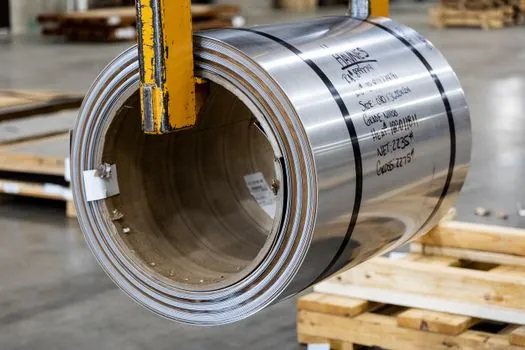
For a buyer choosing between 3003-H14, 5052-H32, and 6061-T6 on a general fabrication project, the trade is cost versus strength-versus-corrosion. 3003-H14 at USD 2,500–2,950/ton is the cheapest, has good formability, and adequate corrosion resistance for roofing, gutters, and HVAC parts [S1]. 5052-H32 at 2,800–3,300/ton adds higher strength (about 2x 3003 yield in H32) and much better marine corrosion resistance, which is why it dominates fuel tanks, marine panels, and pressure vessels [S1][S3].
For deep-drawing and foil stock the 1xxx series (1050/1060/1100) at 2,300–2,800/ton is the right call, not because of price but because purity controls the earing and surface finish. For classification-society marine plate, 5083-H116 at 3,100–3,700/ton is effectively mandatory, so the 20–30% premium over 5052-H32 is a compliance cost, not a procurement choice.
Regional, tariff, and total-cost-of-ownership layer
Geography can override alloy choice. Q2 2026 alloy coil in China at USD 2,780/MT, Germany at 3,260/MT, and the US at 3,640/MT means a 1,000-ton annual buy for a US fabricator costs roughly USD 860,000 more than the same tonnage sourced from a Chinese mill, before freight and tariff pass-through [S5]. Section 232 duties and a wide Midwest premium keep the US as the priciest major market; Germany's carbon border adjustment and industrial power costs add a smaller but persistent premium; Japan sits between them, supported by automotive die-casting demand and import dependence [S5].
Total cost of ownership rarely lives on the purchase order alone. Smaller-than-20-ton orders carry a 10–25% spot premium over the mill-direct reference [S1]. Container freight, export packaging, and currency moves can add or erase 5–15% between quote and invoice. For end uses that touch food, marine, or aerospace, the certification paperwork (mill test certificate to EN 10204 3.1, classification society witness, or AS9100 traceability) is part of the cost and should be line-itemed, not buried. A 3003-H14 roofing coil at USD 2,700/ton delivered to a US job site is not the same product as a 3003-H14 coil at the same price with no US origin documentation; the second one may trigger Section 232 reassessment at the port.
Standards, sourcing, and decision framework
Specifying by alloy and temper without naming a product standard is the most common cause of cross-vendor mismatch. The widely used reference for flat-rolled aluminum coil is the AA (Aluminum Association) designation system, with mill finish, gauge, and width called out per ASTM B209 or the equivalent EN 485; classification-society marine grades (5083-H116, 5086-H116) are typically ordered against ASTM B928 or B928M with a witnessed test certificate. Buyers should always request a mill test certificate to EN 10204 3.1 and check the contained metal value table for the alloy in question before signing [S9].
For most projects, the practical sourcing rule is: pick the lowest-cost alloy that meets the strength, corrosion, and formability targets, then accept the gauge, width, and temper premiums as non-negotiable, and finally stress-test the regional premium by asking for a like-for-like quote from at least two regions. On the equipment side, the aluminum alloy grade, the aluminum ladder market (a useful gauge of downstream 1xxx/3xxx demand), and broader construction machinery and equipment activity all feed coil consumption. Watchable signals for the next quarter are the LME spot band (currently USD 2,100–2,650/ton over the past 12 months [S3]), China's aluminum export rebate policy, and the Midwest premium trajectory that set the US Q2 2026 alloy print at USD 3,640/MT [S5].
This topic is covered further in Aluminum HPDC Cell Equipment List: Press, Furnace, Die, and Auxiliary Stack.