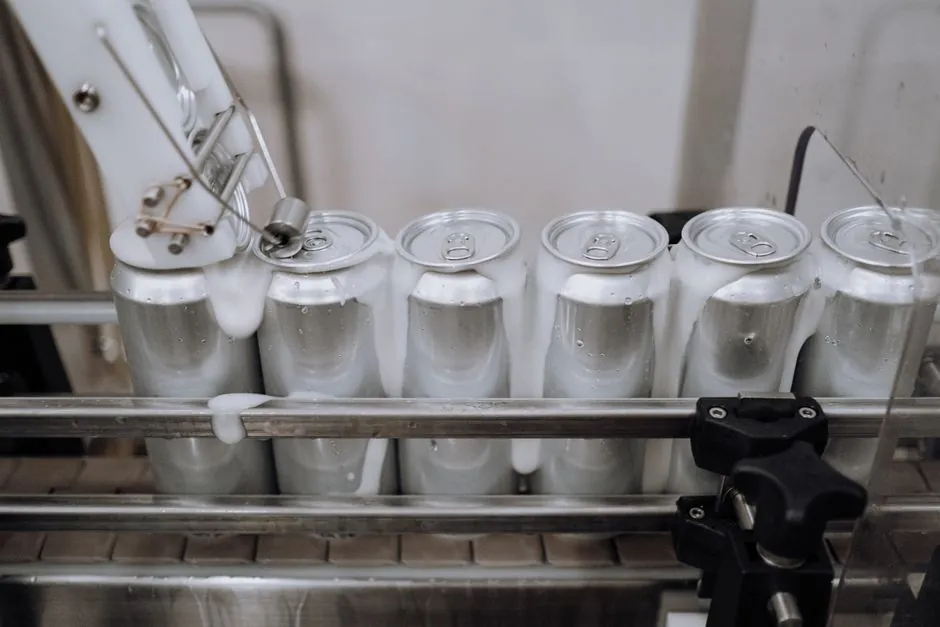
Global aluminium consumption is projected to climb to 106.8 million tons in 2026, a 2.7% year-on-year rise, following 100.8 million tons in 2024 and an estimated 104.01 million tons in 2025 [S2].
Three end-use channels dominate that curve: transportation at 28% of 2025 volumes, building and construction at 22%, and packaging at 16%, with solar panel frames, EV battery enclosures, and beverage can stock as the highest-growth sub-segments inside each channel [S2][S5].
Demand Volume by End-Use: Transportation, Construction, Packaging
Transportation aluminium consumption is projected at 28.58 million tons in 2025, up from 27.52 million tons in 2024 and 26.29 million tons in 2023, with another 2.76% increase baked into the 2026 outlook [S2]. Building and construction is set to reach 22.72 million tons in 2025 and to post the fastest 2026 growth among major segments at roughly 2.77% [S2]. Packaging aluminium demand is forecast at 16.70 million tons in 2025, up 3.5% on 2024's 16.13 million tons, with another 2.75% rise expected in 2026 [S2]. The structural argument for aluminium across these three channels is well established: it combines low density (about 2.7 g/cm³), high corrosion resistance, infinite recyclability, and electrical conductivity that is roughly 61% of the International Annealed Copper Standard, which is why specifiers keep substituting it for steel and copper in body panels, busbars, foil, and racking [S1].
EV Lightweighting: 30-50% More Aluminium Per Vehicle
EVs require 30-50% more aluminium than internal combustion models for battery enclosures, chassis cross-members, and motor housings, a delta that the lighting equipment and electric lamps adjacent supply chain is now mirroring with extruded busbar and frame stock [S5]. Global EV sales exceeded 17 million units in 2024, a 25% year-on-year jump, and that volume is the single largest structural pull on rolled and extruded aluminium product categories [S1]. Extrusion held roughly 31.5% of product revenues in 2025 and is projected to record the highest forecast CAGR through 2033 as EV battery frames and solar racking scale in parallel [S1].
Solar Frames and Racking: Extrusion's Fastest-Growth Lane
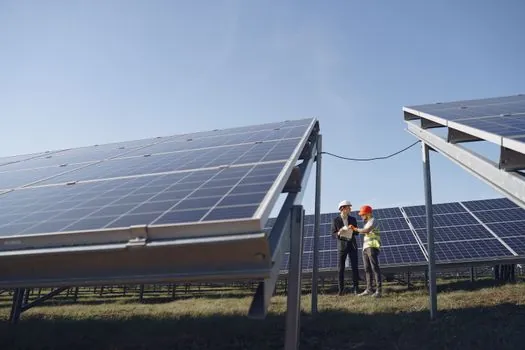
Solar panel frame and racking extrusion is one of the highest-growth sub-segments in the 2026-2033 window, sitting inside the same extruded product category that already captures battery frames and architectural facades across Asia Pacific and North America [S1]. Aluminium's corrosion resistance and strength-to-weight ratio make it the default framing material for utility-scale photovoltaic mounting, a market whose annual deployment volumes are now large enough to register in the IEA's electricity trackers and to feed into primary aluminium demand forecasts. The renewable-energy pull is not confined to frames: wind turbine nacelle castings and power transmission cabling also draw on the same rolled and extruded supply base, so a single upstream bottleneck (bauxite, alumina, or power) propagates into all three channels at once [S3].
Packaging: Foil, Cans, and the Recycled-Aluminium Premium
Packaging aluminium demand growth is sustained by beverage cans, foil, and aerosol containers, with the IAI noting that about 75% of all aluminium ever produced remains in circulation, a stock that underwrites the closed-loop economics of can-to-can recycling [S2]. Secondary aluminium, which consumes less than 5% of primary smelting energy, is now the single largest structural opportunity in the market, with OEM Scope 3 mandates, the EU Carbon Border Adjustment Mechanism, and the EU Packaging and Packaging Waste Regulation driving certified low-carbon premiums [S1]. For procurement teams, this means that can-stock and foil contracts increasingly carry a recycled-content attestation clause, and that suppliers without audited secondary smelting capacity are starting to lose spec slots in European FMCG accounts.
Comparison: Three Demand Channels Against Four Procurement Criteria

Procurement and design engineers evaluating aluminium supply contracts in 2026 can line the three dominant channels against four practical criteria: (1) volume growth, (2) alloy specification, (3) recycled-content premium exposure, and (4) supply tightness. Transportation offers the largest 2026 volume delta (28.58 Mt) with 5xxx and 6xxx series alloys for body-in-white and 7xxx for crash structure, moderate CBAM/PPWR exposure, and the highest exposure to LME tightness (LME stocks down 20% year-on-year) [S2][S5]. Building and construction is volume-heavy (22.72 Mt in 2025) but uses a wider mix of 1xxx, 3xxx, and 5xxx series for facades and roofing, with lower CBAM exposure and moderate tightness. Packaging is smallest by volume (16.70 Mt) but the highest recycled-content premium channel, dominated by 3xxx and 5xxx can stock and 1xxx foil, and the most exposed to EU PPWR and recycled-content mandates [S2][S1]. The practical takeaway: specifiers chasing lowest carbon-intensity metal should prioritize packaging and extrusion supply; specifiers chasing volume security should hold dual-source transport-grade billet.
Supply Constraints: Bauxite, Power, and the 2026 Deficit
Global inventories are sitting at multi-year lows, with LME stocks down 20% year-on-year, and the supply side is being squeezed simultaneously by China's production caps, Guinea bauxite export disruption (alumina costs up 25% year-on-year), and Middle East water scarcity that has idled roughly 300,000 tonnes of smelting capacity [S5]. The net of those pressures is a projected 2026 aluminium deficit of approximately 365,000 tonnes, against forecast demand of 106.8 million tons [S2][S5]. Additive manufacturing using aluminium alloys is now cutting component weight by 20-30% in aerospace and automotive parts, and nano-aluminizing is extending marine and EV component lifespans by 40%, but neither offsets the upstream tightness; both actually increase the per-unit aluminium intensity of finished goods [S5].
For a process engineer in 2026, the actionable signals are three: watch the LME 3-month spread and Rotterdam duty-paid premium as the cleanest read on physical tightness, track Chinese quarterly capacity announcements because production caps rather than demand swings now set the marginal tonne, and treat recycled-content attestation as a hard requirement on any 2027 European can-stock or automotive extrusion contract rather than a nice-to-have. The September 2026 component shortage map already flags aluminium billet alongside copper and certain steel grades as the metals most exposed to allocation through 2026, and the 365,000-tonne deficit projection is the underlying data point behind that allocation signal [S5].
For component-level specifications, see construction machinery and equipment, and lamps and light fittings.