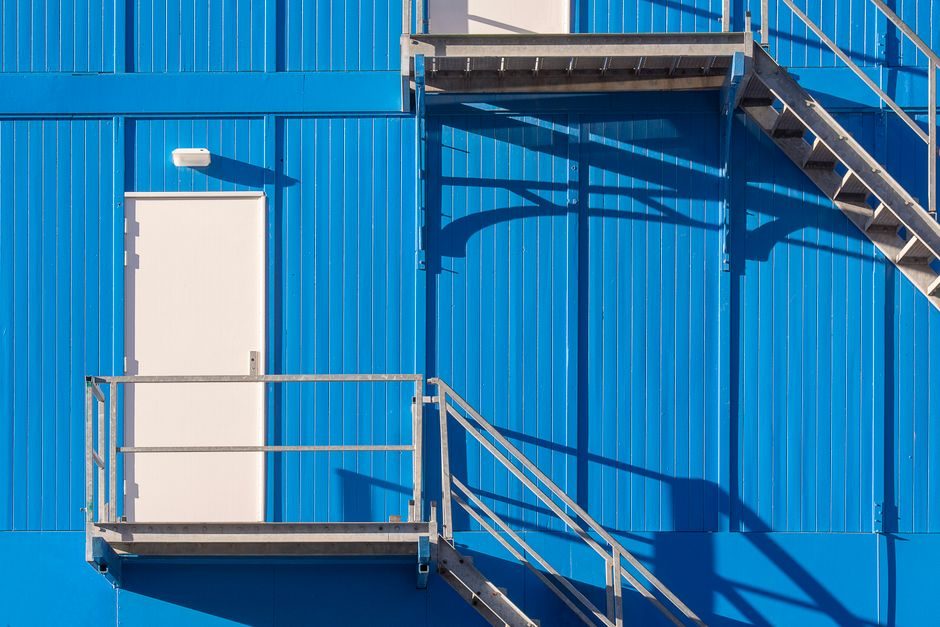
Aluminum extrusion profile and aluminum window & door sit on the same value chain but are bought and specified differently: extrusion is the upstream 6063/6061 T5-T8 billet-shape stock ordered by ton, while window & door is the downstream fabricated system with hardware, glazing, and surface treatment [S2][S3].
Specifying engineers and procurement officers need a criteria-first view of when to buy raw profile (cut, surface-treat, fabricate in-house) versus when to buy a finished system (delivered glazed and hardware-fitted), because the lead-time, MOQ, and cost structure differ by an order of magnitude [S3][S9].
Alloy, Temper, and Mechanical Envelope
6063 T5/T6 is the dominant window-and-door grade, with 6061 T6 reserved for structural curtain-wall mullions and high-load applications, as confirmed by Freecom Hardware's spec sheet listing 6063 T5 plus T3-T8 temper range [S2]. The same source lists compatible stock alloys as 3003/6005/6060/6061/6063/6082/6463 for general extrusion supply [S2].
For aluminum window & door system buyers, the alloy-temper choice is largely set by the system designer (6063 T5 for residential, 6063 T6 or 6061 T6 for high-rise curtain wall), so procurement is confirming a spec rather than selecting. Anhui Hongyu Aluminium's 2026 catalog lists 6000-series alloy in T3-T8 temper for window/door profile stock [S5].
A frequent misread is treating 6061 as interchangeable with 6063 for window frames; 6061 has higher tensile strength but lower surface-anodising response, so it is rarely used where a Class-II anodised finish is specified. Confirming the alloy on the mill certificate (not just the catalog tagline) is the cheapest insurance against finish rejection.
MOQ, Price Band, and Sourcing Geometry
Raw extrusion profile on Made-in-China lists 2-10 ton MOQ at roughly US$2,350-4,000 per ton for industrial window/door grade, with Linyi Shengao quoting US$3,000-4,000/ton at 10-ton MOQ and Foshan Guangya quoting US$2,350-3,200/ton at 1-ton MOQ [S3][S9]. These bands reflect 2026-06 spot listings and shift with billet cost, alloy surcharges, and surface-treatment selection.
Finished aluminum window & door is priced per square metre or per opening, not per ton, and tiered MOQs of 1-100 openings are typical for OEM/ODM fabricators like JiaHua Aluminium and Powerdekor [S1][S7]. Freecom's raw-profile listing shows the lowest entry at US$1-5/kg with 1,000 kg MOQ, but that is profile-only without cut, finish, or hardware [S2].
For a 50-ton annual window profile program, the per-ton raw profile route is roughly 30-40% cheaper than the equivalent fabricated window delivered glazed, but the buyer absorbs tooling (die cost US$800-3,000 typical for a 200-300 mm profile), cutting tolerance, anodising/powder-coating line access, and assembly labor. Decision rule: if annual volume is below ~200 tons and the opening mix is fragmented, buy the system.
Surface Treatment, Thermal Break, and Hardware Integration
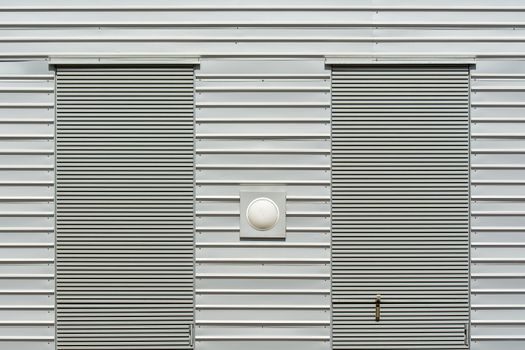
Raw extrusion profile ships as mill-finish stock and the buyer must specify anodising (AA-M12C22A31 Class II 10-18 µm typical), powder-coating (60-80 µm), PVDF, or wood-grain transfer before fabrication [S2]. Anhui Hongyu's 2026-01-20 listing shows anodised aluminium profile extrusions as a default stock option, indicating the surface treatment is added at the extrusion mill before shipment rather than downstream [S5].
Finished aluminum window & door systems already carry surface treatment, weather-stripping, hardware, and increasingly a thermal-break polyamide strip (typically 14.8-24 mm wide, PA66 GF25) for European and Middle-East cold-climate builds [S3]. The thermal-break feature is what differentiates a 2026-spec residential window profile from a basic tropical-market sliding profile, and it is rarely retrofittable after extrusion.
For system-window-door procurement, the polyamide-strut width, glass-pane U-value target, and hardware groove compatibility (Euro-groove, 12-15 mm) are the three locks that must be set before die opening, because changing any one of them after tooling forces a new die and a new MOQ cycle.
Decision Matrix: Raw Profile vs Finished System
On the four decision criteria that matter to a spec engineer, raw extrusion profile and finished aluminum window & door line up as follows, drawn from the 2026-06 marketplace data [S3][S7][S9]:
Lead time: raw profile is 15-25 days for in-stock die plus 7-12 days surface treatment, finished system is 25-45 days end-to-end. Customisation depth: raw profile allows any shape within the design circle, finished system is constrained to the system house's library. Quality liability: raw profile is single-attribute (alloy, tolerance, finish), finished system is multi-attribute and the supplier carries field-performance risk.
For a residential developer building 5,000+ identical openings in a single climate zone, the finished aluminum window & door route wins on risk transfer and erection speed. For an OEM fabricator with in-house anodising, CNC, and assembly, raw aluminum extrusion profile wins on margin and SKU flexibility.
Standards, Certification, and Mill-Test Discipline
Reputable Chinese extrusion mills carry ISO 9001 as baseline, and system houses like JiaHua Aluminium list powder-coating and anodising lines certified to Qualicoat-class and AAMA-2603/2604 ranges on their 2026-07-28 web pages [S7]. Huixin Aluminium of Foshan lists ISO 9001 plus IATF 16949 (the latter indicating automotive-grade process discipline applied to building-profile production) [S10].
For Middle-East and Saudi shipments specifically, 6063 T5 mill certificates must confirm Fe content <0.35% and Mg/Si ratio near 1.73 for anodising response, and the powder-coat line must hold ±2 RAL colour delta against the master chip. Suzhou Zhongyifeng's 2026 listing explicitly tags 6063 profiles to Saudi/UAE/Shate markets, indicating those spec constraints are baked into their standard SKU [S1].
Window-system buyers in Europe additionally need EN 14351-1 factory-production-control documentation and CE marking under the Construction Products Regulation; raw-profile-only buyers escape CPR but inherit the conformity duty once they cut, assemble, and place the product on the EU market.
Limitations and Failure Modes
Raw profile buyers most often fail on three points: die-amortisation cost hidden in the unit price when a profile shape changes mid-run, surface-treatment lot-to-lot colour drift on PVDF or anodised finishes, and dimensional tolerance drift above 0.15 mm on the 200-300 mm profile width that breaks hardware fit [S3][S9].
Finished system buyers fail when the supplier substitutes 6063 T5 in place of specified 6063 T6 for high-rise projects, or when the thermal-break polyamide strip is downgraded from PA66 GF25 to PA6 with no notification, because both changes pass visual inspection at the dock but show up as deflection or thermal bridging in the first heating season.
For projects above 8 stories, a fire-rated-door or fire door sub-scope must be specified separately from the window system, and the aluminium framing around the fire-rated opening cannot be sourced from the same profile die as the standard window without an intumescent strip and a tested assembly certificate.
Track the next data points: 2026 Q3 billet-spot price movement for 6063 grade (drives the per-ton raw-profile band), and any new Qualicoat Class-3 or AAMA 2605 listings from the same Foshan/Suzhou mill cluster that will shift the premium-finish procurement toward domestic supply. The spread between 1-ton MOQ and 10-ton MOQ per-ton pricing on the Made-in-China portal is the single most useful leading indicator for when a project should commit volume to lock price.
Background reading: DTH vs Rotary Drilling Rig: Spec Decision Map.