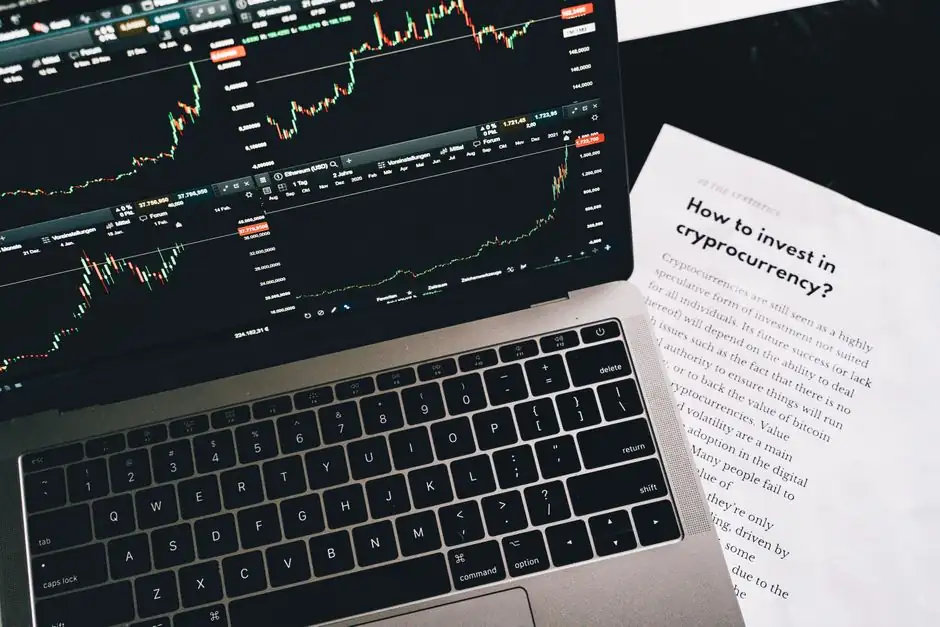
A disciplined aluminum ingot buy starts with price-architecture clarity: the LME spot price sets the global benchmark, but the delivered cost to a factory floor is the LME quote plus a regional premium that ranged USD 100-400/tonne through the most recent reporting cycle [S6].
Ingot unit weight is the single biggest reason small-volume buyers get shut out of direct mill sales: a single ingot weighs several tens of tonnes to several hundred tonnes, so mills only accept orders in tens-to-hundreds-of-tonne lots and rarely deal with one-off retail customers [S4]. That structural reality is the root of every distribution, trading-desk, and sourcing-partner layer in the aluminum supply chain.
What "Aluminum Ingot" Actually Means in a Buyer Spec
An aluminum ingot is the standardized cast shape (typically a trapezoidal sow or a T-bar/P1020a pig) that smelters and remelters pour primary or secondary aluminum into for handling, transport, and re-melting; downstream processors re-melt it into billet, slab, or aluminum alloy feedstock for extrusion, rolling, and casting [S1][S4].
Three format choices matter at the PO stage: (1) primary P1020 (99.7% min Al) for electrical and high-purity rolling, (2) secondary/remelt ingot from recycled scrap for casting and aluminum window and door billet, and (3) alloy-specific sow (e.g. 6063, 6061) sold by the smelter as a near-net-melt for extrusion houses. The selection controls what documentation the mill must furnish and which foundries will accept the heat.
Where to Source: ASEAN, China, and the LME Price Layer
Thailand has consolidated its position as a regional non-ferrous trading hub, with deep-sea ports such as Laem Chabang connecting primary supply from China, Australia, ASEAN, and the Middle East to downstream automotive, electronics, and packaging converters inside Southeast Asia [S1].
For most Asian buyers the practical shortlist is three channels: (1) direct mill offtake from Chinese primary smelters, (2) Thai/ASEAN trading desks and recyclers handling both primary and secondary feedstock, and (3) global merchants on the LME who can offer warrant-backed or back-to-back lots. Each carries a different minimum order quantity, premium, and documentation package. Recycled-content supply is no longer a niche lane: buyer guidance now explicitly recommends engaging suppliers that operate recycling capability, because it lowers the supplier's production cost and that saving is passed through to the buyer's landed price [S2].
Selection Criteria: What Separates a Reliable Mill from a Trading-Desk Reseller
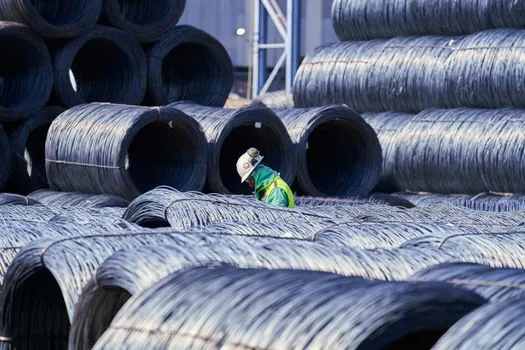
Reliable primary ingot suppliers are typically evaluated on five hard criteria: quality consistency across heats, third-party certifications, batch-level traceability, documentation discipline (mill test certificate, certificate of analysis, country of origin, HS code), and on-time shipment performance [S1].
Buyers should also probe four less-visible risk vectors before signing a frame agreement: (a) the supplier's subcontracting policy and the regulatory compliance of any sub-melter used, (b) recycling capability as a cost-and-sustainability lever, (c) cost-buffer hidden in the unit price when buy-side volume forecasts are unstable, and (d) clarity of contract scope so a sudden input-cost spike cannot be passed through uncontested [S2]. For small and single buyers, these checks frequently cannot be done alone, which is why a sourcing agent or trading desk is the default route: a mill will not engage a customer whose annual off-take is below one ingot's worth of tonnage [S4].
Price Architecture: LME, Regional Premium, and the All-In Calculation
All-in delivered cost = LME spot + regional premium + inland freight + duty + financing cost, and only the LME component is transparent. Regional premiums in the recent reporting window ranged USD 100-400/tonne, which can swing a delivered price by 3-8% before any freight or duty is applied [S6].
For comparison, the three dominant procurement routes stack up as follows on the criteria that actually move landed cost: direct mill offtake wins on unit price and documentation depth but loses on minimum order quantity and lead time; Thai/ASEAN trading desks win on minimum order quantity flexibility and logistics reach but add a 1-3% trading margin; LME-warrant brokers win on price transparency and optionality but require sophisticated contracts and credit lines. Competitive bidding between suppliers compresses price most effectively when there is no meaningful technical differentiation between heats; if the buyer's spec discriminates (e.g. low-iron P1020 for foil stock, or controlled Mg/Si ratio for extrusion billet), the field of competing suppliers is narrower and the bid leverage is weaker [S2][S4].
Standards, Documentation, and the Audit Trail

Documentation is the single highest-leverage control a buyer has over ingot quality. A complete shipment file for a primary P1020 or an alloy sow should include the mill test certificate, a per-heat certificate of analysis with the actual chemistry, country of origin, HS code (typically 7601 for unwrought aluminum), weight certificate, and packing list; without these, downstream aluminum veneer panel and extrusion lines cannot run a proper incoming-material acceptance test [S1][S4].
Recycled-content claims now travel with sustainability and compliance overhead: increasing regulatory guidance on data protection and cybersecurity has added compliance costs for suppliers, which are partially passed through as marginal price increases, so a buyer specifying a recycled-content percentage should expect to fund the audit trail that proves it [S2].
Use-Case Map: Which Ingot Goes to Which Downstream Line
Primary P1020 (99.7% min) feeds electrical conductor rod, foil stock (household foil is typically 8011 / 1235 / 1145 at 0.009-0.23 mm gauge, all originally cast from ingot), and high-purity rolled products [S4].
Alloy ingots and sows feed extrusion billet for aluminum window and door profiles, automotive aluminum alloy structural parts, and casting ingots for engine and transmission housings. Recycled secondary ingot has expanded into aluminum ladder and general industrial casting where the spec tolerates higher Fe and Si. Picking the wrong grade at the ingot stage is the most expensive mistake in the chain: it does not surface at incoming inspection, it surfaces as cracked extrusions, anodizing defects, or foil pinholes months later.
Failure Modes and Constraints Buyers Should Price In
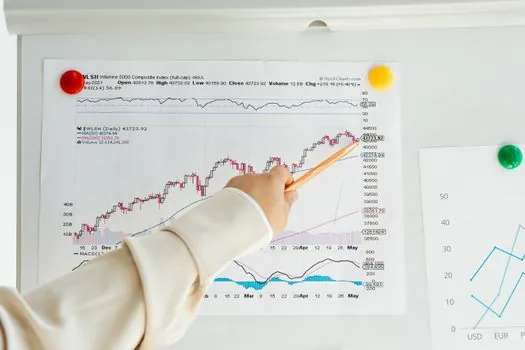
Six recurring failure modes show up in ingot procurement: inconsistent alloy composition between batches, shipment delays, unstable supply volumes, insufficient documentation, limited batch traceability, and quality variation between heats, all of which translate directly into line stoppages at the downstream plant [S1].
Two structural constraints bound the strategy. First, minimum order quantity at the mill is set by ingot unit weight, which is several tens to several hundred tonnes per piece, so direct mill offtake is only economic at full-truck or full-container scale [S4]. Second, internal misalignment between procurement and the actual users of the ingot is a documented root cause of overspend: when usage forecasts are unstable, suppliers build in cost buffers for unforeseen risk, and the buyer's realized price drifts above the quoted price [S2]. A monthly reconciliation between procurement tonnage and the casting line's actual melt consumption closes that gap.
Direct Mill vs. Trading Desk vs. Sourcing Partner: When Each Wins
Direct mill offtake is the right answer when annual off-take is above roughly 5,000 tonnes, the buyer's credit line can carry 30-60 day payment terms, and the spec is stable across heats. Trading desks and sourcing partners are the right answer when annual volume is below that threshold, when the buyer needs mixed-grade or mixed-origin flexibility, or when the buyer's team cannot run a full supplier-qualification audit in-house, which is the case for most first-time importers [S1][S2].
For buyers in or near ASEAN, a Thai sourcing partner typically reduces qualification lead time, opens access to both primary and recycled regional feedstock, and provides documentation support that a direct mill relationship would not extend to a smaller customer. The trade-off is a layer of margin (typically 1-3%) and one more entity in the contractual chain.
Action Map: Five Verifiable Signals to Track Through 2026
Run a quarterly check on five signals: (1) the LME 3-month aluminum price and the regional premium spread against the USD 100-400/tonne band [S6]; (2) supplier on-time-shipment scorecards against the mill's stated lead time; (3) certificate-of-analysis yield rate (percentage of heats accepted without concession) [S1]; (4) the ratio of recycled to primary feedstock in the buyer's actual melt, as a sustainability KPI that also tracks cost [S2]; (5) the per-tonne hidden cost buffer in the contract, which can be inferred by comparing quoted price to the rolling 12-month settlement price. If recycled-content sourcing and aluminum alloy re-melt economics continue to improve, expect 2027 frame agreements to include a higher recycled-content floor as a default term rather than a premium option [S2]. For related reference reading, see this 2026 spec map for sourcing industrial polymers from China, which applies the same regional-premium-plus-mill-cert discipline to a different commodity class.