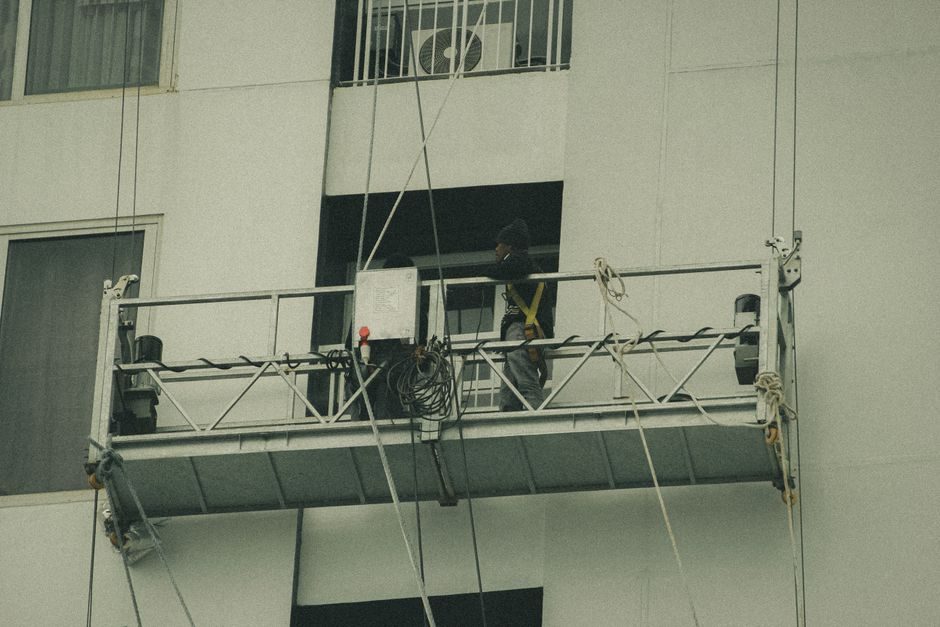
A mobile aluminum platform ladder of the TUBESCA SHERPAMATIC type is rated for single-operator, low-to-mid-rise indoor maintenance with a working height typically up to ~4 m on level industrial floors, with a 150 kg load class common to EN 131-2 professional series [S1]. The Munk Günzburger 05001 mobile aluminum platform ladder series adds REACH-compliance material declarations and documented frame geometry, targeting the same low-rise, single-rigger niche [S2]. For access above roughly 8 m, or whenever a crew, tools, and a workpiece must be carried aloft on a continuous working face, the equipment class shifts from a ladder to a suspended working platform governed by EN 1808.
Aluminium Enterprises (Kolkata, founded 2000) and Foshan Xingon (founded 1996, 30 years of profile extrusion) supply the bulk of catalog aluminum ladders sold through industrial channels in 2026, while US-side distributors AlacoLadder.com and Metallic Ladder still publish the LOFT/ladder-repair policy paperwork that most procurement teams require for warranty sign-off [S3][S4][S5][S6]. On the suspended side, the comparable suspended working platform product class is a powered cradle winched on wire ropes from a roof-mounted suspension rig.
Working-Height Envelope: Where Each Class Stops
Catalog aluminum platform ladders cluster at platform heights of 1.0-2.5 m, giving effective working reach of ~3-4.5 m for an average-height operator; step-stool and stock-picker variants in the SHERPAMATIC family stay below 3 m of working reach [S1]. Munk Günzburger's 05001 mobile platform ladder, with its documented REACH-compliant aluminum extrusions, follows the same envelope and is sold for warehouse picking, HVAC service, and switchgear rooms where a rolling base beats a fixed step [S2]. The standard that frames the upper limit is EN 131-2 for professional use, with a 150 kg (1 person + tools) load rating, anti-slip stiles, and a 1.0 m minimum guardrail on integrated platforms.
Suspended platforms begin where ladders become unsafe: their typical operating envelope starts at roughly 8-10 m of façade height and extends through 50-150 m on high-rise maintenance contracts, with twin-rope and single-rope configurations sized to platform length. For an apples-to-apples decision tree, a buyer who can solve the access problem with a single worker, a tool bag, and reach under 5 m is in ladder territory; anything that needs a crew of two or more, a continuous working surface, or vertical travel above ~8 m has moved into suspended platform territory.
Load Class, Crew Size, and Working-Surface Type
An aluminum platform ladder is a one-person working surface: EN 131-2 professional platforms are rated 150 kg total, meaning roughly 100-120 kg of operator plus 30-50 kg of tools before the unit is overloaded [S1][S2]. Munk Günzburger's 05001 datasheet explicitly calls out the platform-and-mobile combination, with a single-operator stance and a toe-board that confines loose parts to the deck [S2]. A suspended working platform, by contrast, is sized by platform length and live load in kg/m²: a typical 2 m × 0.7 m cradle is rated 240 kg total, and a 6 m twin-rope cradle for window-cleaning crews is commonly rated 500 kg across two workers plus equipment.
For multi-trade façade work (cladding panels, glazing units, signage), a single ladder cannot carry the second worker or the staged materials; this is the workload signature that pushes the spec toward a suspended platform even when the building is only 12 m tall. For warehouse racking, the inverse logic applies: a rolling aluminum platform ladder with a 75-100 mm-diameter swivel castor set and a parking brake fits a 1.0-1.2 m-wide aisle, while a suspended platform is mechanically meaningless inside a rack row.
Compliance Frame: EN 131 vs EN 1808
Aluminum platform ladders sold in the EU in 2026 carry the EN 131-2 professional mark, including stile-flatness, rung-strength, anti-slip-foot, and platform-guardrail tests, and many industrial buyers now also request the REACH declaration of conformity for aluminum alloy and any plastic or rubber component, as shown in the Munk Günzburger 05001 listing [S2]. TUBESCA's SHERPAMATIC platform-ladder listing calls out the safety-cage option, which converts a single-platform step into a guarded access tower for maintenance crews climbing a fixed ladder run on a tank or silo [S1]. US procurement against the same equipment class typically references ANSI A14.2 for portable ladders and OSHA 1910.23 for fixed-ladder fall protection; that standard pair is not interchangeable with EN 131 and must be specified separately on the PO.
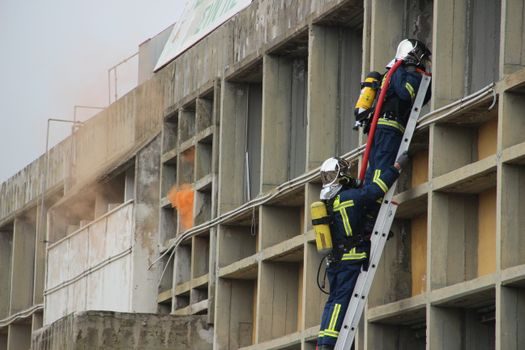
Suspended work platforms are a separate, stricter regime. EN 1808 governs the safety requirements for suspended access equipment, covering wire ropes, secondary safety devices, overspeed brakes, roof anchors, and the rated load calculation. In the US, the same equipment falls under OSHA 1926.451 (scaffolds) and, for permanent installations, ASME A120.1. The compliance path is therefore not "ladder plus extras" - it is a different code set with its own inspection, anchor-design, and operator-certification chain.
Mobility, Surface, and Site Constraints
An aluminum mobile platform ladder needs a flat, hard surface: castors are sized for concrete and smooth resin floors, not for gravel or soft ground, and the parking brake locks one or two wheels while the operator works [S1][S2]. A suspended platform has no ground-contact constraint - it hangs from a parapet, a davit arm, or a roof-track system - so it is the only practical option when the ground is a glass canopy, a water feature, or active plant traffic. For indoor retrofit work above a cleanroom ceiling grid, neither a ladder nor a wheeled platform is safe, and a suspended platform rigged from the structural slab above is the standard solution.
Set-up time also separates the two: a SHERPAMATIC-type mobile platform ladder deploys in roughly 2-5 minutes by one worker, with no anchor and no rope inspection log; a suspended platform requires a rigging plan, anchor proof-load documentation, wire-rope inspection records, and an operator with platform-training certification per EN 1808. For a 30-minute bulb change at 4 m, a ladder is correct; for an eight-week re-glazing contract, a suspended platform is correct - the total cost of rigging is amortized over the working hours, while the ladder setup is a tax paid every visit.
Cost, Lead-Time, and Total-Use Economics
Catalog pricing for an EN 131-2 aluminum mobile platform ladder in mid-2026 sits in the €250-€900 band for 2-6 step units, with safety-cage and larger-platform options pushing the top end above €1,500; suppliers like Aluminium Enterprises (Kolkata) and Foshan Xingon (Guangdong, founded 1996) quote competitive export FOB for both single-platform and extension-ladder formats [S3][S4]. Distributor channels such as AlacoLadder.com and Metallic Ladder add US-side stocking, warranty administration, and downloadable policy forms (LOFT, credit application, ladder-repair policy) that procurement teams need to keep their vendor files current [S5][S6].
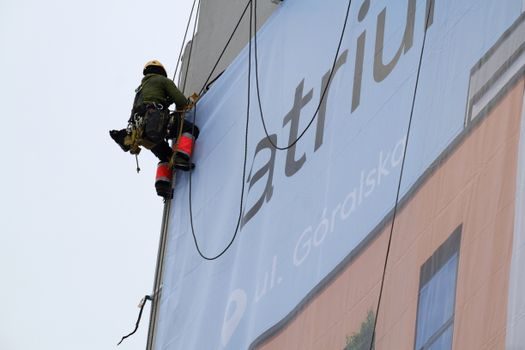
A suspended platform's capital cost is roughly 10-30× a single ladder once the cradle, hoists, suspension rig, secondary safety device, and roof anchors are itemized, and the recurring cost is dominated by rigging labour and re-inspection per EN 1808. The break-even math is therefore not "ladder price vs platform price" but "platform price ÷ façade hours" against "ladder price × number of visits × crew size". A two-visit, two-hour job is a ladder job; a 200-hour, multi-visit contract is a platform job. Procurement teams that mix both - a rolling aluminum platform ladder for warehouse work plus a contracted suspended platform for the annual façade clean - cover the full access envelope without owning the heavier class.
Decision Matrix: Ladder, Mobile Platform Ladder, or Suspended Platform
Use this four-criterion grid when the access problem sits on the boundary: [S1]
- Working height ≤ 4-5 m, single operator, ≤ 150 kg load, ≤ 2 hours per visit, flat floor: aluminum platform ladder, EN 131-2, optional safety cage [S1][S2].<br>- Working height 5-8 m, single operator, fixed structure (tank, silo, machine): fixed aluminum ladder run with safety cage, EN 131-1/131-2, or a self-supporting aerial work platform.<br>- Working height 8-50 m, 1-2 operators, continuous façade or soffit: suspended platform per EN 1808, with documented anchor and rope inspection.<br>- Working height 8-150 m, multi-trade crew, multi-week programme: twin-rope suspended platform per EN 1808 plus a suspended ceiling-style modular cradle if overhead MEP access is needed.
The grid is intentionally conservative: if any one criterion crosses into the next row, the equipment class has to change, because a ladder cannot legally be tied off as a substitute suspended platform, and a suspended platform cannot legally be used as a one-person warehouse picker on castors.
For related access-equipment decision cuts, see the aluminum ladder selection spec-gate guide and the demolition-hammer joules-and-vibration buying guide for the power-tool side of the same maintenance crew.