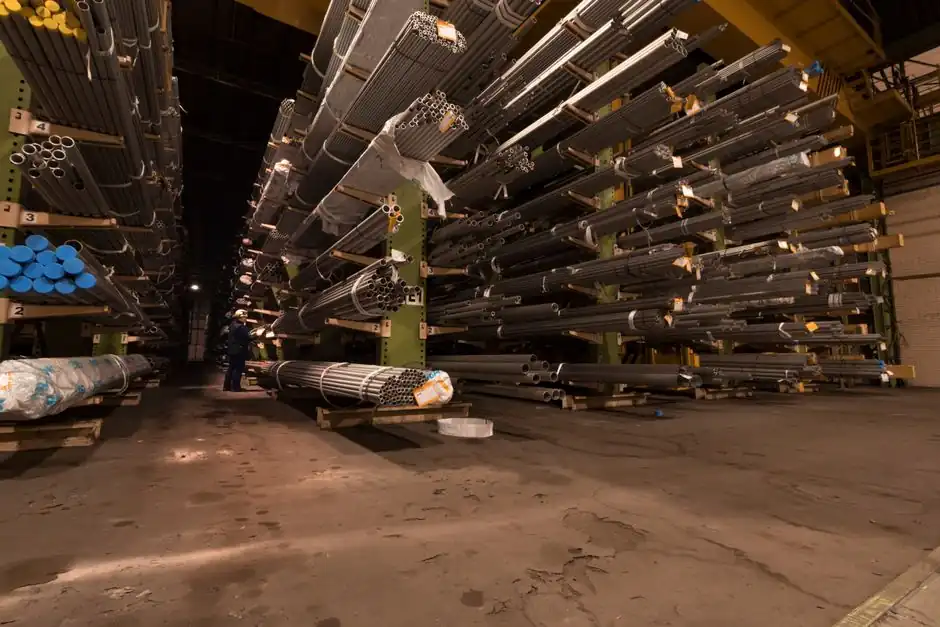
Aluminum sourcing from China in 2026 is no longer a single channel: the country runs three parallel pools (primary mill product, large-group castings, and secondary scrap) that each demand different paperwork, Incoterms, and MTC discipline.
Industrial buyers comparing offers from 1050/1060/3003 coil mills, top-10 integrated casters, and UBC/6063/A356 scrap aggregators should fix alloy designation, temper, and inspection scope before negotiating price, because each pool has a different failure mode and a different recovery route once a container is already on the water.
Three Supply Pools, Three Different RFQs
Primary mill product in China is dominated by 1xxx, 3xxx, and 5xxx/6xxx series coils, sheets, strips, and extrusions. The product line published by Sinoaluzinc in 2026 lists 1050, 1060, and 3003 aluminum coils, sheets, and strips as standard SKU [S2]. Mingtai Aluminum, ranked in the 2026 top-10 Chinese aluminum casting plants, separately covers 1-8 series aluminum plate, strip, and foil [S4]. For a buyer, this means a single 1050-H14 coil RFQ can be routed to a strip mill, a casting plant, or a downstream service center with three different cost stacks.
Scrap forms a third pool that looks like a primary buy but behaves like a commodity trade. Chinese scrap buyers in 2026 actively procure Used Beverage Cans (UBC, baled to specified density/moisture limits to limit oxidation losses during ocean freight), 6063 extrusion offcuts from window/door/cladding (stripped of rubber, glass, and steel reinforcement), and A356 alloy wheels from the automotive stream [S3]. ZLM-series castings are also traded but must be segregated from wrought alloys to preserve metallurgical integrity [S3].
Mill Test Certificate (MTC) Is the Single Hard Gate
The Mill Test Certificate is the only document that links a specific heat/lot to a verifiable chemistry and mechanical result, and it is the first checkpoint that any China-sourcing playbook (steel or aluminum) insists on reading line by line [S2]. For aluminum, the buyer should require the MTC to state alloy designation (e.g. 1050, 3003, 6063-T5), temper, tensile/yield strength, elongation, and the actual lot number traceable to the coil ID or extrusion bundle.
Cross-checking the MTC against the buyer's PO is the cheapest insurance available: substandard materials, missing parts, and wrong specifications are the three failure modes most often reported when first-time China importers skip this step [S1]. For 6063 architectural extrusion, an MTC mismatch typically shows up as a hardness or wall-thickness drift, while 1050/1060 coil mismatches usually appear as a coating or gauge deviation discovered at unloading.
Factory vs Trading Company: The Core Vetting Question
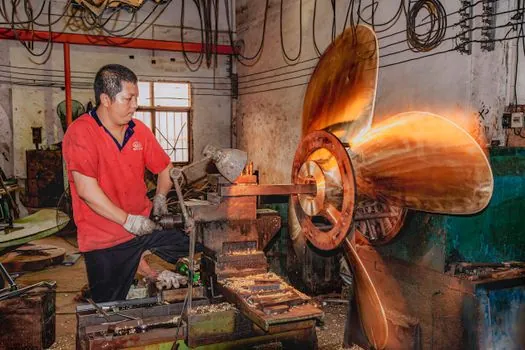
Many Chinese aluminum suppliers listing on global B2B platforms claim to be manufacturers, but a meaningful share are trading companies reselling mill or scrap output under their own letterhead [S1]. For primary mill product, this matters less if the MTC is genuine, but for castings and extrusions the distinction changes who controls tooling, lead time, and corrective action on defects.
The 2026 top-10 Chinese aluminum casting plant ranking illustrates the integrated model: Aluminum Corporation of China (Chinalco) and Shandong Weiqiao both run closed-loop chains from bauxite/alumina through primary aluminum to deep processing and recycled aluminum, while Xingfa Aluminum supplies conductive profiles for metro locomotives and Minfa Aluminum operates two production centers focused on architectural and industrial profiles [S4]. An RFQ that reaches one of these groups directly typically returns a different lead time and a different MTC format than one routed through a Ningbo- or Foshan-based trading house.
Incoterms, MOQ, and the Real Cost Stack
FOB, CIF, and DDP are the three Incoterms most commonly offered on Chinese aluminum quotations, and each shifts a different portion of logistics risk onto the Chinese side [S2]. FOB keeps freight and insurance with the buyer, CIF bundles ocean freight, and DDP includes duty-paid delivery to the buyer's dock, which is the only term where the quoted number equals landed cost. The buyer's selection should track inventory carrying cost, not just per-kg price.
Minimum order quantities (MOQ) on Chinese aluminum are quoted in metric tons and vary by alloy and form: scrap programs (UBC, 6063 offcuts, A356 wheels) typically consolidate into mixed containers, while mill coils and architectural extrusions are quoted per full production batch [S2][S3]. A useful rule of thumb: any quoted unit price that is 20% or more below the prevailing market level is a fraud red flag and should be re-verified with a fresh MTC and a third-party pre-shipment inspection [S2].
Quality Control: Pre-Shipment and Container Loading

Pre-Shipment Inspection (PSI) and Container Loading Inspection (CLI) are the two field checks that catch defects a desk review cannot. For aluminum, a PSI should sample coils or extrusions for gauge, width, surface finish, and (where relevant) coating weight, while a CLI verifies that the loaded coil IDs match the packing list and that dunnage is correctly placed to prevent transit deformation [S2].
For scrap loads, the field check shifts to contamination: UBC bales must meet density and moisture targets with steel tabs and plastic liners minimized, 6063 offcuts must be free of gaskets, glass, and steel reinforcement, and cast aluminum must be de-oiled and dried to keep iron content and hydrocarbon residue within the smelter's acceptance window [S3]. Failure on any of these points typically triggers price deduction or outright rejection at the port of entry.
Scrap-Side Pricing: Why Alloy Drives the Payout
Scrap pricing in 2026 is alloy-driven, not weight-driven. UBC commands premium pricing because its consistent alloy composition supports closed-loop can-to-can recycling with minimal energy input, while 6063 extrusion scrap is favored by Chinese smelters supplying the construction and infrastructure sectors for its corrosion resistance and weldability [S3]. A356 alloy wheels from the automotive stream hold value because their predictable chemical profile supports remelting into new wheel and casting stock [S3].
Mixing wrought 6063 with cast ZLM-series alloys, or loading oily cast turnings, is the most common cause of price deduction at the receiving smelter; exporters who segregate at source and document the segregation on the packing list routinely clear customs faster and settle on the higher tier of the buyer's published payout range [S3].
Comparison: Primary Mill vs Casting vs Scrap

Primary mill product (1050/1060/3003 coils, sheets, strips) suits buyers who need tight gauge tolerance, EN/ASTM-grade MTC, and a stable per-ton cost stack, with a typical friction point being 20-30 day mill lead time and MOQ in tons [S2]. Large-group castings (Chinalco, Weiqiao, Nanshan, Mingtai, Xingfa) suit buyers who need tooled, value-added parts and can accept a longer quotation-to-sample cycle tied to pattern and die work [S4]. Scrap (UBC, 6063 offcuts, A356 wheels) suits buyers with remelting capacity, who can absorb contamination risk in exchange for the lowest metal cost, and who can perform the segregation work that unlocks premium pricing [S3].
For procurement teams cross-sourcing other non-ferrous inputs, the same spec-first discipline used here (MTC gate, Incoterm clarity, PSI/CLI field check) also applies to adjacent streams covered in our rare earth sourcing guide and our lithium sourcing from China: 2026 spec-first buyer guide.
What This Guide Is Not For
This guide is not for buyers sourcing consumer-grade finished aluminum goods (kitchenware, ladders, decorative panels) for retail; those categories use different HS codes, different packaging standards, and different retail-compliance documentation, and they are covered in our reference pages on aluminum ladders, aluminum veneer panels, and aluminum windows and doors. It is also not a price index: published 2026 sell-side data sets per-ton prices for Chinese primary and scrap aluminum, but RFQ-level pricing is alloy-, temper-, and Incoterm-specific and must be re-quoted each cycle. [S3]
For teams still in the alloy-selection stage, the broader property and grade reference on aluminum alloys is a useful precursor, and the related procurement track on industrial linear guide sourcing follows the same MTC + Incoterm logic applied here.