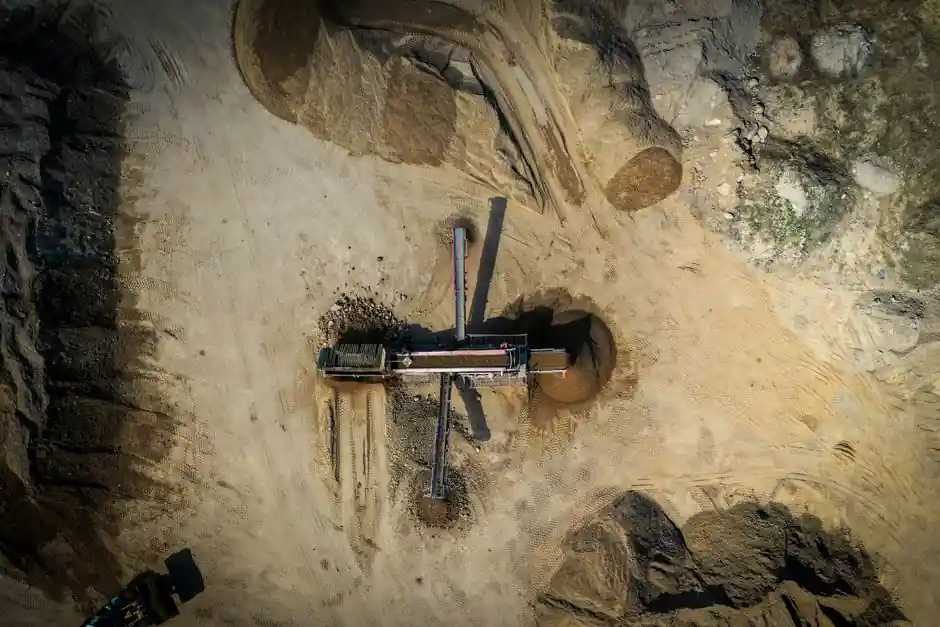
Buyers specifying rare earths in 2026 must treat the material as a supply-controlled input, not a commodity: China mines about 60% of global output, processes and separates roughly 90%, and manufactures about 94% of REE-based magnets, while the U.S. produced only 51,000 metric tons of REO equivalent in 2025 from two mines [S1].
Effective procurement now depends on five engineering decisions: which of the 17 REEs (15 lanthanides plus scandium and yttrium) the design actually needs, the oxide or metal purity grade, the magnet or non-magnet form, the qualifying country of origin for the separated oxide, and the stockpile and recycling buffer that absorbs licensing shocks such as the 2025 PRC controls on Sm, Gd, Tb, Dy, Lu, Sc, and Y [S1][S8].
Element Selection: Map the Design to the LREE/HREE Split Before You Quote
Light rare earths (LREEs) lanthanum, cerium, praseodymium, neodymium, samarium, europium, and gadolinium dominate catalysts, polishing compounds, and glass, while heavy rare earths (HREEs) terbium, dysprosium, holmium, erbium, thulium, ytterbium, lutetium, plus scandium and yttrium are the bottleneck in high-temperature NdFeB magnets, phosphors, and defense-grade optics [S1].
NdFeB magnets are the dominant industrial use case and rely on Nd, Pr, Tb, and Dy, with Dy added specifically to raise the Curie temperature and resist demagnetization at 150-200°C operating points typical of EV traction motors and wind turbine generators; specifying the magnet grade (N35SH, N42UH, N48AH for example) fixes the Dy/Tb content before the procurement team can negotiate [S1].
Buyers should split their BOM by application tier: magnets (Nd, Pr, Tb, Dy), catalysts (La, Ce, Nd, Pr), metal alloys and battery precursors (Nd, Y, La, Ce, Pr), phosphors (Eu, Tb, Y, Er, Gd, Ce, Pr), and ceramics (Y, Eu, Dy, Lu, Gd, La, Ce, Pr) [S1]. That tier-by-tier split makes the export-control exposure visible, because every HREE-heavy tier is now license-controlled under the 2025 PRC regime expanded in 2026 [S8].
Form and Purity Specs: Oxides, Metals, Alloys, and the Waste Penalty
Industrial lots are typically traded as rare earth oxide (REO) equivalent for statistical reporting, but delivered as separated oxides (e.g. Nd₂O₃ at 99.5-99.99% purity), metals (Nd metal 99% min), or ferroalloys, depending on the downstream process [S1][S6].
Extraction waste ratios can reach up to 2,000 tonnes of waste per tonne of rare earths depending on the process route, and the extremely similar chemical properties of rare earth elements make separation complex, directly impacting cost, purity, and supply stability for industrial buyers [S4].
The same numeric discipline applies to non-REE process inputs, which is why spec-first reference pages such as the industrial valve selection guide exist; material and dimensional spec discipline is the same craft across all process equipment.
Supply Concentration: The 60/90/94 Risk Triangle and the 2025-2026 Licensing Shocks
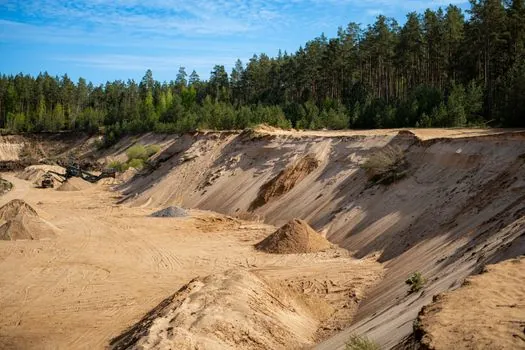
Three ratios define the buyer's risk: roughly 60% mined in China, about 90% processed and separated in China, and approximately 94% of REE-based magnets manufactured in China, while non-Chinese reserves sit in China (44 million MT), Brazil (21 million MT), Australia (6.3 million MT), and Russia [S1].
In 2023 the PRC banned export of REE processing and refining technologies; in 2025 export controls were announced on Sm, Gd, Tb, Dy, Lu, Sc, and Y; in 2026 the licensing net widened to include samarium, gadolinium, and lutetium for new license categories, and these are exactly the elements used in SmCo high-temperature magnets, Gd-bearing phosphors and MRI contrast agents, and Lu-bearing PET detector scintillators [S1][S8].
For U.S. defense and energy programs, the same dependence shows up in downstream components the spec team is already buying, and the spec discipline carries over to industrial flow and pressure hardware; see the pressure transmitter selection reference for how a controlled-input spec list is structured when the supply side is constrained.
Sourcing Levers: Primary Mining, Secondary Recovery, and Stockpile Buffer
Primary supply outside China is concentrated in the U.S. Mountain Pass (California) and a Georgia operation, with 2025 output of about 45,000 MT and 6,000 MT REO equivalent respectively, plus Australian output near 29,000 MT and Burmese production around 22,000 MT, all of which still depend on Chinese or other offshore separation capacity for many individual oxides [S1].
Secondary supply is scaling fast: acid mine drainage (AMD) recovery and end-of-life magnet recycling are both being piloted at the engineering scale, with a 2026 Minerals Engineering assessment framing AMD recovery as a network sourcing strategy rather than a single-plant solution [S7]. Permanent-magnet recycling from EV motors, wind generators, and HDDs is the most direct route back to Nd, Pr, Dy, and Tb, but recovery yields and impurity profiles must be qualified per batch [S2][S7].
The third lever is strategic stockholding: USA Rare Earth has indicated it may supply REEs to the U.S. stockpile to help reduce reliance on Chinese material, and the DOE critical minerals strategy explicitly adds recycling and reuse as one of four pillars alongside supply diversification, substitutes, and materials/manufacturing efficiency [S1][S2]. A workable buffer for an industrial buyer is to maintain 6-12 months of magnet-grade NdPr and Dy inventory at the oxide or alloy stage, paired with a qualifying second-source audit under the same 4N assay spec.
Comparison of Sourcing Strategies on the Decision Criteria That Matter

Four sourcing strategies line up against the criteria a 2026 procurement team actually scores: (1) primary Chinese oxide, (2) non-Chinese primary oxide (Mountain Pass, Australian, Brazilian feedstock separated offshore), (3) secondary recovery (magnet recycling, AMD), and (4) strategic stockpile / qualified buffer [S1][S2][S5][S7].
On HREE access, primary Chinese oxide scores highest for Sm, Gd, Tb, Dy, Lu, Sc, Y but now requires the 2025-2026 export license; non-Chinese primary is constrained on HREE separation; magnet recycling is strongest on Nd, Pr, Dy; and AMD recovery is a distributed network play with lower per-element purity [S1][S7][S8]. On price stability, recycled NdPr typically trades at a premium in tight markets but with less licensing risk, and the non-Chinese primary route carries a 2-3x separation premium because of the limited non-PRC separation capacity [S5]. On ESG and waste, recycled and AMD routes avoid the ~2,000 t/t waste ratio of primary chemical leaching; on lead time, stockpile buffer is the only option that can absorb a sudden license revocation, and the 2026 expansion to Sm, Gd, and Lu licensing is exactly the kind of trigger it is sized for [S4][S8].
Spec Documentation and Compliance for License-Controlled Elements
For Sm, Gd, Tb, Dy, Lu, Sc, and Y, the shipment file must include a copy of the Chinese export license (where applicable), the importer-of-record declaration, the dual-use classification, the assay certificate on a TREO basis, the isotope purity check (in particular for Sm, Gd, and Eu where cross-contamination shifts magnetic and optical performance), and the country-of-origin declaration back to the mine and the separation plant, not just the trading entity [S1][S8].
Spec sheets should also record the form factor (oxide calcined at 800-1000°C, metal vacuum-cast, or hydrogen-decrepitated NdFeB strip), packaging under argon for air-sensitive metals, and shelf-life assumptions; the same documentation discipline is used for adjacent process consumables, including the flow meter selection reference which documents the spec envelope that a qualified second source must hit.
For a European or Swedish industrial buyer the same ruleset runs through the Business Sweden 2026 resilient value chains framing, which positions non-Chinese separation, recycling, and magnet manufacturing as the three capture points, with public-private partnership funding as the de-risking layer [S5].
Failure Modes and Constraints to Engineer Around
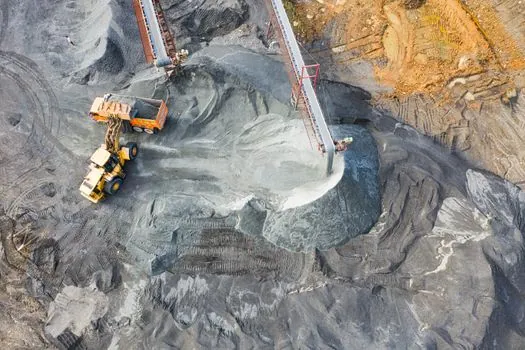
Four failure modes recur in REE procurement: (1) single-supplier lock-in on a license-controlled HREE that is suddenly restricted, (2) off-spec recycled feedstock (high oxygen, carbon, or co-precipitated iron that breaks NdFeB grain-boundary engineering), (3) assay drift between shipments from the same supplier (NdPr ratio shift that changes magnet Br), and (4) substitution failure when Dy is removed to chase cost, dropping the motor's continuous operating temperature from 150-180°C down to 80-100°C [S1][S4].
The hard constraint is that separation capacity remains the chokepoint, not mining: non-Chinese mines can ship concentrate, but converting that concentrate into separated 4N oxides still depends on a thin non-PRC separation base, and licensing risk on processing technology (the 2023 PRC ban) limits how fast new separation plants can be brought up outside China [S1][S5].
The same constraint pattern shows up in any spec-driven build, and is one reason a linear guide selection reference or a crossed-roller guide selection reference exists; in each case the buyer is locking critical tolerances before negotiating supply, and the audit cost of a bad lot is paid in the field, not on the purchase order.
Track these signals over the next two quarters: any new additions to the PRC export-license list beyond Sm, Gd, Tb, Dy, Lu, Sc, and Y; first commercial output from non-Chinese separation projects (U.S., Australian, European); and the first qualifying volumes of recycled NdPrDy at 4N from magnet-to-magnet loops [S2][S5][S8].