
China manufactured roughly 1,240 GWh of lithium cells in 2025, about 67% of the 1,850 GWh global output, and shipped USD 76.7 billion in lithium-ion batteries, up more than 25% year on year [S1].
Q1 2026 lithium battery exports alone reached USD 23.95 billion, a 54.7% jump, and Chinese-controlled projects are projected to lift China's share of global lithium extraction to 39% by 2030 [S1][S5].
Why China Anchors the Lithium Supply Chain
The Chinese lithium stack runs from spodumene and salt-lake refining through cathode/anode active material, separator film, electrolyte, cells, BMS electronics, pack assembly, aging labs, and recycling, all inside one customs border [S1]. That vertical depth is why a compliant Chinese factory lands 45–70% below Western brands and 12–28% below Southeast Asian OEMs on identical spec sheets with full certification [S1]. The same depth is also why a first-time buyer can be buried in choice: thousands of cell vendors, dozens of credible ones, and a long tail of workshops with a laser engraver and a glossy catalog.
Concentration at the top is real and measurable. CATL held about 40.7% of global EV battery installations in 2025; CATL and BYD together controlled roughly 54.8% [S1]. Tier-1 Chinese cell makers named across multiple 2026 buyer guides include CATL, BYD, EVE Energy, Gotion, CALB, Sunwoda, Farasis, REPT BATTERO, and SVOLT [S7]. For most industrial buyers, the realistic question is not "China or not" but "which cluster, which cell grade, and which cert chain".
Cell Chemistry and Format: LiFePO4 vs NMC vs LFP vs 18650/21700
LiFePO4 (LFP) cells dominate Chinese energy-storage, e-bike, e-scooter, and low-voltage EV packs because of thermal stability and cycle life; NMC (nickel-manganese-cobalt) cells go into higher-energy-density applications where pack weight matters more than absolute cycle count [S1]. Cylindrical formats 18650 (18 mm × 65 mm) and 21700 (21 mm × 70 mm) remain the workhorse form factors for portable power, power banks, and many ESS modules, while prismatic and pouch cells dominate automotive and stationary storage. For spec-first buyers, the chemistry call is a pack-life and safety call, not a brand call.
Format and capacity directly drive the dangerous-goods paperwork downstream. UN3480 covers lithium-ion cells and packs shipped standalone; UN3481 covers lithium-ion cells and packs packed with, or contained in, equipment; UN3090 and UN3091 are the lithium-metal equivalents (primary lithium, not the Li-ion chemistries above) [S2]. A buyer who cannot state chemistry, watt-hour rating, voltage, cell-vs-pack status, and built-in vs standalone at quote time is not ready to ship, and carriers will refuse the booking.
Cell Grades A vs B vs Recycled: The Question Most Buyers Forget to Ask
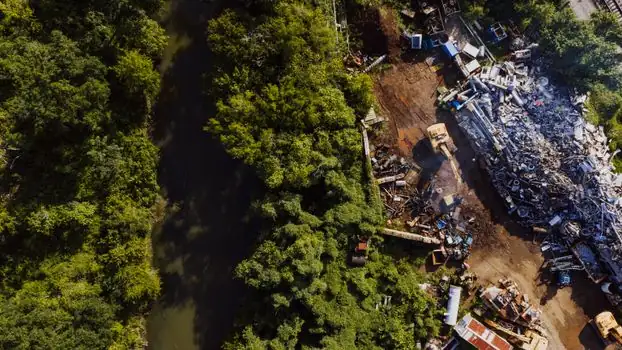
Inside the Chinese supply chain, "Grade A" means brand-new cells from a tier-1 or credible tier-2 maker with full traceability and matching date codes; "Grade B" means second-life or B-stock cells (test pulls, overstock, minor cosmetic blemish, often with reduced cycle-life guarantees); "refurbished" or "recycled" cells have been re-wrapped, re-coded, or relabeled and frequently carry inflated capacity claims [S1]. A polished recycled 18650 looks identical to a Grade A EVE or BAK cell on a desk, and behaves very differently after a few hundred cycles in the field.
Verification that separates a real cell factory from a workshop: laser-etched date codes that match the supplier's date-code table, capacity test reports on a calibrated cycler (not a self-declared PDF), on-site video of the production line and aging racks, and a refusal to substitute without written notice [S1].
Certifications and UN38.3: The Paper That Stops the Container
Lithium batteries are UN Class 9 dangerous goods, and UN38.3 (the UN Manual of Tests and Criteria, section 38.3) is the transport-test report that customs and carriers ask for before the booking is confirmed [S1][S2]. A valid UN38.3 must cover altitude simulation, thermal, vibration, shock, external short circuit, impact, overcharge, and forced discharge, and the cell or pack part number on the report must match what is physically in the carton. The shipping guide at JTLGO lists the minimum document set as MSDS, UN38.3 test summary, product photos, battery label, carton mark, and the supplier's export documents, with missing paperwork flagged as a hard risk before any route is quoted [S2].
Beyond UN38.3, Chinese dry-cell and lithium-cell shipments to the EU now need to clear EU 2026 battery updates that introduce stricter supply-chain due diligence and carbon-footprint declarations, plus zero-heavy-metal thresholds of <0.0005% mercury and <0.002% cadmium on primary cells, and RoHS/REACH SVHC compliance on non-active materials [S3]. IEC 60086-1 and IEC 60086-2 compliance test reports are still required for primary cells, and IEC 62133 is the parallel safety standard most buyers ask for on Li-ion packs. None of these replace UN38.3; they stack on top of it.
Shipping Mode and Route Screening: Air vs Sea vs DDP
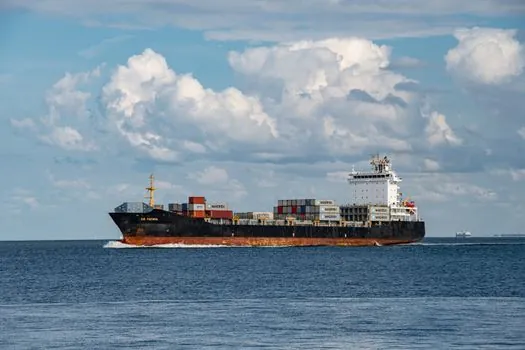
Air freight is fast but tightly restricted: most passenger aircraft will not accept standalone lithium-ion packs above 100 Wh without airline approval, and cargo carriers apply strict state-of-charge limits (typically ≤30% SoC for air) plus specific packing instruction PI 965 to PI 970 depending on cell-vs-pack and standalone-vs-in-equipment status [S2]. Sea freight is the default for full containers, with Packing Instruction PI 968 covering standalone cells and PI 969/PI 970 covering packed-with or contained-in-equipment configurations, and DDP (delivered duty paid) hands the customs and last-mile burden to a Chinese freight partner who already knows the cell and pack paperwork.
The route-screening step is the one most first-time buyers skip. JTLGO's DG freight checklist explicitly reviews chemistry, watt-hour, voltage, cell-vs-pack, and built-in-vs-standalone status, then matches the cargo to UN3480, UN3481, UN3090, or UN3091 before any rate is quoted [S2].
Pricing, MOQ, and Incoterms: What a Real Quote Looks Like
For a compliant Chinese factory with full UN38.3, IEC 62133, and MSDS, FOB China prices for Grade-A 18650 3000 mAh cells commonly sit in the USD 1.10–1.60 per cell band in mid-2026, and Grade-A 280 Ah LFP prismatic cells for stationary storage in the USD 60–95 per cell band depending on cycle-life spec and BMS integration [S1]. The "12–28% cheaper than Southeast Asia" margin only holds for like-for-like certified product; a non-certified cell from an unknown workshop will always beat it on price, and always loses on field failure cost.
MOQ is chemistry- and pack-specific, not a single number. A first order of cylindrical 18650/21700 cells typically starts at one full export carton (a few hundred to a few thousand cells) for sampling and 5,000–10,000 cells for production; a 5 kWh–10 kWh residential LFP pack line commonly requires 50–200 packs for the first production run to amortize the BMS programming and aging-rack time [S1]. True landed cost, not FOB unit price, is the metric that matters: Purchase Price + Freight & Duty + Defect Rate Costs + Warranty/Return Claims, and a 3% defect rate on a leaking alkaline or swelling Li-ion pack will erase any unit-price savings [S3].
Supplier Audit Workflow: From Inquiry to First Container
A defensible 2026 sourcing workflow for a first-time Chinese lithium buyer runs in five gates: (1) chemistry, format, voltage, capacity, and cycle-life spec locked in writing, with the cell part number cross-referenced to a public datasheet; (2) supplier shortlist filtered to factories that hold UN38.3 on the exact part number, plus IEC 62133 for Li-ion or IEC 60086 for primary cells; (3) on-site or live-video audit of the production line, aging racks, and warehouse, with a sample of 5–10 cells pulled for independent capacity testing; (4) trial order of one export carton to validate packing, label, MSDS, and UN38.3 paperwork end-to-end through customs; (5) only then, a full production PO with a written substitution and deviation clause [S1][S2].
For industrial buyers already running process equipment and instrumentation, the supplier-audit discipline is the same as auditing a pressure transmitter vendor or a flow meter line: ask for the test report on the exact part number, verify it independently, and refuse any substitution that is not paper-trailed. The same rigor applies when qualifying a linear guide or industrial valve supplier for a production line, since the failure cost of a Grade B cell in a solar-storage rack and a mis-rated valve in a chemical skid are both paid long after the PO is closed.
Use Cases, Limits, and When NOT to Source from China
China is the right source for verified LiFePO4 stationary storage, e-mobility packs, portable power stations, 18650/21700 consumer cells, and large-format prismatic cells with full UN38.3 and IEC 62133, with the price and supply-chain depth that no other region currently matches [S1][S7]. It is also where the widest range of adjacent energy hardware sits, which is why integrated buyers moving into solar-plus-storage or PV-plus-battery product lines often find a single-supplier trip covers panels, inverters, lithium batteries, and mounting structures at once [S8].
China is the wrong source when the buyer cannot verify the supplier, when the destination market bans the cell chemistry (some marine and aerospace certifications still restrict NMC in confined spaces), when the application is medical or safety-critical without a local notified-body review, or when the buyer's order volume is below the factory MOQ and forces a trading-company middleman with no UN38.3 traceability. Buyers looking at adjacent power-electronics sourcing, for example a fleet or stationary hydrogen fuel cell build, face the same audit chain: spec, cert, witness test, trial order, then scale.
Track these signals over the next two quarters: the EU 2026 carbon-footprint declaration templates becoming enforceable on imported cells, China's share of global lithium extraction crossing the 35% line on the way to the 39% Wood Mackenzie projection for 2030, and the next round of Q2–Q3 2026 export data to confirm whether the +54.7% Q1 growth rate holds through the shipping peak [S1][S5].