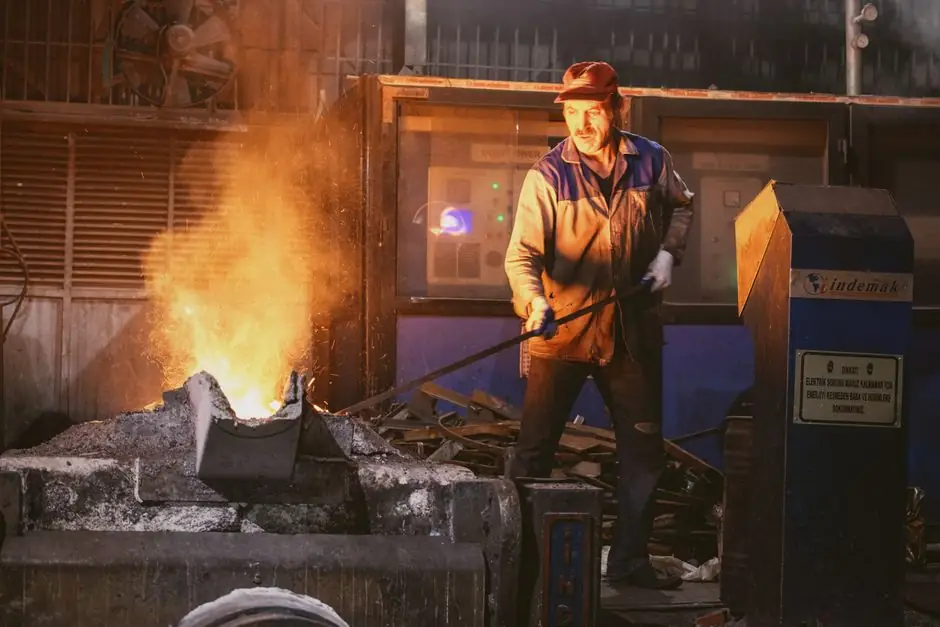
Squeeze casting of aluminum alloys hits near-zero porosity when applied pressure lands in the 20 to 30 MPa window and is held for 5 to 10 minutes through the entire solidification phase, per the IntechOpen process review by Adediran et al. (2022) [S2].
That 20 to 30 MPa band sits an order of magnitude above the 0.05 to 0.15 MPa typical of low-pressure die casting air pushes, and roughly 200 times higher than the 0.1 MPa head pressure of gravity pouring, which is exactly why the resulting density approaches forged stock instead of conventional cast stock [S2][S6].
Why 20 to 30 MPa: Process Mechanics and Grain Response
Pressure in the 20 to 30 MPa range is the value band where the molten aluminum stays in intimate contact with the die wall through the entire solidification interval, suppressing both gas porosity and shrinkage porosity simultaneously [S2]. The squeeze casting process combines casting and forging in a single step, and the forging element is the punch pressure that compresses the still-plastic alloy as grains form [S4].
Direct squeeze casting applies pressure through a hydraulic punch on a poured cavity, while indirect squeeze casting pushes metal through a thicker gate at a lower velocity than high-pressure die casting, then ramps to the same peak pressure window [S4]. Pressure is maintained until the casting is fully solid; under that sustained load, dendrite fragments shift, micro-voids collapse, and the grain structure tightens, raising the density of the final part to roughly the level of forged material [S4][S5].
Pressure-Tight Performance Benchmark: Beyond 200 bar
Castings made in the 20 to 30 MPa squeeze window routinely hold pressure beyond 200 bar in hydraulic leak testing, a level that conventional high-pressure die castings cannot meet without vacuum assist or squeeze-pin retrofits [S7]. For comparison, an aluminum HPDC cell running 250 to 1600 tons of clamp force can hit leak-free performance only when paired with vacuum assist and squeeze-pin technology to compensate for the missing solidification pressure [S3].
The mechanism is straightforward: in standard HPDC, the metal freezes from the gate outward and heavy-mass zones go underfed, leaving shrinkage porosity and leak paths [S3]. Squeeze casting's slow fill and continuous punch load feed the heavy zones until the last degree of solidification, so the same part that fails a pressure test as a die casting passes it as a squeeze casting [S4][S7].
Comparison Against Competing Near-Net Shape Routes
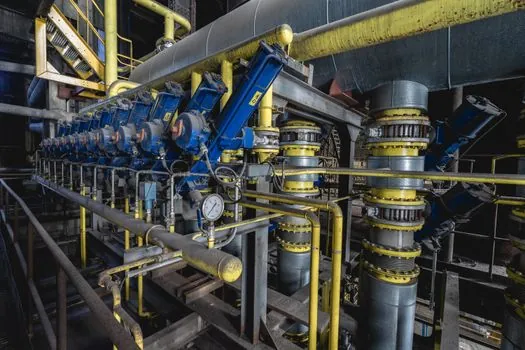
Selecting among squeeze casting, low-pressure die casting, vacuum HPDC, and squeeze-pin HPDC comes down to four criteria: peak pressure on the solidifying shell, internal porosity, strength, and cycle time. The table below lines the four options against the same four metrics using data from the cited sources [S2][S3][S6][S7].
Process, peak pressure, porosity, tensile strength, cycle time: Squeeze casting, 20 to 30 MPa, near-zero, approaching forged, 5 to 10 min hold [S2]; Low-pressure die casting, 0.05 to 0.15 MPa, less than 0.5 percent internal and under 0.1 cubic centimeter per 100 g aluminum, at least 280 MPa, short [S6]; Vacuum-assisted HPDC, HPDC injection pressure, low gas porosity, HPDC-grade, seconds [S3]; Squeeze-pin HPDC, HPDC injection plus local pin displacement, low in heavy zones, HPDC-grade, seconds [S3].
For zero-porosity requirements, squeeze casting is the only one of the four that meets the spec without retrofitting the cell [S7]. For low-porosity, cycle-time-sensitive work, vacuum HPDC or squeeze-pin HPDC is the cheaper call [S3][S7].
Machine Sizing: Why Clamp Force Below 50 MPa Will Not Work
Die casting cells under 50 MPa clamp force cannot deliver the 20 to 30 MPa sustained-on-shell pressure that defines a real squeeze casting station, regardless of how the OEM markets the press [S2][S3]. The HPDC clamp range of 250 to 1600 tons on aluminum cold-chamber machines is a locking force, not a solidification force, which is the source of the leak-path failures in heavy-mass cast sections [S3].
Specifying engineers should require that vendors quote two distinct numbers: peak injection pressure (in MPa) and sustained solidification pressure (in MPa) for the full 5 to 10 minute window [S2]. If the second number is not on the data sheet, the press is an HPDC, not a squeeze caster, and the leak-tight guarantee does not apply [S3][S7].
Material Range, Limits, and Where Squeeze Casting Loses

Squeeze casting accepts a broader material envelope than HPDC, including magnesium, copper, ferrous, and nonferrous alloys in addition to aluminum [S4]. Aluminum-magnesium alloys are the most common automotive target because the process matches forged density while keeping casting-style geometry freedom [S5].
The process is, however, slower than HPDC, the upfront tooling investment is heavier than gravity casting, and the part envelope is bounded by press platen size rather than by clamping tonnage as in HPDC [S3][S5]. For high-volume runs where a 5 to 10 minute solidification hold is economically unacceptable, vacuum-assisted HPDC or squeeze-pin HPDC remain the right call [S3][S7].
Specifying standards in the squeeze casting process literature in the cited sources are limited to ISO 9001:2015 quality systems at the foundry level and metallurgical/NDT lab verification on the part level, which is why buyers should confirm both certifications during supplier audits [S3].
Selection Checklist for a 2026 Squeeze Casting Cell
For an aluminum structural or pressure-tight component on a 2026 spec, confirm that the press can sustain 20 to 30 MPa on the shell for the full 5 to 10 minute solidification window, that the quoted peak equals the sustained value (not just an injection peak), and that the cell can be platen-sized for the largest part in the program rather than for tonnage [S2][S3]. Buyers who care about pressure tightness beyond 200 bar should write that 200 bar number into the acceptance test, since castings that pass that threshold match what squeeze casting routinely delivers [S7].
Trackable signals to watch over the next two quarters: OEM disclosures of sustained solidification pressure in MPa rather than clamp tonnage, and field data on whether liquid metal forging variants of squeeze casting push the upper end of the 20 to 30 MPa window or settle near 25 MPa for standard automotive pistons. Related process coverage on ADC12 versus A380 injection pressure and on the aluminum alloy page gives the material-side data for the same aluminum family that squeeze casting targets, while the squeeze casting machine reference covers the equipment envelope covered here.
Component reference pages worth checking: aluminum die casting machine.