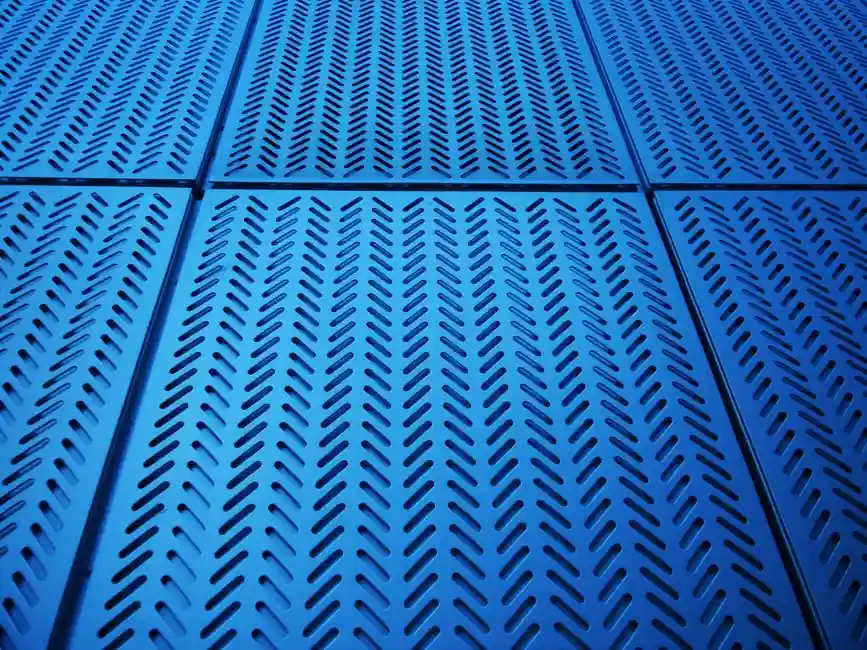
Aluminum honeycomb cleanroom panels (painted steel face, aluminum honeycomb core, painted steel back) are specified for cleanroom wall panels, ceiling panels, and door infills in modular wall systems, with non-outgassing, non-particle-shedding, and non-combustible performance for microelectronics and pharmaceutical enclosures [S1][S5].
Coated aluminum panels and stainless steel are the two material families most commonly selected to meet cleanroom durability, smooth-surface, and cleanability requirements under ISO 14644 and GMP [S2]. For a spec-first walk-through of aluminum veneer panel grades used in clean environments, the envelope choice typically reduces to honeycomb-core, aluminum-composite, or solid coated sheet.
Three Panel Families Engineers Actually Compare
Aluminum honeycomb panels are non-outgassing, non-particle shedding, anti-static, lightweight, and non-combustible, which makes them the most popular wall panel choice for microelectronics cleanrooms [S5]. Painted steel/aluminum face sheets bonded to a honeycomb core give the flat, monolithic surface cleanroom finish protocols require, and they double as a finished aluminum alloy face for areas where FRP or stainless is over-spec.
Aluminum-composite panels pair a painted aluminum skin with a high-density corrugated polypropylene or solid polyethylene core that will not swell, corrode, rot, wick water, or delaminate under prolonged water exposure, useful in wash-down and GMP suites [S5]. Fire-and-sound panels layer an outer gypsum skin (Class A non-combustible rating) over a polystyrene core with vinyl, steel, aluminum, or FRP facings, and post published STC and R-value numbers in a single table, see below [S5].
STC, R-Value, and Thickness: The Hard Comparison
Cleanroom wall panel suppliers publish acoustic and thermal data in a three-column thickness table (2", 3", 4⅝"), and aluminum honeycomb reads STC 20 / R-Value 3 across all three thicknesses, while fire-and-sound reads STC 32 / R-Value 3 at 2", stepping to STC 31 / R-Value 11 at 3" and R-Value 16 at 4⅝" [S5]. FRP-faced panels trade acoustic performance for chemical resistance, posting STC 24 / R-Value 7 at 2", STC 20 / R-Value 13 at 3", and STC 20 / R-Value 20 at 4⅝" [S5].
For ISO 14644-1 Class 5-7 microelectronics suites, the specifier is paying roughly 12 STC points of sound isolation to keep the non-outgassing, non-combustible aluminum-honeycomb construction; if speech privacy or equipment noise matters, the fire-and-sound gypsum-faced panel is the engineering trade [S5]. Coated aluminum and stainless steel both satisfy the smooth-surface, easy-clean, and microbial-resistance clauses baked into cleanroom material specifications [S2][S4].
Compliance Drivers and Where Each Material Wins

Cleanroom construction is governed by ISO 14644, GMP, and FDA-adjacent regulations, and material selection directly impacts certification outcome: non-shedding, easy-to-clean surfaces that resist microbial growth are the baseline; corners and joints must be designed to minimize crevices where particles can accumulate [S2]. Joints should be sealed and corners cove-radiused so dead pockets do not trap ISO 14644-1 counted particles [S4].
Stainless steel, coated aluminum, and aluminum honeycomb panels with cleanroom-grade coatings are the three options that consistently meet those surface requirements, with stainless preferred for high-bioburden or harsh chemical wash-down, coated aluminum preferred where weight and cost matter, and aluminum honeycomb preferred for microelectronics and modular wall systems [S4][S5]. Aluminum-core cleanroom panels are also described as lightweight, cost-effective, and widely used for structural integrity in modular systems, a useful framing when the build is a relocatable ISO suite rather than a permanent slab [S3].
Insert-Style vs Sandwich-Style Wall Construction
Insert-style cleanroom walls use extruded aluminum frames with thin insert slots that accept panel materials from 1/8" to 3/8" thick, enabling tool-free assembly and fast remodel cycles [S5]. Pre-assembled 4' x 8' wall panels ship on a pallet and latch together, cutting enclosure build time versus traditional stick-built cleanrooms, with the insert-style approach a lower-cost alternative to sandwich panels when 1/4" clear polycarbonate viewing panels replace conventional windows [S5].
For spec-driven construction procurement, the rule of thumb is: sandwich panels (honeycomb, composite, fire/sound) for finished, monolithic runs; insert-style frames for reconfigurable suites, ISO upgrades, and rental/demo enclosures. The aluminum extrusions integrate gasket seals and door frames directly, which is why aluminum window door sub-systems share the same extruder base for cleanroom projects that need sealed vision panels.
Surface Coatings, Profiles, and Cleanroom-Grade Finishes
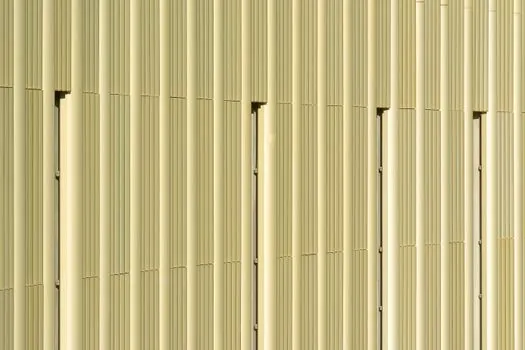
Cleanroom-grade aluminum honeycomb panel systems carry a cleanroom-grade coating, paired with a smooth painted-aluminum or painted-steel skin so the surface can survive repeated IPA, hydrogen peroxide, and quaternary ammonium wipe-downs without pinhole failure [S4]. Coated aluminum panels and stainless steel both meet the durability, smooth-surface, and ease-of-maintenance clauses under ISO 14644 and GMP [S2].
Aluminum profiles for cleanrooms are a separate sub-class, designed to meet the stringent requirements of cleanroom facilities and ensure a contaminant-free enclosure, with non-standard sections for door frames, coving transitions, and HEPA/FFU ceiling grids [S6]. For residential or architectural-grade specs that bleed into cleanroom-adjacent areas (gown rooms, air locks, packaging rooms), the Aluminum Veneer Panel Selection for Residential Builds: 2026 Spec Map covers the architectural side, while this map covers the controlled-environment side.
Selection Criteria and Decision Matrix
For ISO 14644-1 Class 5 semiconductor or hard-disk cleanrooms, specify aluminum honeycomb sandwich panels, painted steel or aluminum face, 2"-4⅝" thickness, accept STC 20 / R-Value 3 in exchange for non-outgassing, non-combustible, anti-static performance [S5]. For USP 797 / USP 800 pharmaceutical and compounding rooms, specify coated aluminum or stainless steel sandwich panels, sealed joints, and coved corners, with FRP as the wet-side alternative where chemical exposure is the dominant stressor [S2][S4][S5].
For modular, relocatable ISO 8 suites and CMM/inspection rooms, specify insert-style extruded aluminum frames with 1/8"-3/8" insert panels in aluminum or polycarbonate, which trades the monolithic acoustic performance of a sandwich panel for build/remodel speed [S5]. For data-center-controlled environments and ESD-sensitive electronics back-of-house, coated aluminum veneer pairs naturally with aluminum honeycomb panel ceilings and is a common specifier pairing when both cleanroom and IT-suite requirements overlap.
Limitations, Failure Modes, and Watch-Outs

Aluminum honeycomb panels run STC 20 flat across 2", 3", and 4⅝" thicknesses, so acoustic privacy is the real ceiling, not wall thickness, and a sandwich-panel specifier must add a separate acoustic treatment or accept lower STC than a fire/sound gypsum-faced build [S5]. Coated aluminum can fail at cut edges and penetrations if the cleanroom-grade coating is not continuously restored after MEP tie-ins, and the specifier should require field-repair coating kits on the submittal.
Insert-style walls accept inserts only 1/8"-3/8" thick, so heavy structural loads, large mechanical services, or thick fire-rated assemblies push the project back to sandwich panels [S5]. Aluminum honeycomb is non-combustible but the panel-to-panel joint is the weak link for fire rating unless a tested joint system is specified; for projects that need both cleanroom and rated assembly, require the panel vendor to publish a tested joint detail, not a generic gasketed seam.
Sourcing, Standards, and Trackable Signals
Material compliance is documented through ISO 14644 cleanliness classification, GMP material-contact requirements, and FDA-adjacent audit trails, with material certifications, particle-count tests, airflow visualization, and pressure-differential measurements forming the validation package [S2]. Specifiers should require mill certs on the aluminum alloy face sheet, coating-system data sheets, and a panel-to-panel joint detail on the submittal set before release.
Track these signals on the next sourcing cycle: (1) vendors publishing tested joint details for both cleanroom and fire-rated assembly on the same panel; (2) aluminum honeycomb and FRP sandwich panels expanding published acoustic data beyond STC 20-24 to support higher-classification suites; (3) cleanroom-grade coating systems with documented resistance to vaporized hydrogen peroxide (VHP) at typical room concentrations for bio-pharm suites.