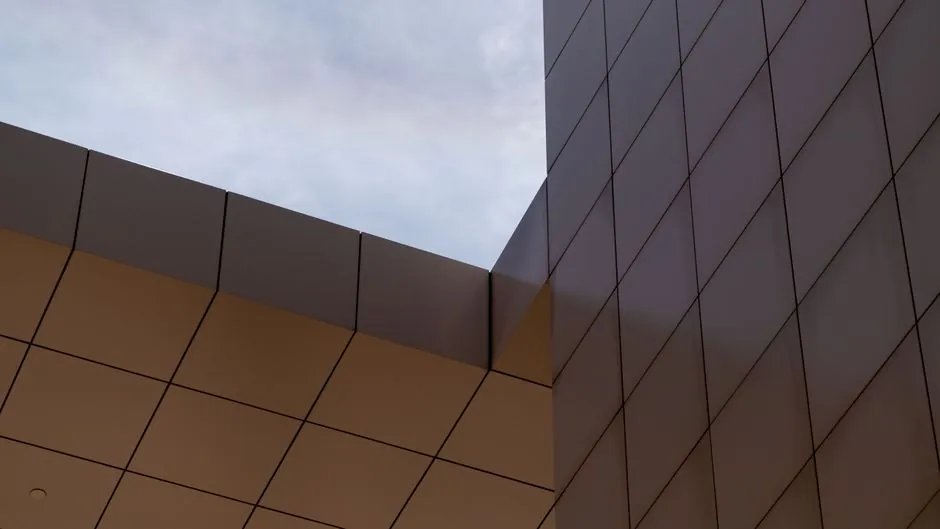
Residential-grade aluminum veneer is almost always specified as AA1100 pure sheet or AA3003 alloy at 2.5–3.0 mm for exterior façades, with light-gauge 0.8–1.0 mm sheets laminated to a backer for interiors [S4][S1]. A 4 mm aluminum composite panel (two 0.5 mm skins over a core) is the dominant alternative when weight, flatness and budget dominate over single-piece metal feel [S4][S5].
The wrong pick is rarely the metal itself: it is the wrong core, wrong coating system, or wrong edge detail for the wall it sits on. A 2.5 mm solid aluminum panel on a 6 m coastal façade and a 4 mm PE-core ACM on a mid-rise lobby wall are two different specification exercises, even though the catalog descriptions look similar [S5][S7].
Solid Veneer vs. ACM vs. Honeycomb: Three Real Options
Three product families compete in the residential exterior wall market: solid aluminum veneer, aluminum composite panel (ACM), and aluminum honeycomb panel; the first two cover roughly the entire detached-housing and low-rise multifamily segment [S4]. Solid aluminum veneer is a single rolled sheet, typically AA1100 or AA3003, in 2–4 mm gauge with 2.5 mm as the most common default; the surface is fluorocarbon (PVDF) sprayed after sheet-metal fabrication [S4].
ACM is a sandwich of two ~0.5 mm aluminum skins bonded to a 3–4 mm core, total panel thickness 3–6 mm with 4 mm as the architectural standard in North American commercial practice [S5]. A typical 4 mm PE-core ACM costs roughly 120 RMB/m² less than 2.5 mm solid veneer in the Chinese market, which on a 1,000 m² façade is about 1.2 million RMB of material delta [S4]. Honeycomb panels enter the picture mainly for very large or impact-loaded panels, not for typical residential cladding [S4].
Coating, Finish and Fire-Rated Core Specs That Decide the Job
PVDF (polyvinylidene fluoride) and FEVE resin coatings are the exterior default because they hold colour and gloss through summer UV and winter de-icing salt exposure, and they back the typical 20-year finish warranty carried by architectural aluminum veneer [S1][S5]. AAMA 2605 is the high-performance exterior finish benchmark most often cited on millwork and feature-wall sheets; the same datasheet also lists ASTM E84 Class A fire rating, CAN/ULC-S102 compliance, and a minimum 20% post-consumer recycled content [S1].
For fire compliance, the core dictates what you can build: PE (polyethylene) cores are combustible and limited to low-rise residential and interior signage; FR (fire-retardant) cores add mineral additives that slow flame spread; A2 cores are tested as virtually non-combustible and are required on most high-rise and many mid-rise façades in jurisdictions such as Ontario [S5]. Specifiers on tall residential blocks should require CAN/ULC-S134 test data with the panel submittal, not just a generic Class A label [S5].
Weight, Flatness and the Structural Sub-Framing Question
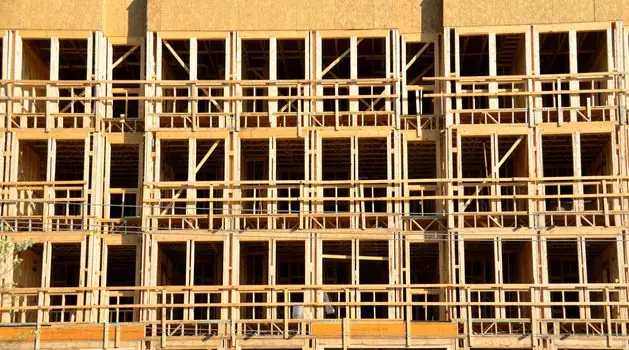
Solid 2.5 mm AA3003 aluminum weighs about 6.75 kg/m²; a 4 mm PE-core ACM weighs roughly 5.5 kg/m² for the same face area, and the dead-load difference compounds over a full façade [S4][S3]. ACM's stiffness comes from the sandwich geometry, not the metal: two 0.5 mm skins around a 3–4 mm core behave like a much thicker plate in bending, which is why 4 mm ACM can span typical stud spacing without the oil-canning that 0.8–1.0 mm architectural sheet shows if it is not laminated to a backer [S5][S1].
For interiors, the working range is 0.8 mm to 1.0 mm light-gauge sheet, sold as flat stock up to 48″ × 177″ and laminated to wood, phenolic or honeycomb backers by the millworker, never used as a self-spanning skin [S1]. Pure + FreeForm publishes the 0.8–1.0 mm window for this product class, and explicitly notes that flat sheets of 1 mm are the default for its Stocked Finish Program on millwork [S1]. Any interior spec above 1.0 mm should be treated as a cladding spec, not a millwork spec, and pushed back through structural review.
Where Solid Veneer Wins, Where ACM Wins, Where Neither Fits
Solid 2.5 mm AA3003 is the right pick when the design calls for crisp folded returns, deep reveals, formed column covers, or impact-prone ground-floor conditions, and the budget can absorb the material premium [S4]. ACM is the right pick on large flat expanses above ~3 m, on light-gauge steel stud framing, and on any project where panel size multiplied by 120 RMB/m² actually swings the bid, which on multi-building residential developments it almost always does [S4][S3].
Neither is appropriate as a waterproof barrier on its own: both are detailed as drained-and-ventilated rainscreens with a separate weather-resistive barrier behind, and the seams must be sealed or drained or moisture will enter the wall, regardless of how the panel is fastened [S3]. Rain noise is a known acoustic complaint on thin aluminum skin without acoustic backer, and denting from hail or impact is a real risk on low-gauge, unreinforced stock, which pushes the spec toward heavier gauge or a backer in storm-exposed regions [S3].
Specification Checklist a Residential Designer Can Hand to a Supplier
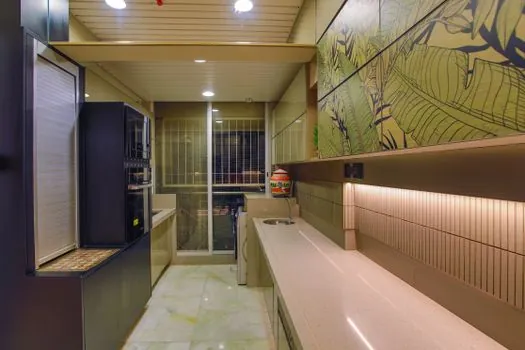
Every residential submittal for exterior aluminum veneer should carry, at minimum, the alloy and temper (AA1100 or AA3003), the thickness in mm, the coating system and resin type (PVDF or FEVE), the AAMA compliance tier where applicable, the core type and fire test report number, and the panel weight in kg/m² for the structural engineer [S4][S1][S5]. For interior millwork the same list compresses to alloy, gauge (0.8–1.0 mm), backer type, finish system, and edge condition [S1].
Two comparison points an estimator or owner will want: a 4 mm PE-core ACM runs roughly 120 RMB/m² under 2.5 mm solid veneer at 2026 China-market list pricing [S4]; and an architectural millwork sheet at 0.8–1.0 mm is typically sold in 48″ × up to 177″ stock sizes, which determines how many seams show on a feature wall [S1]. For a deeper look at the surrounding envelope, see the Building Stone Selection for Prefabricated Construction: 2026 Spec Map, and for the alloys themselves, the aluminum alloy reference covers the 1xxx/3xxx temper logic behind AA1100 versus AA3003. The aluminum veneer panel encyclopedia page is the right place to chase any term in this article that needs a longer definition.
Trackable signals to watch next: revisions to the National Building Code of Canada core-classification table for residential mid-rise wood-frame, and any move by U.S. residential building codes to adopt CAN/ULC-S134-style fire test data for PE-core ACM on buildings over three storeys, since both will re-rank the options above for detached and multifamily work [S5].
Component reference pages worth checking: construction tools.