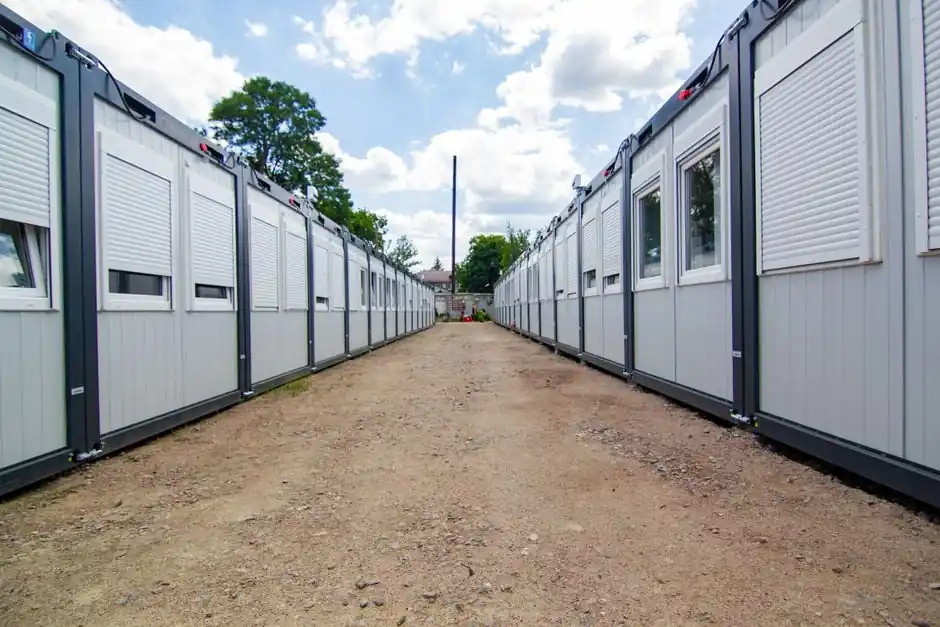
Granite, quartzite, and slate are the three natural stones most frequently specified for prefabricated and modular building envelopes in 2026, with marble reserved for interior pods where its veining is wanted but its softness and acid sensitivity are tolerable [S2][S5].
ASTM C-615, the Standard Specification for Granite Dimension Stone, is the governing reference for granite supplied into U.S. prefabricated cladding and is reviewed on a five-year ASTM technical-committee cycle, making it the anchor spec that stone buyers should require on mill certificates [S1]. For builders weighing material decisions across categories, the broader building stone reference catalogues the trade classifications that feed those mill certificates.
Geologic Families and Where They Fit in Prefab
Building stones are sorted into three geologic families: sedimentary (sandstone, limestone, dolomite), metamorphic (marble, slate, quartzite, gneiss, onyx, serpentine), and igneous (granite, basalt, gabbro, syenite, diorite, andesite), and each family maps onto different prefab envelope duties [S1]. Granite and basalt from the igneous family are favored where hardness, low porosity, and freeze-thaw durability matter; marble from the metamorphic family is preferred only in interior bathroom or reception modules where veining is a design driver, not a structural one [S1][S5]. Limestone and sandstone from the sedimentary family are widely used for lightweight modular landscaping and rustic-finish facades because they cut and shape easily, though their porosity forces sealing in any wet or polluted exposure [S2].
For teams also specifying tools to cut and anchor these panels, the cross-category construction tools reference covers the gang-saw and CNC equipment that makes factory-tolerance natural-stone panels possible in the first place.
ASTM Trade Classifications Buyers Should Require
ASTM C-615 sets the physical property limits that granite supplied into prefab cladding must meet, including minimum values for density, absorption, compressive strength, modulus of rupture, and abrasion resistance, and the standard is reviewed every five years by ASTM Committee C-18 [S1]. Marble is sorted into four soundness groups (A through D) based on the frequency of natural faults, veins, and voids, with Group A the most uniform and Group D the most heavily repaired using polyester resin or epoxy liners [S1]. Specifiers should match group letter to exposure: Group A or B for exterior prefab panels, Group C acceptable with reinforcement for interior pods, and Group D generally avoided in any load-path application [S1].
Imi, the International Masonry Institute, lists marble, granite, limestone, travertine, onyx, and quartzite as the six stone types most commonly used across its new-construction assemblies, which aligns with the modular-build emphasis on a small, well-characterised stone palette that mills can keep in consistent stock [S4].
Selection Criteria for Prefab and Modular Envelopes
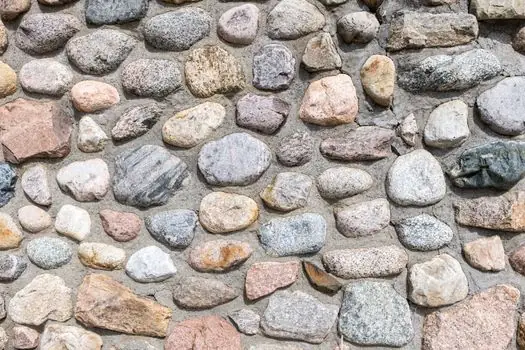
The Pebble Junction technical guideline lists surface finish, wear resistance, slip resistance, staining resistance, and a fifth factor (typically weathering or chemical resistance) as the primary selection criteria for any building stone going into architectural work, and these five criteria map directly onto prefab panel duty [S1]. For modular flooring inserts in hotels and hospitals, slip resistance and stain resistance dominate; for exterior cladding panels, weathering, freeze-thaw, and abrasion dominate; for bathroom and kitchen pods, chemical resistance to acids and cleaning agents is the deciding factor [S3][S5]. Granite's low porosity and hardness satisfy the first two exposures, marble satisfies the third only when polished and sealed, and quartzite satisfies moisture-heavy kitchen and bathroom pods where marble would etch [S2][S5].
Natural stone's lifecycle cost typically beats fabricated alternatives because natural stone ages without losing structural integrity, while engineered stone can fade or require replacement sooner, a payback case that becomes more attractive the longer the facade warranty term [S3]. The four-decision-criteria comparison below lines the main options against the metrics that drive prefab procurement:
Granite scores high on hardness, low on porosity, mid on weight, and high on cost; marble scores mid on hardness, mid on porosity, mid on weight, and high on cost; quartzite scores high on hardness, low on porosity, mid on weight, and high on cost; slate scores mid on hardness, low on porosity, low on weight, and mid on cost; sandstone scores low on hardness, high on porosity, low on weight, and low on cost [S2][S5].
Modular-Specific Fabrication and Logistics
Modular construction demands factory-tolerance thickness, repeatable finish, and pre-cut panel geometry so that modules can be craned into place without on-site dressing, and modern gang-saw plus CNC cutting now allows granite and marble to be pre-cut into precise, lightweight panels that snap into modular wall and floor systems [S5]. Pre-fabrication in this workflow reduces on-site cutting dust and waste, accelerates installation once modules arrive, and lengthens the interval between facade replacement cycles [S5]. For buyers used to sourcing mechanical hardware, the cross-discipline building pipe hardware reference sits in the same prefabrication ecosystem where stone-cladding subframes and anchoring devices are specified.
Pre-cut natural stone panels carry more weight per square metre than engineered alternatives, so module framing and lifting points must be sized for the heavier dead load, and natural stone contains no resins or binders, which is a sustainability plus for projects targeting bio-based or low-VOC material credits [S5]. The natural-stone-versus-engineered trade is summarised cleanly in GrabMyStone's panel table: unique appearance, excellent durability, heavier weight, higher upfront cost, and quarried-but-resin-free for natural stone, against uniform appearance, very-good durability, lighter weight, lower upfront cost, and resin-bound for engineered stone [S5].
Failure Modes and What to Specify Against Them

Limestone is soft relative to granite and marble, prone to scratching, and reactive to acids and chemicals, so it must be sealed for any long-term use and is generally restricted in modular kitchen or industrial-cleaning exposures [S2]. Marble is slippery when polished, prone to staining and scratching, and demands frequent sealing, which is why it is held back to interior pods rather than exterior prefab cladding [S2]. Sandstone weathers to unique textures but its grainy surface is more porous than granite, requiring sealing where freeze-thaw or acid-rain exposure is expected [S2]. Improper installation is the single biggest cause of premature stone failure, so good drainage, correct anchoring, and joint design per the Pebble Junction technical guideline are non-negotiable even when the stone itself is correctly selected [S1][S3].
Standards, Sourcing Signals, and 2026 Tracking Points
ASTM C-615 is the central U.S. reference for granite dimension stone and is on a five-year review cycle through ASTM Committee C-18, so any 2026 procurement should pull the current edition and check the physical-properties table against the mill certificate [S1]. The Imi new-construction stone assembly page remains the practical entry point for architects choosing between brick, concrete masonry, plaster, rainscreen, stone, terrazzo, and tile cladding systems in prefab envelopes [S4]. For European modular hotel and hospital projects, CE marking under EN standards and quarry-origin traceability are the equivalent gating documents, though those exact references sit outside the supplied research and should be confirmed with the project's notified body. Trackable signals into 2026 include wider specification of quartzite in modular bathroom pods, continued growth of gang-sawn granite panels in prefab facade modules, and gradual displacement of polished marble from exterior prefab duty back into interior reception and lobby modules [S2][S5]. For engineers cross-referencing material decisions with related quartz material selection for rail and industrial machinery selection, the same factory-tolerance logic that drives modular stone panels drives modular composite panels and CNC-cut machinery bases.