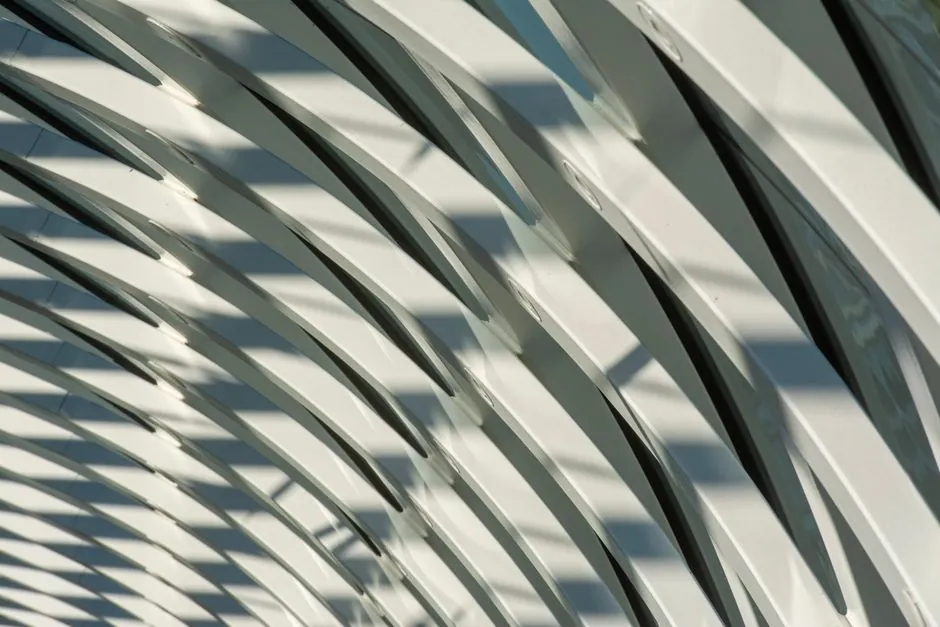
Solid aluminum veneer in 1.5–3.0 mm gauge, 3000/5000 series alloy, with PVDF or AAMA 2605 fluorocarbon finish, is the safer default for primary, middle, and university facades where A1 non-combustibility, weather resistance, and a 20-year finish warranty are all required [S1][S5].
ACP (aluminum composite panel) with a fire-retardant mineral core remains an option for budget-driven flat curtain-wall runs, but for classrooms, libraries, dormitories, gymnasiums, and labs the specifier is generally pushed toward solid veneer, AAMA 2605 high-performance exterior finishes, and ASTM E84 Class A fire-rated assemblies [S1][S2][S5].
School Building Types and Panel Suitability
Aluminum veneer panel systems are specified across primary schools, middle schools, university teaching buildings, libraries, laboratories, student centers, lecture halls, dormitories, gymnasiums, campus entrances, and canopy areas, covering both exterior walls and entrance canopies on the same campus [S2]. For an educational campus, the same 1.5–3.0 mm solid aluminum sheet can be cut into flat, curved, folded, perforated, carved, and special-shaped panels so one substrate covers a teaching block, a library soffit, a perforated auditorium baffle, and a sunshade fin [S2][S5].
Light-gauge metal veneer (0.8–1.0 mm) laminated to a wood, phenolic, or honeycomb backer is reserved for interior millwork such as reception desks, signage, lockers, and casework, not for exterior school facades [S1]. For K-12 classrooms specifically, finished aluminum panels closest to the windows are used to shade interior learning spaces while still allowing outdoor views, which is one of the documented high-performance use cases for architectural aluminum on school campuses [S7].
Material, Alloy, and Thickness Decision
Solid aluminum veneer is typically produced from AA1100 pure aluminum sheet or AA3003 aluminum alloy, with 2.0–4.0 mm being the common exterior thickness band and 2.5 mm cited as a frequent default [S6]. Alu NJJX similarly defines solid veneer as 1.5–3.0 mm of 3000 or 5000 series alloy, contrasting it with ACP's two thin skins bonded to a polyethylene or fire-retardant mineral core [S5].
For school exteriors, the AAMA 2605 high-performance exterior designation is the finish spec to write, because it covers UV degradation, chemical exposure, color fade, chalking, and gloss loss, and Pure + FreeForm warrants that combination on 100% aluminum, recyclable panels for 20 years [S1]. PVDF (polyvinylidene fluoride) coating is the cross-vendor finish equivalent used on K-12 painted aluminum wall panels, where the campus palette was specified in Agate Gray, Gray Cashmere, Semolina, and Silk Gray [S3].
ACP vs. Solid Veneer on the School Project

ACP and solid aluminum veneer can both deliver a sleek metallic PVDF finish, but they behave very differently once the school architect pushes the design past a flat rectangle. ACP's sandwich structure gives superior flatness over large elevations and is significantly lighter, reducing dead load on the school structure and lowering install labor; that is why ACP dominates high-rise flat curtain walls and tight-budget commercial signage [S5].
Solid veneer, by contrast, can be welded, folded into tight corners, and curved into double-curved shapes without losing integrity, which is what an auditorium ceiling, a perforated gymnasium baffle, or a curved entrance canopy asks for [S5]. For public buildings under the strictest fire codes, solid aluminum is naturally non-combustible and carries an A1 rating, while only specially formulated A2-class fire-retardant ACPs approach that performance, so solid veneer is generally preferred for auditoriums, stadiums, and other public infrastructure where A1 is mandated [S5].
On the school decision tree, the trade reads cleanly: pick ACP when the elevation is large, flat, and budget-bound; pick solid veneer when the geometry is curved, the perforations are intricate, or the local code insists on A1 non-combustibility [S5].
Fire, Finish, and Code Compliance Data Points
ASTM E84 Class A fire rating and CAN ULC-S102 compliance are stated performance points for architectural aluminum veneer panels finished to AAMA 2605, alongside HPD and LEED documentation and a VOC-free coating system [S1]. Painted aluminum wall panels on a school campus project were specified with PVDF coatings in Agate Gray, Gray Cashmere, Semolina, and Silk Gray, which is a real cross-vendor K-12 color palette worth lifting for new school specifications [S3].
Solid aluminum is non-combustible by nature and achieves an A1 rating, while the highest-performing fire-retardant ACP reaches A2, so for any school occupancy that falls under stricter public-building fire classes the specifier should default to solid [S5]. Pure + FreeForm's architectural aluminum veneer line is documented to contain at least 20% post-consumer recycled content and to be 100% recyclable at end of life, which supports LEED Material Credits on school builds [S1].
Customization, Installation, and Detailing
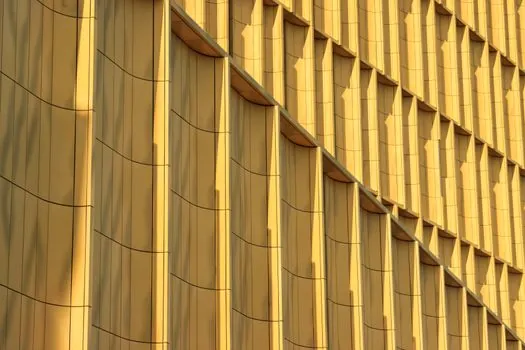
For school and university facade projects, panel thickness, size, color, surface finish, edge design, joint style, installation method, and supporting structure are all customizable from the same production line, and the system coordinates with glass curtain walls, entrance canopies, signage panels, sunshade structures, and exterior lighting [S2]. Finishes on offer include PVDF, powder coat, metallic colors, wood grain, stone-look, and custom matched colors, which is what lets a single campus carry a coordinated identity from the teaching block to the dormitory wing [S2].
Install sequence on a typical school curtain wall is bracket-and-subframe first, level-and-align check second, panel hang in planned sequence third, then reserved-position detailing for corners, edges, openings, and sealant joints, and a final alignment and joint-treatment inspection [S2]. A separate, lighter product line exists for interior millwork at 0.8–1.0 mm flat-sheet thickness, cut from 48 inch by up to 177 inch stock, with optional perforations and acoustic backing for library and cafeteria interiors [S1].
Comparison Table: Solid Veneer vs. ACP for Schools
The four criteria most often argued over on a school selection meeting are fire rating, geometry flexibility, weight, and budget. On fire rating, solid veneer scores A1 naturally while only A2 fire-retardant ACP can approach it; on geometry, solid veneer accepts welding, tight folding, and double curves whereas ACP is essentially limited to flat or single-curved panels; on weight, ACP's sandwich core is significantly lighter than a 2.5 mm solid sheet of the same size; on budget, ACP is generally cheaper because less aluminum is used per square meter [S5][S6]. For a K-12 classroom block where the elevation is flat and the budget is tight, ACP wins two of four; for an auditorium with curved ceiling baffles, solid veneer wins all four [S5].
Limitations, Failure Modes, and What to Avoid
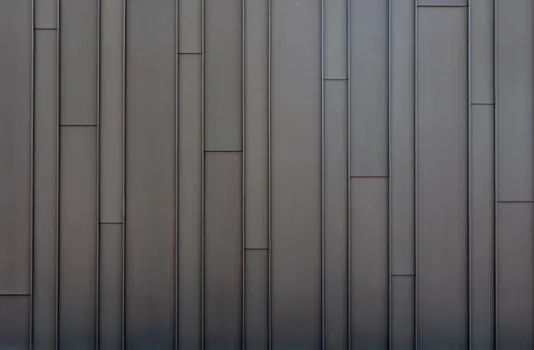
Light-gauge millwork veneer at 0.8–1.0 mm will crack or craze if it is formed too aggressively without proper backing, and it is not a substitute for an exterior-rated 2.0–4.0 mm solid panel on a school facade [S1][S6]. ACP with a standard polyethylene core is combustible and is not the right call for school assemblies, dormitory towers, or any area under stricter public-building fire classification; only A2 fire-retardant mineral-core ACP should even be considered, and even then it loses to solid aluminum on the A1 rating [S5].
For school projects near the ocean or in heavy industrial corridors, a PVDF or AAMA 2605 fluoropolymer topcoat is non-negotiable because polyester and standard powder coats fade and chalk noticeably faster under UV and chemical exposure [S1][S4]. Anodized finishes are durable but offer a narrower color range than PVDF, so a campus palette like Agate Gray, Gray Cashmere, Semolina, and Silk Gray is more reliably hit with PVDF than with anodizing [S3][S4].
Standards, Sourcing, and Verifiable Next Signals
Write AAMA 2605 high-performance exterior finish, ASTM E84 Class A fire rating, and CAN ULC-S102 compliance into the school facade spec section, and require the panel supplier to document at least 20% post-consumer recycled content with HPD and LEED paperwork at submittal [S1]. For solid veneer, cite the alloy (AA1100 or AA3003), the thickness band (2.0–4.0 mm, with 2.5 mm as a defensible default), and the panel system (perforated, curved, folded, or flat) on the same drawing [S2][S6].
For the related cleanroom envelope problem, the cross-over spec is very similar and is laid out in aluminum veneer panel selection for cleanrooms, where A1 non-combustibility, PVDF finish, and 1.5–3.0 mm solid sheet dominate for the same fire and cleanability reasons. The general substrate decision is also covered in the aluminum alloy encyclopedia entry, and the curtain-wall product family itself is catalogued under aluminum veneer panel for reference on tolerance and finish options. For an educational campus that mixes facade cladding with interior partitions and window-wall systems, the aluminum window door reference page covers the framing side of the same alloy and finish logic.
Trackable next signals: confirm the project's local jurisdiction classification of the school occupancy, since K-12, dormitory, and assembly-auditorium occupancies may be coded differently and drive the A1 vs. A2 call; require the curtain-wall submittal package to include the AAMA 2605 warranty letter, the recycled-content declaration, and the ASTM E84 / CAN ULC-S102 test reports before fabrication release [S1][S5].