
For a weighing integrator choosing a load cell module, the metal body is the spring element, so material sets capacity ceiling, corrosion survival, weight, and unit price all at once. Three families cover nearly every industrial order: aluminum alloys, alloy (tool) steels, and stainless steels, each with a defensible niche.
The cost spread is wide. A standard 1000 kg alloy steel shear beam typically lists at $80-120 versus $180-250 for the same geometry in stainless, a 30-50% premium for the stainless steel body [S1]. Aluminum single-point cells sit below both, which is why they dominate retail and packaging scales.
Alloy Steel: The Workhorse for Dry Industrial Weighing
Alloy steel cells in the 40CrNiMoA / AISI 4330 family are the most specified body material in industrial weighing, and the cost-to-performance ratio is the reason: properly heat-treated 4330 routinely exceeds 1700 MPa tensile strength, allowing compact designs for truck and rail scales that would be impractical in aluminum alloy [S1][S3].
The trade-off is corrosion. Without a nickel plate, epoxy coat, or zinc barrier, alloy steel rusts within weeks in humid service, and once the coating is scratched the underlying steel becomes a fatigue-crack initiator [S1]. Regulations including EU EC 1935/2004 and FDA 21 CFR rule nickel-plated alloy steel out of direct food contact, pushing food, pharma, and washdown plants toward stainless regardless of price [S1].
Stainless Steel: 17-4PH and 316 for Washdown, Marine, and Chemical Service
17-4PH precipitation-hardening stainless in the H900 condition reaches 1310 MPa yield, so it carries stainless-class corrosion resistance without giving up the strength an alloy-steel body delivers, and that is why it dominates precision cells from 50 kg to 50 t [S1]. For chloride-heavy service, 316 austenitic bodies are standard, and hermetically welded versions (welded cover plus welded cable entry) are specified wherever high-pressure washdown or immersion is routine [S3].
Stainless cells cost 30-50% more than equivalent alloy-steel units [S1], but the lifecycle math inverts in hostile service: a hermetically sealed stainless cell routinely outlasts three to five replacement cycles of plated alloy steel in chemical or marine duty, which is why OEM guidance for offshore platforms, fishing vessels, and pharmaceutical cleanrooms points almost exclusively to stainless [S1][S3].
Aluminum Alloys: 2024/2023 Single-Point Cells Under 100 kg
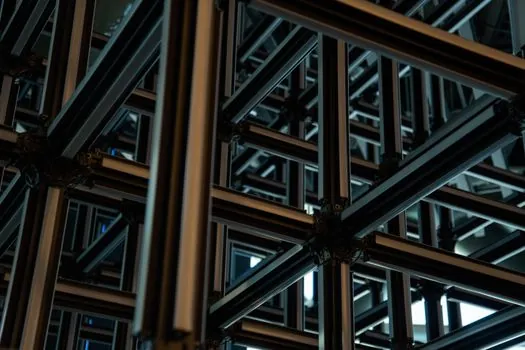
Aluminum single-point cells, almost always 2024 or 2023 stock for low creep and hysteresis, are the cheapest body available, and they are the default in retail scales, bench platforms, checkweighers, and packing machines where capacity stays under roughly 100 kg per point [S3][S4]. The same low density that makes them light also limits them: aluminum's elastic modulus is roughly one-third of steel's, so for the same mV/V sensitivity a steel body carries about three times the capacity of an aluminum body of the same geometry [S2].
Aluminum also loses on corrosion resistance. Plated or stainless steel out-performs even anodized aluminum in wet or chemical exposure, and aluminum is the only one of the three that is widely described as unsuitable for any wet or chemical environment without a sealed enclosure [S2][S3]. For an integrator weighing a multi-point platform above 100 kg per leg, aluminum is essentially off the menu.
Decision Matrix: Picking the Right Body Material
The short list that drives 90% of picks is environment, capacity, accuracy class, and budget. Matched to the three families, the working rule is: dry indoor industrial weighing, capacity above 100 kg per point, choose alloy steel (4330/40CrNiMoA); washdown, food, pharma, marine, or chemical exposure, choose 17-4PH stainless (or 316 for chlorides), hermetically sealed if cleaning is aggressive; single-point platforms under 100 kg in dry rooms, choose 2024/2023 aluminum and accept the lower capacity ceiling [S1][S3][S4][S5].
Accuracy tracks material only loosely. Both quality alloy steel and quality aluminum can deliver C3 or C4 OIML performance in the right geometry, so the specifier should not pay a stainless premium purely for a better accuracy class [S2][S6]. Where stainless does pay back is zero stability over time: the same chromium-oxide passivation that blocks rust also damps zero drift in humid cycles, which matters in slow-flow tank weighing and loss-in-weight feeders [S1].
Comparison Table: Aluminum vs Alloy Steel vs Stainless Load Cell Bodies

Cost per cell (same geometry): aluminum lowest, alloy steel 30-50% below stainless, stainless the premium tier [S1][S3]. Corrosion resistance: stainless (17-4PH, 316) best with Cr2O3 passive layer, plated alloy steel only as good as its coating, aluminum worst in wet/chemical service [S1][S2][S3]. Typical capacity ceiling: aluminum single-point up to about 100 kg, alloy steel shear beam and S-type up to 50 t and beyond, stainless 17-4PH covers the same 50 kg-50 t band with better survivability [S1][S2][S3][S4]. Weight per cell: aluminum lightest, roughly one-third the density of steel, which is a real lever on moving platforms and aerospace test rigs [S2][S5].
Use Cases and Failure Modes by Environment
In food and pharma lines, the binding constraint is not capacity, it is CIP/SIP washdown at 80-95 C with caustic and acid cleaners, and the only safe answer is hermetically sealed 17-4PH or 316, with the cable entry also welded to keep wicking moisture out of the gauge cavity [S1][S3]. In dry indoor plants, pallet scales, hopper scales, and truck scales running on 4330 alloy steel with nickel or epoxy coating remain the cost default, provided the coating is inspected on a service interval [S1].
The most common failure mode by far is coating breach: a nick in the nickel plate exposes alloy steel, surface rust forms a stress riser within weeks, and a fatigue crack walks through the spring element within months [S1]. Aluminum in unintended wet service fails by pitting and creep, and stainless in the wrong grade fails by chloride stress-corrosion cracking, which is why 316, not 304, is specified for seawater and de-icing salt exposure [S3].
Integration Notes and Adjacent Spec Decisions
Material choice feeds back into mounting hardware, junction box, and cable decisions. Kits that pair a steel body with an aluminum junction box are common and acceptable, since the junction box is a passive housing rather than a spring element, but the load-button surfaces still need to be hardness-matched to avoid brinelling under vibration [S7]. For higher-tier weighing modules in tank and silo service, the load cell body, mounting kit, and self-aligning hardware should be quoted as a matched set so the capacity derating and side-load allowance stay consistent.
For tank and silo modules, expect the same material logic to apply one level up: a 17-4PH hermetically sealed cell in a stainless mounting kit is the default for chemical and outdoor service, while alloy steel in a zinc-plated kit remains the lower-cost pick for indoor dry hoppers [S1][S3]. Trackable signal to watch over the next procurement cycle: NTEP/OIML certification status on the cell, hermetic vs welded-seal vs environmentally-sealed rating, and explicit documentation of the body alloy (4330, 17-4PH, 2024), since these three fields drive both price and survivability.
Background reading: AC Servo Motor and Drive Pairing: Inertia Matching Reconsidered for 2026.