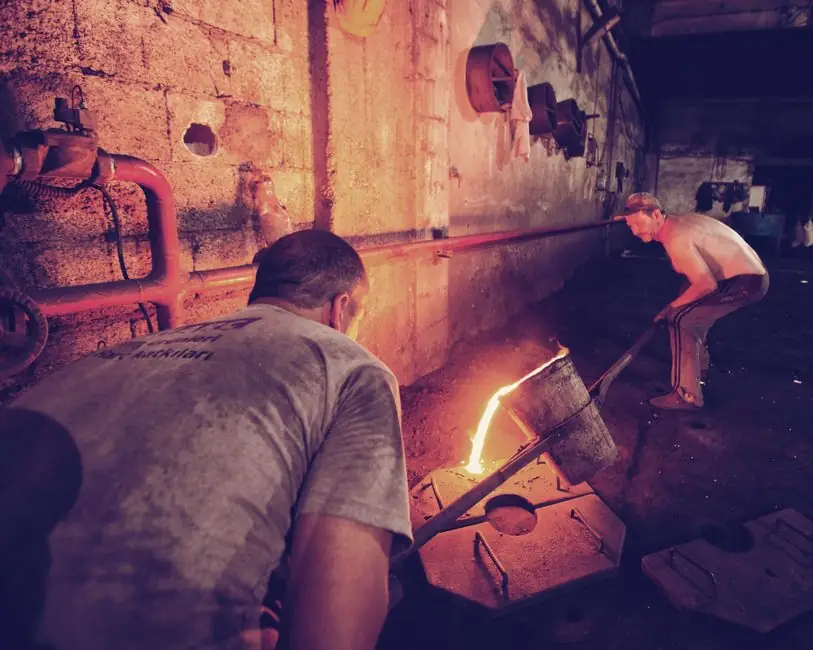
Amine-catalyzed cold box core making holds more than 60% of the industrial core production market, with tertiary amine gas (typically DMEA or triethylamine) injected at 0.15–1 bar into a sealed core box to cross-link phenolic-MDI binders at room temperature [S4].
The two-part polyurethane binder, roughly 55% phenolic-formaldehyde resin as component I and ~80% MDI as component II, totals about 70% of the cold box formula; the remaining 30% covers solvents and additives that shape reactivity, moisture resistance, and sand life [S4]. Catalyst dosing on this system aims for 99% hardness benchmark cure while keeping gassing time and amine consumption at the economic minimum.
Catalyst Chemistry and Carrier Gas Selection
The most common cold box catalysts are tertiary amines, predominantly dimethylethylamine (DMEA) and triethylamine (TEA), with a typical feed concentration of at least 10%, usually 12% liquid DMEA mixed into an inert or air carrier stream [S1]. The carrier gas must be dry; using ambient air without dehumidification invites moisture-driven binder defects and uneven cure [S4].
TEA is favoured for its higher boiling point and lower vapour pressure, which reduces the risk of condensation in cold gassing lines, while DMEA gives faster benchlife and is preferred where cycle time dominates the production target [S2][S4]. Both amines are hazardous, and respirator-grade local exhaust ventilation is standard at the gassing station [S2].
Dosing Concentration and Pressure Windows
Foundry process data place the amine introduction pressure at 0.15–1 bar and the post-gassing wash (purge) pressure at 1–2 bar, a window that prevents amine leakage from the core box while driving catalyst into the deepest sections of the sand pack [S3]. At a fixed 2 bar flushing pressure, 0.1 ml of liquid catalyst delivered as fog will harden a defined mass of core sand, a ratio used as a quick commissioning check on a new gassing rig [S4].
Multi-stage curing protocols published in 2026 specify 0.3–0.5% initial catalyst exposure by mass of sand, followed by a controlled ramp that limits surface over-cure while allowing the core interior to reach 99% hardness [S5]. The two-stage pattern, surface flash followed by diffusion cure, has become the default recommendation for thin-walled cores where through-thickness uniformity is critical.
Gassing Hardware and Process Sequencing
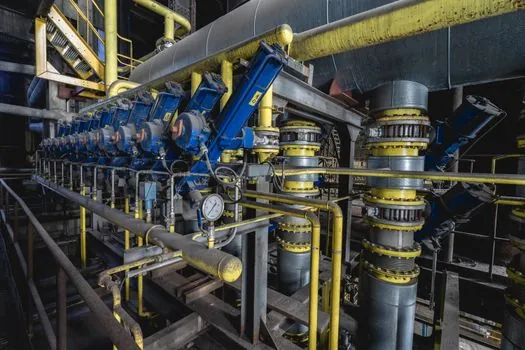
A modern cold box line runs four sequential steps inside the sealed core box: shoot (sand + binder fill), gas (amine fog injection), purge (carrier air to clear residual amine), and eject. On a Mingzhi MP40 horizontal-parted core shooter, the box is clamped against the gassing head to form a seal before the amine mixture enters, then decompressed and purged before the ejection system indexes the cured core out [S2]. The reference cold box core machine architecture is designed around this shoot-gas-purge-eject cycle, with the gassing head geometry dictating uniform amine distribution.
Arena-flow's August 2024 validation of its cold-box curing model confirmed that computational fluid dynamics can resolve the amine front as it propagates through a sand pack, giving process engineers a tool to tune gassing time and purge duration before cutting steel [S6]. For plants retrofitting existing core machine cells, the model output typically shortens commissioning trials by pointing directly at over-gassed and under-gassed zones inside complex core geometries.
Comparison: DMEA vs TEA vs DMAE Catalyst Choices
Three catalyst options dominate amine cold box dosing, and the selection criteria line up against four decision dimensions: cure speed, vapour pressure (handling safety), sand benchlife impact, and regulatory burden. [S2]
DMEA (dimethylethylamine) gives the fastest benchlife and shortest cycle, sits at moderate vapour pressure, suits high-volume steel and iron core lines, and carries the standard REACH registration burden. TEA (triethylamine) cures slightly slower, has the lowest vapour pressure of the three (cleanest workplace air), gives the longest sand benchlife, and is the default for large castings where deep penetration matters [S2][S4]. DMAE (dimethylaminoethanol) is used when lower odour and reduced BTX co-emissions are specified, accepts a longer cure time, and is favoured in foundries chasing lower VOC footprints [S1][S4]. Each option still relies on the same two-component phenolic-MDI binder backbone, so downstream casting-defect behaviour (veining, gas porosity) is governed more by purge quality than by the choice of tertiary amine.
Standards, Safety, and Zone Classification
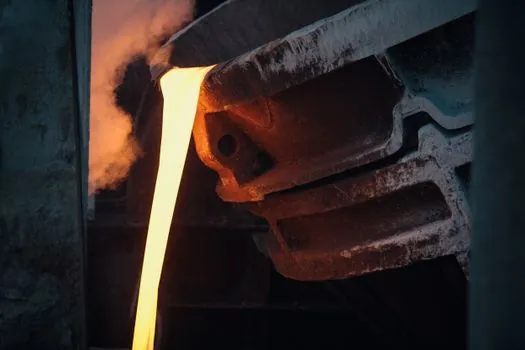
Cold box gassing stations handle flammable tertiary amines, so the gassing enclosure, amine reservoir, and vent stack are classified hazardous area; designers routinely apply the equipment-protection-level logic covered in ATEX 2G vs EPL Gb vs Zone 1 equivalence decoded for specifiers when siting gas generators near operator workstations. Local exhaust must capture amine vapour at the gassing head before the eject step, and the wash-air stream (1–2 bar purge) is ducted to a scrubber rather than vented to the shop floor [S3].
Process interlocks typically include amine flow totaliser, core box seal-pressure confirmation, and a permissive that blocks eject until the purge timer has elapsed. For high-throughput foundries, the hot box core machine remains the alternative where heat-based cure is preferred and amine handling is to be avoided altogether, but it trades the energy cost of heated tooling for the simplicity of the cold box process.
Failure Modes and Process Limits
Under-gassing shows up as soft cores, peel-back at corners, and sand erosion at the casting surface; over-gassing shows up as brittle cores, surface glaze, and elevated BTX carry-over into the pour [S4][S5]. Sand temperature above 30°C shortens the two-hour benchlife window and accelerates binder depletion, while moisture above the carrier-gas dew-point specification causes localized uncured spots that propagate into casting veining [S4].
Excessive amine concentration wastes catalyst, increases workplace exposure, and raises the load on downstream amine scrubbers, while insufficient concentration pushes gassing time beyond economic limits without reaching 99% hardness [S5].
Process Monitoring and 2026 Optimisation Practice
Current cold box lines log amine mass flow, gassing time, and core-box back-pressure per cycle, and the data is fed back to tune concentration setpoints shift-by-shift. The 2026 reference protocol recommends targeting 99% bench hardness as the minimum acceptable cure, with catalyst exposure staged so the surface reacts within 5–10 seconds and the core centre completes cross-linking within the next 20–30 seconds [S5].
For foundries evaluating new gassing heads, the concrete curing compound comparison is informative only as an analogy: both processes depend on a volatile active species penetrating a packed granular bed, and the limiting factor in each is uniform distribution rather than absolute dose. Trackable signals for the next planning cycle include amine consumption per ton of core, average gassing time per core, and BTX scrubber outlet concentration, all of which are now routinely reported on a per-cell, per-shift basis.