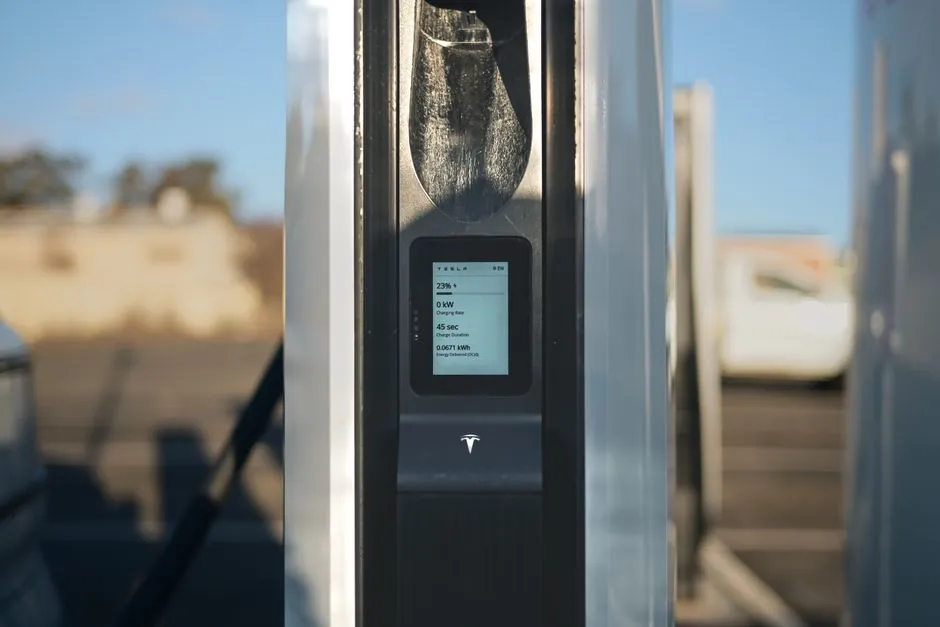
For most AMR fleets, opportunity charging during predictable idle windows is the lower-friction default; battery swap earns its capital cost only when duty cycles are dense enough that no idle window is long enough to trust [S1].
The call is operational, not ideological. A two- or three-shift warehouse with on-route charger placement and LFP packs will almost always favour top-up charging, while a 24/7 line-feeding cell with sub-15-minute dwell points tends to recover more value from a spare-pack rotation than from adding chargers [S1][S3].
Decision criteria that actually move the answer
Duty-cycle density outranks battery chemistry when choosing between opportunity charging and swap [S1]. A fleet with recurring dwell points built into the work, such as transfer stations, queuing buffers, or shift-change pauses, can hold state of charge in a healthy band without ever taking a unit fully offline; a fleet with relentless wave arrivals cannot, and that is when larger onboard capacity or a swap pool becomes safer [S1].
Charger placement, fleet software coordination, and peak-demand management swing the answer harder than cell chemistry alone, because poor charger concurrency creates demand-charge spikes and queueing delays that erase the productivity case for top-up charging [S1][S3]. For a wider view of how mobile fleets interact with facility-side controls, see the AMR encyclopedia entry and the related AI path planning 2026: DRL, Transformers, and AMR re-planning reference.
How opportunity charging works in practice
Opportunity charging means topping up the battery in shorter sessions during natural idle periods, for example between tasks, at transfer stations, or during shift changes, rather than waiting for a full discharge-to-100% cycle [S3]. The core payoff is that the same battery stays in continuous use across multiple shifts and that complete discharge, with its long associated charging pause, is eliminated [S2].
Charge time and depth depend on the variant: conventional forklift charging runs 8-10 hours to 100% SOC at 16-18 A per 100 Ah, while fast/opportunity charging delivers shorter 10-30 minute top-ups at 40-60 A per 100 Ah to roughly 80-85% SOC, with a once-per-week equalization charge to 100% recommended to balance the cells [S5]. For lithium chemistries, partial top-ups do not damage the pack the way they damage lead-acid, which is why LFP and lithium titanate are described as ideal for in-process charging [S2][S4].
What battery swap actually buys
Swapping buys continuity: a depleted pack leaves, a charged pack goes in, and the robot returns to work while charging happens off to the side, which is powerful in three-shift buildings, repetitive high-throughput transport, and material flows where a charger queue can ripple into missed picks, late replenishment, or idle labour [S1]. It also buys redundancy; if one pack underperforms or ages, a spare can take its place, and that buffer can matter more as ambient conditions swing across a year [S1].
The bill arrives in labour, hardware, and floor space. Manual swaps are not free, and the relevant OSHA electric-truck guidance is explicit that battery changing should be handled by trained, designated personnel in designated areas, with heavy packs, corrosive acid, and hydrogen off-gassing during charging all listed as real hazards [S1]. Standard vs opportunity forklift practice also drives the case: conventional charging takes place once a day, whereas opportunity charging happens anytime the trucks are not in use, eliminating the dedicated battery-change room that some facilities must keep [S6][S7].
Chemistry fit, cycle cost, and lead-acid penalty
Chemistry is not the deciding factor, but it sets the cost of a wrong choice. Lithium-ion and lithium titanate tolerate frequent partial charges without the long-term capacity loss that lead-acid suffers, so in-process charging keeps their energy level constant and rules out the overcharge or overheat damage that frequent intermediate top-ups can cause on weaker chemistries [S2].
Lead-acid is the cautionary tale: opportunity charging a lead-acid pack with a conventional CC-CV (constant current, constant voltage) charger can cut service life by as much as 40%, and any lead-acid pack on an opportunity regime needs a dedicated opportunity charger and a full equalization charge roughly once every one to two weeks [S4]. Fast/opportunity charging at 40-60 A per 100 Ah also shortens battery warranty life and requires built-in cooling, fans, or vents under the hood, plus permanently mounted rear connectors and dual battery cables on the truck [S5]. For modern LFP and NMC AMR packs this is a non-issue, which is why the same opportunity regime that destroys a lead-acid pack leaves a lithium pack effectively indifferent [S2][S4].
Comparison: opportunity charging vs battery swap, criterion by criterion
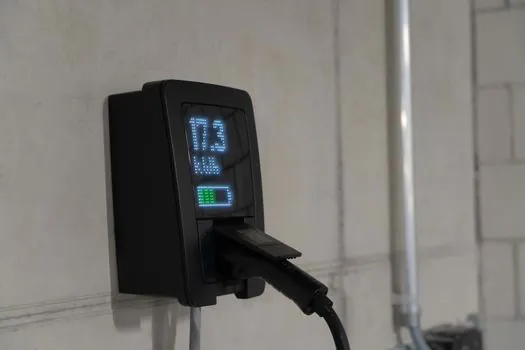
The two approaches differ on every parameter that matters to fleet planning, and the side-by-side pattern is consistent across the recent guides. The table below condenses the working factors; values are taken from the sources cited rather than extrapolated [S1][S3][S5].
How it works: opportunity charging delivers short top-ups during idle windows; swap pulls a depleted pack and slides in a charged one [S1][S3]. Best fit: opportunity for two-shift, three-shift, and 24/7 operations with natural dwell points; swap for dense, interruption-sensitive duty cycles where idle windows are too short to trust [S1][S3]. Robot availability during shift: higher for opportunity charging, since robots rarely go offline for long; lower for swap if spare-pack inventory is undersized [S3]. Charging infrastructure: more, distributed points for opportunity charging; fewer but a dedicated battery room or swap station for swap [S1][S3][S6]. Battery capacity on-board: can be smaller with opportunity because energy is replenished during the shift; must cover a full operating period with swap unless the pool is sized correctly [S3]. Fleet software dependency: high for opportunity charging (staggered triggers, charge windows, demand management) and low for swap (a fixed rotation usually works) [S1][S3]. Charger traffic risk: congestion if many AMRs dock at once on opportunity, minimal during operations for swap [S1][S3]. Cycle impact: many partial charges that count cumulatively for opportunity, fewer deeper cycles for swap, with lithium chemistries tolerating both regimes and lead-acid penalised heavily for partial top-ups [S2][S4].
Who opportunity charging is for, and who it is not for
Opportunity charging is the right answer for AMR fleets in multi-shift production and logistics, especially where the operation is being automated and a human cannot be plugging trucks in or pulling packs routinely, because the manual cost is described as simply too high in that case [S2]. It is also the right answer where the floor space for a dedicated battery-change room is more valuable as productive area, which is one of the recurring selling points across the recent forklift guidance [S6][S7].
Opportunity charging is the wrong answer for a duty cycle with no reliable dwell points, for sites where demand charges dominate the electricity bill and the chargers will all fire at once, and for any operation still running on conventional lead-acid packs that are not on a dedicated opportunity charger with weekly equalization [S1][S4]. Swap is the right answer when continuity beats capital efficiency, when ambient temperature swings punish pack life, and when the labour model already has trained, designated battery-handling staff in a compliant room [S1].
Standards, hazards, and the cross-industry signal

The standards umbrella that actually governs battery rooms and AMR power systems runs through OSHA electric-truck guidance on trained personnel, designated areas, hydrogen off-gassing, and corrosive-acid handling, with IEEE/IEC cell-level standards governing the lithium packs themselves [S1]. The same opportunity-charging concept is also being applied to electric buses at terminal stops in cities such as Heidelberg and Mannheim, with contactless fast-charge systems feeding the bus before the next tour, which is a useful cross-industry data point on duty-cycle tolerance for top-up regimes [S2].
The procurement signal that follows from this is consistent: in 2026 the practical default for new AMR builds is opportunity charging on lithium chemistry, with a swap pool held as targeted redundancy rather than the primary energy strategy, and with a clear operational review whenever the duty cycle tightens past the point where the on-route charger can be trusted to find a robot [S1][S3][S8]. Two trackable signals for the next planning cycle: facility peak-demand response on existing charger clusters, and the duty-cycle density of any new AMR cell being specced against the same opportunity regime.
Spec-level background on the components involved: pressure transmitter, and flow meter.