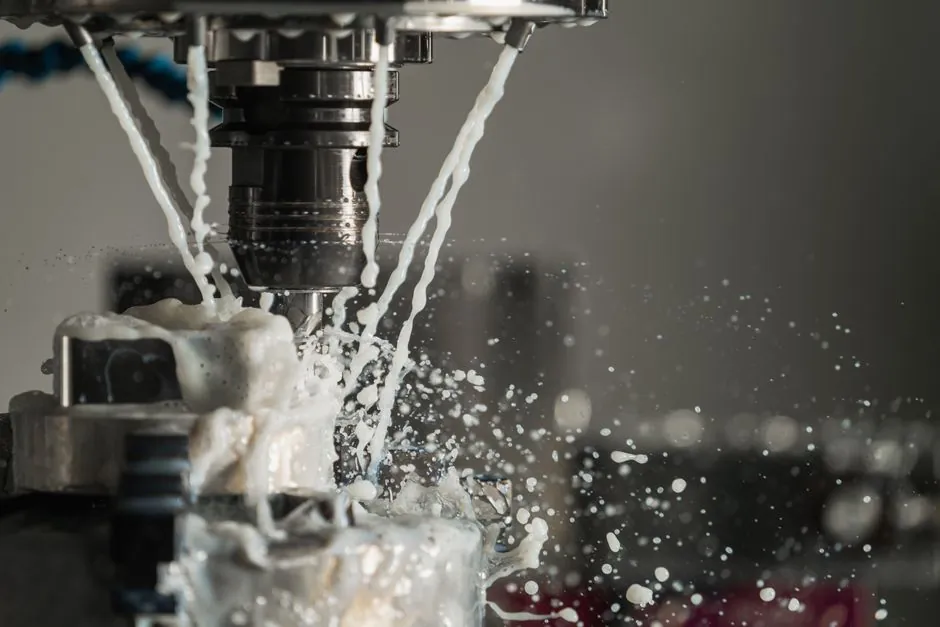
Generative AI tools for CNC programming moved from pilot to production in 2025, with vendors reporting programming-time reductions of 40% to 75% on feature recognition, toolpath generation, and feeds-and-speeds selection [S3].
AI-assisted CAM now spans four functional layers: automated feature recognition (AFR), conversational copilots, physics-based cutting-parameter engines, and energy-based tool-life monitoring, each targeting a different bottleneck in the CAM workflow [S1][S3][S4][S5].
Where the time savings actually come from
AI feature recognition uses machine-learning classifiers to detect holes, pockets, slots, and contours in 3D models, then proposes matching operations and tool sequences; Siemens NX CAM's Feature-Based Machining (FBM) has shipped this capability for years and now adds learning of programmer choices for reuse on repeat jobs [S1]. The same AFR pattern underpins CloudNC CAM Assist, Mastercam plug-ins in development, and the Lambda Function NX App Hub plugin that also targets Mastercam, Fusion 360, and GibbsCAM [S2][S4][S5].
Conversational copilots sit on top of the CAM tree and answer plain-language prompts; the NX X Manufacturing Copilot, for example, returns context-aware steps such as how to change tool diameter, with linked documentation [S1]. These copilots do not bypass simulation, which remains mandatory before any NC code reaches the spindle [S1].
Selection criteria: match the tool to the bottleneck
Four decision criteria separate the 2025 offerings: scope of CAM automation, integration surface, cutting-parameter physics, and post-CNC tool-life feedback. DELMIA Machining from Dassault Systèmes positions AI-assisted programming for complex multi-axis aerospace, defense, and automotive work, with claims of 40–75% programming-time reduction and a 20% productivity lift, while keeping human approval in the loop [S3]. CAM Assist targets 3-axis and 3+2 milling, with an AI cutting-parameters engine that balances cycle time, surface finish, and tool life, plus instant soft-jaw generation that the vendor says removes an average of 40 minutes from CAD to first cut [S2].
Lambda Function combines AFR, adaptive feeds-and-speeds, and a real-time spindle-load module that defines tool life by energy consumed rather than time or part count; vendor figures list 10× faster programming, 30%+ lower recurring cost, and 50%+ fewer trial-and-error iterations on the platform's own landing page [S4][S5]. Toolpath folds AI into DFM feedback and quoting, so cycle time and cost are estimated before a full CAM program is built [S7]. Selection logic for a job shop: pick CAM Assist or Toolpath for fast quoting and 3-axis throughput, pick DELMIA or NX with Lambda for multi-axis aerospace, and pick the NX X Manufacturing Copilot where the binding constraint is programmer onboarding rather than cycle time.
Who it is for, and where it still falls short
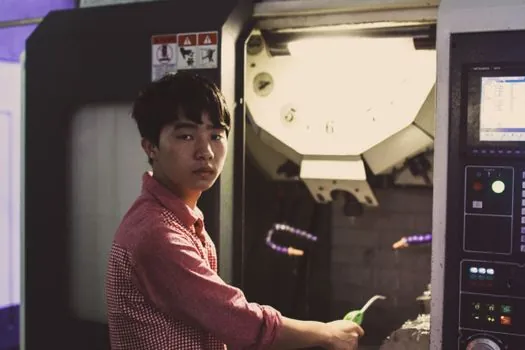
AI CAM is a strong fit for high-mix/low-volume shops, programming novices, and any cell where tribal knowledge is leaving with retiring machinists, because AFR and learning loops capture and reuse shop-specific choices [S1][S3][S4]. Titan Gilroy of CAM Assist user Titan Gilroy Machining reports an 80% programming-time cut, while Andy Soos at Bedford CNC cites faster 3+2 throughput and revenue growth as direct outcomes [S2].
Limits are real: copilots still require programmer validation, AFR struggles on poorly tessellated or non-native geometry, and the "five or six suggestions" pattern (per Lambda engineer Alec Grey) only works if a machinist is in the loop to choose and feed the model [S1][S4]. CAM Assist's own FAQ flags that ITAR-controlled environments require a separate subscription tier, and Toolpath's marketing implies, without quantifying, that quoting accuracy depends on having clean CAD and stock models [S2][S7].
Cutting parameters and tool life: the physics layer
The 2025 generation of AI CAM tools treats feeds and speeds as a constrained optimisation, not a lookup table. CAM Assist's Cutting Parameters engine uses physics-based AI to set feeds and speeds, while DELMIA Machining balances cycle time, tool life, and risk inside a virtual twin [S2][S3]. Lambda Function goes further, recommending tool changes based on energy consumed by the cutter, and providing adaptive control of feeds and speeds via overrides to mitigate adverse events such as overloads, disengagements, and chatter spikes [S4][S5].
This is also where shops see the largest recurring-cost argument: a 30%+ lower recurring cost claim from Lambda maps directly to fewer scrapped parts, longer tool life, and less air cutting [S5]. Real-time spindle-load monitoring feeds a dashboard that surfaces cutting time, air cutting, tool utilization, and process anomalies for continuous improvement [S4].
Standards, security, and shop-floor integration
Security posture is now a procurement item: CloudNC CAM Assist runs on AWS GovCloud (US) for Mastercam, GibbsCAM, and NX integrations, and is SOC 2 Type 2, ISO 27001, and Cyber Essentials Plus certified [S2]. On the manufacturing side, ISO 9001-quality and AS9100-aerospace shops should expect AI CAM outputs to remain subject to the same first-article inspection and process-approval gates that govern hand-written programs; AI does not change the regulatory floor for aerospace or medical work.
Integration breadth is the practical gating factor: NX CAM, Mastercam, Fusion 360, and GibbsCAM cover the bulk of installed CAM seats, and most 2025 AI CAM products are plug-ins or cloud services that sit on top of these hosts rather than replacements [S1][S2][S4][S5]. On the construction-equipment side, where heavy machinery and equipment programs still rely on proven CAM workflows, adoption tends to lag aerospace and medical, but the same AFR and feeds-engines apply wherever 3-axis and 3+2 milling dominate.
Comparison of 2025 AI CAM options
Decision criteria, ranked by what most buyers ask first: programming-time reduction, supported axis count, integration hosts, and whether the tool extends past programming into live tool-life monitoring. DELMIA Machining claims 40–75% time reduction, supports complex multi-axis work, integrates with CATIA and SOLIDWORKS, and includes virtual-twin NC cell simulation [S3]. CloudNC CAM Assist quotes an 80% programming-time cut in a customer case, supports 3-axis and 3+2 only, integrates with Mastercam, GibbsCAM, and NX, and stays at the quoting/programming layer with no live monitoring [S2].
Siemens NX X Manufacturing Copilot delivers a chat-style assistant inside NX CAM, supports the full NX axis range, and is sold as part of the NX X Manufacturing bundle rather than as a standalone product [S1]. Lambda Function claims 10× faster programming, supports 3-axis through 5-axis, plugs into NX, Mastercam, Fusion 360, and GibbsCAM, and adds energy-based tool-life and spindle-load monitoring on top of programming [S4][S5]. Toolpath focuses on DFM, quoting, and CAM automation for job shops, with AI-driven cycle-time estimates feeding the RFQ stage rather than a live tool-life module [S7].
What to track next
Two signals will tell you whether AI CAM has moved past early adopters: IMTS 2026 (Lambda Function is exhibiting) should produce first independent cycle-time and tool-life benchmarks on production runs, and the Mastercam, Fusion 360, and GibbsCAM plug-in wave from Lambda and LimitlessCNC should reach general availability in 2026, broadening the install base beyond NX-only shops [S4][S5][S6]. On the controls side, watch for AI CAM vendors to publish native post-processors for newer CNC controls, since the post-processor layer remains the most common reason a generated toolpath still needs manual cleanup.
Component reference pages worth checking: electrical automation, and lamps and light fittings.
Related analysis: Open Path Gas Detector Path Lengths: Short-Range, Mid-Range, and 330 m Edge Models.