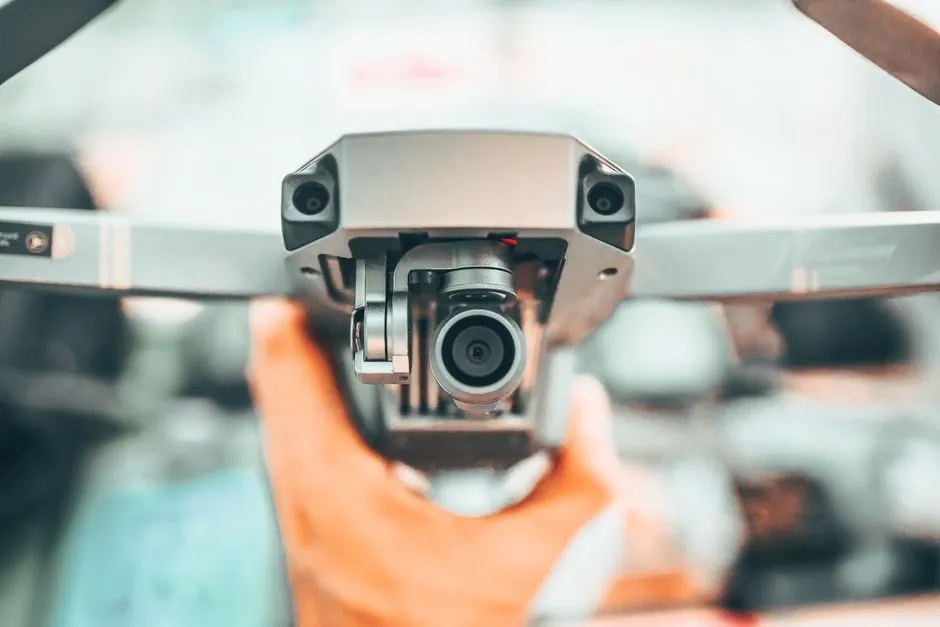
A 2025 multi-sensor review finds that pairing a camera with LiDAR pushes per-decision obstacle-detection accuracy to 94.2% and reliability to 93.7% under adaptive Kalman weighting, versus 100% reliance on either sensor alone [S5].
For autonomous mobile robots operating around people, carts, forklifts, and low-contrast floor markings, the 2024 IEEE ACCESS review by Leong and Ahmad concludes that single-sensor stacks, whether LiDAR-only or vision-only, cannot cover the failure modes that matter in mixed-traffic warehouses, and that sensor fusion with LiDAR as the geometric backbone is the only architecture consistently meeting safety claims in the cited field deployments [S1].
What each sensor actually delivers in an AMR stack
LiDAR gives geometric range, not classification. A 2D or 3D LiDAR returns distance to the nearest reflective surface in a scan plane, and that single capability, millimeter-scale range with no dependence on ambient light, is what makes it the structural backbone of obstacle avoidance on AMR platforms [S1][S7]. The major advantage of LiDAR over a camera is its longer effective range and immunity to darkness or high-glare lighting conditions, which is why most AMR safety stacks still use a 2D safety scanner or a 3D LiDAR as the primary stop-zone sensor [S2]. LiDAR by itself, however, cannot tell a human leg from a rack post, and dense point clouds above ~20 m cost processing budget that an AMR does not have.
A camera gives semantics, not depth. Vision provides colour, texture, and shape, which is what lets an AMR classify a person, a pallet, a transparent PET bottle, or a floor tape line, but a monocular or stereo camera cannot return reliable depth in low light, sun glare, fog, or against a low-contrast background, and that is precisely where a blind camera fails or, worse, hallucinates an obstacle that is not there [S2][S4]. The 2025 MDPI Sensors review notes that LiDAR and radar hold higher raw geometric accuracy and field of view than cameras, but each sensor class on its own underperforms once the operating envelope includes dynamic obstacles, multiple robots, or visually degraded zones [S3].
Why fusion beats either sensor alone, with numbers
The 2024 IEEE ACCESS review aggregates the published case studies and finds that a LiDAR-plus-camera stack is consistently used to recover what each sensor loses: LiDAR supplies geometry where the camera is blinded, and the camera supplies classification where LiDAR returns only points [S1]. An Anvil Labs 2025 measurement puts the benefit concretely, reporting that combining LiDAR with camera data increases the effective detection range by 1.94x compared with LiDAR alone, and that adaptive weighted-average fusion with Kalman filtering reaches 94.2% accuracy and 93.7% reliability on a 3D-LiDAR plus IMU plus GPS stack [S5].
Those numbers are not academic. The Medium review of LiDAR-camera fusion for unstructured environments ties the gain directly to AMR failure modes, including false positives from sensor noise, misclassification of floor markings as obstacles, and missed dynamic obstacles in cluttered aisles, all of which are reduced when the geometry channel (LiDAR) and the semantic channel (camera) vote on the same obstacle [S4]. Slamtec's practitioner write-up echoes the same architecture: LiDAR remains the backbone of most mobile robot obstacle avoidance systems, while complementary sensors (camera, ultrasonic, IMU) enhance robustness in the scenarios where LiDAR alone stalls [S7].
Decision matrix: camera-only, LiDAR-only, LiDAR-plus-camera, LiDAR-plus-camera-plus-radar
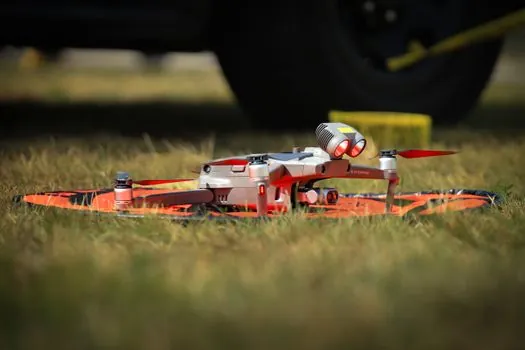
Stacking options against the four criteria that actually drive AMR safety certification, integration cost, low-light robustness, and small-object detection, the published evidence lines up as follows. Camera-only is the cheapest bill of materials and the strongest classifier, but it is the only option that fails outright in darkness, glare, and fog, and it cannot return depth without a stereo baseline [S2][S4]. LiDAR-only is the strongest geometric channel and the only one trusted as a standalone safety scanner on most AMRs, yet it cannot classify a human versus a post, and a transparent or low-reflectivity target can drop out of the point cloud [S1][S7].
LiDAR-plus-camera is the architecture that the 2024 IEEE ACCESS and 2025 MDPI reviews treat as the current best-practice default: LiDAR handles range and the safety-rated stop field, the camera classifies whatever falls inside that field, and the fusion layer (Kalman, IMM-UKF, or a learned late-fusion network) reconciles the two channels, which is why the measured effective detection range jumps by 1.94x versus LiDAR alone [S1][S3][S5]. LiDAR-plus-camera-plus-radar is the over-spec option for outdoor or weather-exposed AMRs, because radar is the only channel that is not degraded by rain, fog, dust, or direct sunlight, but it adds cost, mounting complexity, and electromagnetic compatibility work that indoor AMRs rarely need [S2][S8].
Which AMR class is this for, and which should ignore it
If the robot shares space with pedestrians, forklifts, or other AMRs in a warehouse, factory, or hospital corridor, the LiDAR-plus-camera architecture is for you, because the camera is what discriminates a person from infrastructure and the LiDAR is what guarantees the safety-rated stop distance regardless of lighting [S1][S4]. A relevant sizing reference for the same robot class is the AMR safety LiDAR FOV, range, and blind-spot tradeoffs discussion, which covers how the LiDAR channel itself is selected before fusion is layered on.
If the robot runs in a fully fenced cell with no human traffic, a 2D safety LiDAR alone is usually sufficient, and adding a camera is wasted cost. If the robot operates outdoors in weather, radar becomes a near-mandatory third channel, and a camera-only or LiDAR-only stack is a known failure mode, since rain, fog, and direct sun degrade both [S2][S8]. For an indoor tote-transport or unit-load AMR in a greenfield build, the current consensus is one 2D safety scanner for the safety field, one 3D LiDAR or depth camera for navigation and obstacle classification, and a vision classifier for human-aware behaviour, which is the configuration the 2024 IEEE ACCESS review treats as the lowest-risk baseline [S1][S7].
Failure modes and limits you still have to design around
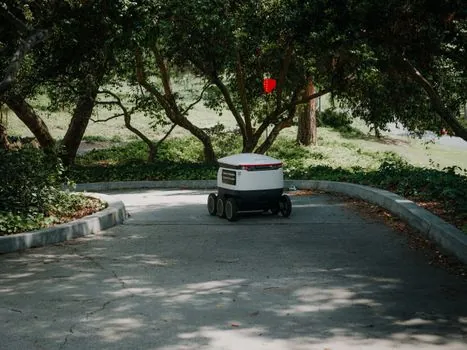
Fusion is not magic. The MDPI 2025 review flags that sensors of different physical nature sometimes cannot directly extract required information, which is why AI-based fusion (Kalman variants, IMM-UKF, learned late fusion) is now the dominant software path rather than hand-tuned geometric rules [S3]. The Medium review adds the practical failure inventory: false positives from sensor noise, misclassification of floor markings as obstacles, and missed dynamic obstacles when the fusion layer is tuned too conservatively, each of which is a real cause of unplanned stops, backup manoeuvres, and human intervention that quietly kills AMR throughput [S4].
Two physical limits stay with you no matter how good the fusion is. LiDAR returns degrade on transparent glass, highly absorptive black plastic, and mirror-like surfaces, which is why a safety-rated AMR stack never relies on LiDAR alone for the emergency stop field in mixed traffic [S1][S7]. Cameras degrade in low light, direct sun, fog, and when the lens is dirty, which is why the same stack never relies on the camera for the safety field either, and the safety field is always owned by a certified 2D LiDAR scanner with the camera acting as a classification and behaviour layer on top [S1][S2][S4]. The 2024 IEEE ACCESS review's bottom line is that LiDAR is the backbone, complementary sensors raise robustness, and any architecture that violates that ordering tends to fail in the field rather than on the bench [S1].
Sourcing and standards to anchor the build
The peer-reviewed anchors for this topic are the November 2024 IEEE ACCESS review by Leong and Ahmad (DOI 10.1109/ACCESS.2024.3493238) for LiDAR-plus-secondary-sensor fusion architectures, and the February 2025 MDPI Sensors review by Ušinskis et al. (DOI 10.3390/s25041248) for sensor-fusion navigation methodology [S1][S3]. Industry-grade references include the Slamtec practitioner note on mobile robot obstacle avoidance, the einfochips 2022 primer that still defines the camera-versus-LiDAR-versus-radar-versus-ultrasonic trade space, and the 2025 Anvil Labs UAV measurement that supplies the 1.94x effective-range gain and 94.2%/93.7% accuracy/reliability numbers [S2][S5][S7]. The remaining 2024-2025 secondary sources cover LiDAR-camera fusion reviews and LiDAR-based obstacle-avoidance guides, and they agree on the same architectural conclusion: LiDAR as the geometric backbone, camera as the semantic layer, and a fusion algorithm that reconciles both [S4][S8].
Trackable next signals: any 2026 vendor update that publishes per-sensor failure-mode coverage (transparent targets, low-light floor-tape misclassification, dynamic-obstacle latency) on a LiDAR-plus-camera stack, and any update to ISO 3691-4 driverless industrial truck safety requirements that explicitly references fused perception rather than LiDAR-only safety fields.