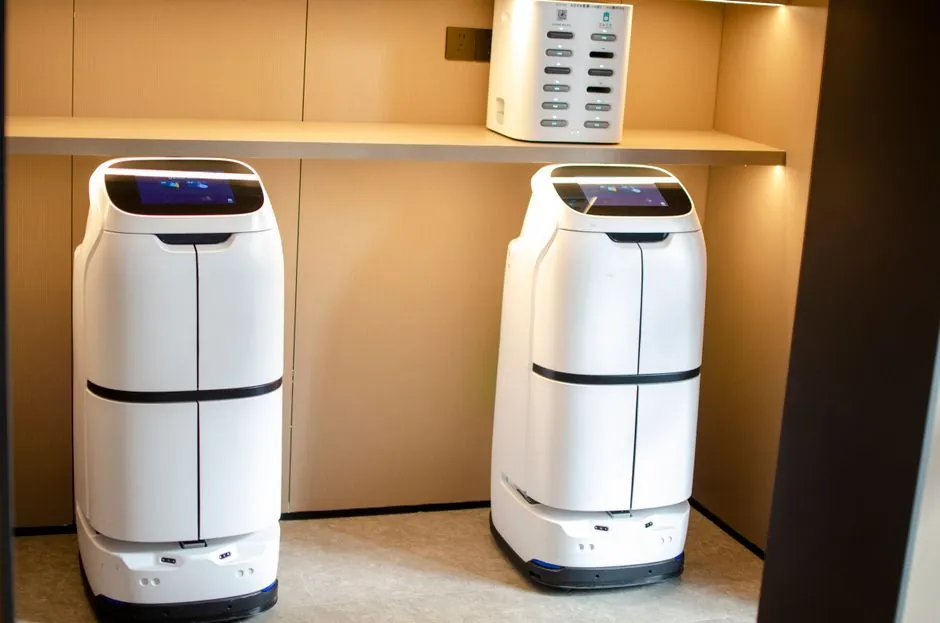
Tote-transport AMR chassis selection is not a payload-equals-cargo problem: a 100kg chassis class is the typical entry point for warehouse totes once the rack, lift, controller and battery are added to the load itself [S4].
For early screening, the working rule in the July 2026 chassis guide is total installed load multiplied by 1.2, which puts tote applications up to 40kg in the 50kg-class review, up to 80kg in the 100kg class, up to 250kg in the 300kg class, and around 415kg in the 500kg class [S4]. AMR payload ranges span from a few kilograms for light shelf and tote units up to roughly 1900kg for heavy pallet and material-transport platforms [S7].
What "Payload" Actually Means on a Tote-Duty AMR
AMR-rated payload, maximum payload, and usable cargo payload are three different numbers, and conflating them is the most common sizing error on tote lines [S4]. The rated payload is the supplier's published number, the maximum is the structural ceiling under defined test conditions, and the usable cargo figure is what remains after subtracting the top module, lift, battery, mounting frame and any onboard robotic arm or conveyor [S4]. A robotic arm, a lift mast, and the battery all count toward chassis payload, which means a 50kg-class chassis is not the right home for a 20kg tote once a 15kg collaborative-arm module is bolted on [S4]. On the heavy end, OEM datasheets confirm an OMRON HD-1500 mobile robot rated at 1500kg payload and a Mobile Industrial Robots pair of MiR600 and MiR1350 units handling 600kg and 1350kg respectively, illustrating the spread between tote-class and pallet-class machines [S1][S5].
Matching Chassis Class to Tote-Transport Scenarios
Chassis classes align to four common tote-transport profiles, and the 1.2× screening rule maps each one to a specific review band [S4]. A 50kg-class review covers up to 40kg of installed load and suits inspection, sensor platforms and small-box delivery, not steady tote work. A 100kg-class review, covering up to 80kg installed load, is the practical entry point for warehouse totes, hospital delivery carts, and light electronics-manufacturing flows [S4]. A 300kg-class review, up to 250kg installed load, is the typical home for line-side racks, lifting AMRs and co-bots carrying tooling, while a 500kg-class review, around 415kg installed load, is the gate to confirm before committing to a heavy-duty chassis on the assumption that a heavier frame is always safer, which it is not without full-load test data [S4]. For larger pallet and material platforms the KUKA Topload family, Mobile Industrial Robots' MiR600 and MiR1350, and OMRON's HD-1500 at 1500kg payload sit above the tote band and are typically paired with pallet rack interfaces rather than tote lifts [S1][S3][S5].
Comparison of Chassis Classes for Tote Duty
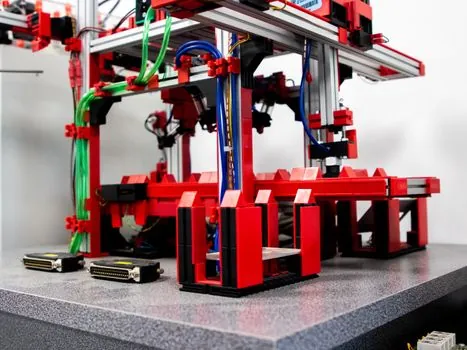
Using the 1.2× screening rule plus the published OEM data, the four most relevant chassis bands line up as follows: 50kg-class, screen up to 40kg installed load, suited to sensor platforms and small boxes, main advantage is compact footprint; 100kg-class, screen up to 80kg installed load, suited to totes, hospital and light-industrial flow, balanced size and integration space; 300kg-class, screen up to 250kg installed load, suited to line-side racks, lifting AMRs and tooling, designed for industrial top modules; 500kg-class, screen around 415kg installed load, suited only after full-load testing confirms the duty [S4]. Above the tote band, the MiR600 at 600kg and MiR1350 at 1350kg cover pallet and racking duty, the OMRON HD-1500 covers 1500kg heavy-pallet flows, and the wider AMR market tops out near 1900kg for material-transport platforms [S1][S5][S7].
Why a "Sufficient" Chassis Rating Can Still Fail in Service
Chassis payload is the headline number, but a rating that looks fine on paper can still fail at full speed, on a slope or in a tight aisle, because several secondary limits are checked only after the headline figure is approved [S4]. Load center of gravity, load distribution across the deck, full-load speed, stopping distance, slope rating, floor condition, runtime between charges, aisle width, and elevator clearance all have to be screened against the actual installation, not the catalogue number [S4]. A 100kg-class robot chassis is not automatically a 100kg continuous-duty chassis, and a 300kg-class chassis carrying 240kg of installed load only stays safe if the supplier's full-load test report covers that exact duty point [S4]. Tote transport is also a continuous-motion application rather than a stop-and-go pallet move, which is why the OMRON HD-1500 and the Jungheinrich/Rocrich AGV family, which carry 5,500lb (about 2,495kg) base capacities on pallet models like the ERE 225a, are specified with ISO 3691-4 driverless industrial truck safety in mind as a baseline [S2].
Selection Criteria: Who a Tote-Class AMR Is, and Is Not, For
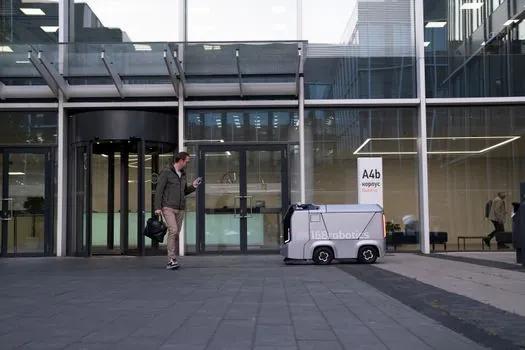
Tote-class AMRs in the 50–100kg payload band fit warehouse picking lines, hospital logistics, electronics assembly cells and any flow where the tote, the lift and the controller together stay under 80kg installed load [S4]. They are not the right answer for line-side rack delivery at 200kg-plus, for pallet loops, or for any application where a heavy top module already pushes the installed load past the 1.2× screening cap for the next class [S4]. Towing capacity and platform payload are not the same number, and confusing them is a recurring selection mistake: a chassis can be rated to pull 300kg on a tow bar while only carrying 100kg on the deck [S4]. For shop-floor tote routes that share space with conveyor sorting line handoffs, the AMR also has to be screened for interface height, not just deck capacity, because an undersized lift module will cap the tote envelope long before the chassis payload is reached, a sizing problem detailed in the related article on AMR lift module vs VLM ceiling clearance.
Standards and Sourcing Signals for Tote-Duty AMRs
The baseline safety standard for driverless industrial trucks, including AMRs, is ISO 3691-4, and Rocrich's transport AGV family is documented to that standard alongside ANSI B56 across models ranging from the 3,300lb EKS 215a stacker to the 5,500lb ERE 225a transport AGV and the 5,500lb Rocla AWTcf counterbalance stacker [S2]. KUKA's Topload topload AMRs add SLAM navigation built on LiDAR scanning, plus QR-code camera positioning, laser scanners and 3D cameras for obstacle detection, four emergency stops at the platform corners, and inductive or conductive charging that brings the unit from 20% to 80% state of charge in roughly one hour, with a full charge in about two hours and an operating window of up to eight hours [S3]. On the heavy-pallet side, OMRON's HD-1500 extends the AMR payload envelope to 1500kg, the MiR600 and MiR1350 cover 600kg and 1350kg respectively, and the broader AMR market tops out around 1900kg for material-transport platforms, all of which sit above the tote band and are typically paired with AMR robot fleet software rather than a single tote-lift topper [S1][S5][S7].
Two signals to track over the next quarter: published full-load test reports tied to a specific chassis class, not just rated-payload brochures, and confirmed ISO 3691-4 conformance statements naming the exact chassis model and the top module it was tested with [S2][S4].