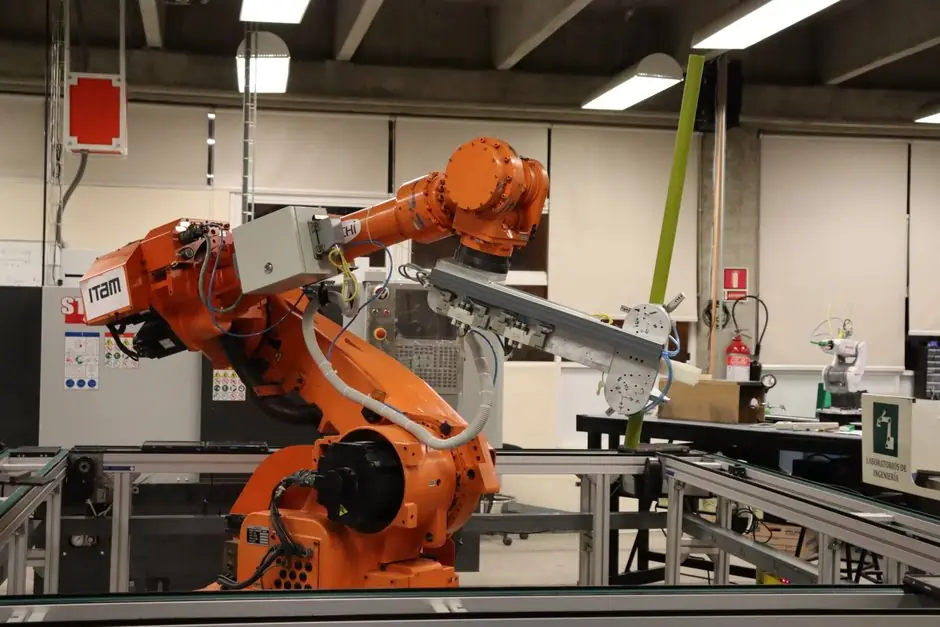
AMRs currently specified for tote transport in the 40–120 kg payload class accept standard 400×600 mm and 600×800 mm totes only when the deck plan is dimensionally matched, and the chassis is rated for total installed load (tote plus top module), not tote weight alone [S1][S2][S3].
Real published examples: GeekPlus PopPick-style units at 640×450×406 mm footprint accept totes up to 600×400 mm and lift to 760 mm height with a 40 kg lift rating [S1]; a separate AMR at 563×511×1473 mm (22.2×20×58 in) handles 36 kg (80 lb) and a "wide range" of container formats [S4]; KNAPP Open Shuttles transport one or two containers with a combined payload up to 120 kg (265 lb), or 50 kg (110 lb) per unit in single-container mode [S3].
Tote footprint and AMR deck plan: matching the 400×600 mm and 600×800 mm standards
The two tote footprints that matter for AMR deck sizing are 400×600 mm (the European/Euro box standard) and 600×800 mm (a common larger logistics tote), and the AMR deck must be at least tote plan plus clearance on the lift axis, typically 40–50 mm per side, before any locating features are added [S1][S4].
GeekPlus-class AMRs at 640×450×406 mm clear a 600×400 mm tote in plan with about 20–25 mm of margin on the long axis and 25–50 mm on the short axis, so the deck is on the edge of acceptance, and tote locating pins or clamp rails will eat most of that margin in practice [S1]. Wider formats such as 600×800 mm require either a longer AMR deck, a turntable, or dual-container handling, and published KNAPP Open Shuttle data shows combined 120 kg dual-container operation in exactly that mode [S3].
Chassis payload class: why 50 kg, 100 kg, 300 kg, and 500 kg are the real screening brackets
Mobile robot chassis are sold in roughly four payload brackets, 50 kg, 100 kg, 300 kg, and 500 kg, and the screening rule of thumb used in current OEM selection guides is to apply a 1.2 multiplier to the total installed load (tote plus top module plus lift plus any conveyor deck), giving effective envelopes of 40 kg, 80 kg, 250 kg, and 415 kg respectively [S2].
The 50 kg class suits single-tote inspection, small-box, and sensor-platform work; the 100 kg class is the practical light-industrial bracket for single-tote transport in electronics, hospital delivery, and small-parts lines; the 300 kg class is the floor for line-side racks, lifting AMRs with a top-mounted conveyor, or co-developed tooling; the 500 kg class is reserved for confirmed heavy loads and pallet-capable bases [S2]. Higher-capacity units such as the MiR600 at 600 kg and MiR1350 at 1350 kg sit above this bracket and target pallet, not tote, work [S5].
Tote-to-person AMRs and the lift axis: 760 mm clear height and ceiling check
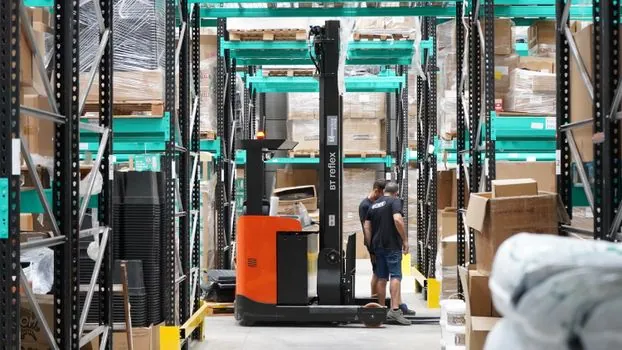
Tote-to-person AMRs need a lift axis, and the published lift envelope is 760 mm on the 40 kg-rated GeekPlus PopPick class, which sets the ceiling-clearance requirement at the sum of tote height, the 760 mm lift stroke, and any sensor or light-stack protrusion [S1].
High-throughput tote-to-person cells quote up to 350 totes per hour per station using two-robot RoboShuttle-class arrangements, one high-storing, one fast-delivering, and the lift module is the limiting subsystem on both height and weight, not the chassis [S1]. Where ceiling height is constrained, the lift must be downrated, and where totes exceed 40 kg, the chassis must move to the next payload bracket even if the deck plan is unchanged.
Dimension, weight, and centre-of-gravity: the three checks that catch mis-specification
Specifying an AMR for tote work on weight alone fails for three reasons: deck plan too small for the tote, top-module mass already consuming 20–25 kg of the chassis rating, and centre-of-gravity offset that is invisible until the AMR runs at full speed on a slope [S2][S7].
A 100 kg chassis does not automatically accept a 100 kg load: the 1.2 multiplier on installed load plus supplier-specific load-centre limits, full-load stopping distance, and slope capability is the real acceptance gate, and the load must be confirmed under full-load test, not calculated from catalogue numbers alone [S2]. As Otto Motors' eight-criteria AMR assessment frames it, payload must be reviewed on the basis of weight, dimensions, and centre of gravity together, with the load envelope rechecked at the worst-case station, not at the picking point [S7].
Use cases by payload bracket: where each class fits, and where it does not
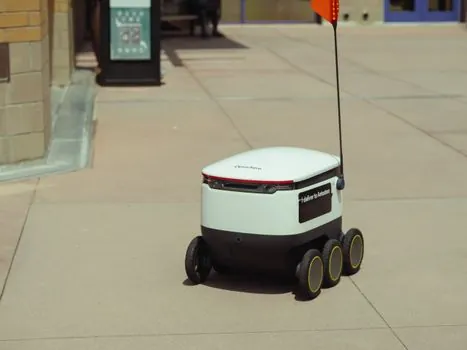
The 50 kg class fits single-tote, single-pick applications with small-footprint totes, and fails when a lift, larger battery, or robotic arm is added because the top module mass alone reaches 20–25 kg, leaving little usable cargo envelope [S2].
The 100 kg class is the working bracket for 400×600 mm totes in light-industrial logistics, with KNAPP's 50 kg single-container mode and 120 kg dual-container mode both falling inside it [S3], and the 36 kg (80 lb) Abel Womack AMR at 563×511×1473 mm is a typical in-class machine accepting a wide range of container formats [S4]. The 300 kg and 500 kg classes are for line-side racks, lifting AMRs with heavy top modules, and pallet-capable bases; they are overkill for single-tote work and add cost, aisle width, and floor-loading burden without benefit [S2]. Above 1000 kg, the conversation shifts to pallet handling, where the MiR1350 at 1350 kg and KATE-class units at 3000 kg set the envelope [S5][S6].
Standards, sourcing signals, and what to verify on the data sheet
No single ISO or IEC standard governs AMR payload or deck dimensions; suppliers publish payload, deck plan, lift height, and weight as catalogue values, and acceptance is gated by supplier load-centre limits, full-load speed, and stopping distance data [S2][S7].
The verifiable data-sheet items to confirm before order are: rated payload, maximum payload, and usable cargo payload listed as three separate numbers; deck plan dimensions with locating-feature allowance; lift stroke and maximum lifted load combined; full-load test results at the planned centre of gravity; and aisle width plus floor-loading limits for the heaviest configuration [S2][S7]. For deeper payload-class context beyond totes, the AGV payload capacity selection guide covers the 50 kg to 600 t envelope, and the Tote-Transport AMR Payload sizing guide walks through the 20–80 kg light-tote case in more detail.