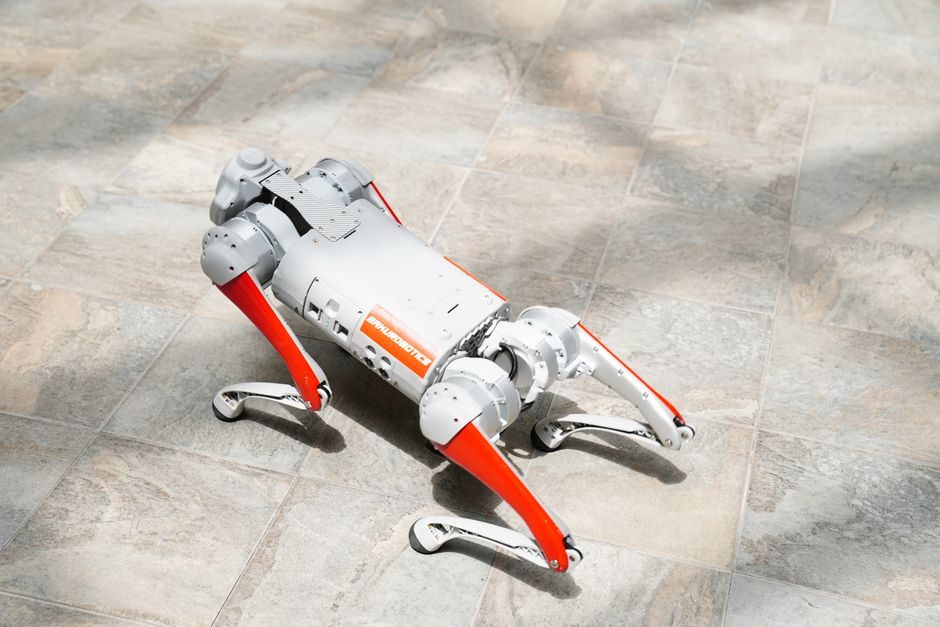
Autonomous Mobile Robots (AMRs) differentiate themselves from older Automated Guided Vehicles (AGVs) primarily by free-navigation SLAM rather than fixed magnetic tape or wire paths, and the spec for a 2026 build should be written as a four-axis table: payload, navigation method, fleet-management software, and safety/sensor stack [S2].
The 2026 catalog of mobile platforms now spans sub-100 kg goods-to-pickers, 300–1500 kg pallet shuttles, and lift-deck AMRs that integrate shelf recognition with vertical pick-face handling [S2][S5]. Decision-makers commonly conflate AGVs (track-bound) with AMRs (map-bound); the latter class dominates new warehouse and last-mile pilots because route changes no longer require floor rework [S1][S3].
Payload Band and Chassis Geometry
Payload class is the first hard filter: a 50 kg under-cart picker, a 300 kg roller-top tote handler and a 1200 kg pallet lift occupy three different chassis families with different drive-wheel counts, motor torque and battery sizing [S2][S5].
MSI's AMR-AI-Lift class is a representative lift-deck platform that combines shelf-recognition vision with a multi-shelf compatible lift mechanism, illustrating why higher payload classes always demand vision-confirmed pick/place rather than simple fork-position assumptions [S5]. For under-100 kg goods-to-person cells, Husarion's ROS 2-based developer platforms show the trend: developers build their own autonomy stack on a reference chassis rather than buying a closed black box [S1]. A 2026 chassis spec sheet should call out rated payload at 0 m/s and at the maximum sustained travel speed, because motor thermal derating cuts real capacity by 10–20% on most lift-deck units [S2].
Navigation: 2D LiDAR SLAM vs QR/AR-Code vs Magnetic Tape
2D LiDAR SLAM with reflective-contour mapping is the de-facto navigation backbone for free-navigation AMRs because it tolerates modest floor drift, reflows a new map in tens of minutes, and supports dynamic obstacle re-routing at 1.5–2.0 m/s cruise speeds [S1].
QR- or AprilTag-code floor tape remains dominant in dense Asian electronics warehouses and in cleanroom adjacent cells where the floor reflectivity makes LiDAR contour matching unreliable; the trade-off is re-tape cost after layout changes (roughly 5–15 USD per square metre for industrial QR tape, not including labour) [S7]. AGV-era magnetic-tape guidance is not AMR navigation — it requires path replanning only through manual tape moves, and any 2026 spec that lists it as "AMR navigation" should be challenged [S1]. For mixed indoor/outdoor last-mile pilots, Shinmaywa's research explicitly pairs indoor AMR drop-off with outdoor autonomous vehicle handoff, which requires the AMR to expose its pose stream through a ROS 2 / MQTT bridge rather than a vendor-locked API [S3].
Fleet Management Software and WMS/WCS Integration
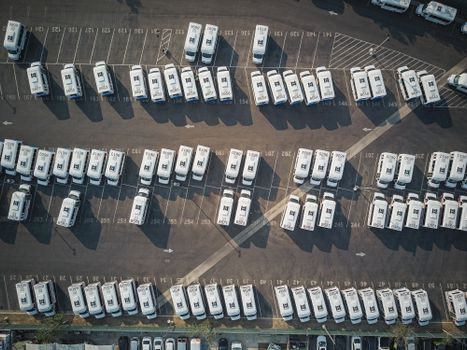
No 2026 AMR purchase is complete without a fleet manager that handles traffic, charge scheduling and order dispatch; without it, even a 5-robot cell devolves into intersection deadlocks within weeks [S1][S3].
The dominant open-source reference is the ROS 2 Navigation2 stack with the nav2_bt_navigator behaviour tree, which is what Husarion's developer kits expose out of the box and what most Western AMR integrators still underneath wrap a vendor UI [S1]. Commercial fleet managers (Fetchcore, OTTO, Locus, Mobile Industrial Robots MiR) layer WMS/WCS REST or AMQP APIs on top; a spec should require a documented REST endpoint for mission submission and a documented ROS 2 topic or MQTT topic for real-time pose, so the WMS can hand off pick waves without vendor-locked middleware [S1][S3]. When integrating with traditional racking, decisions about pallet rack sizing and selection must precede AMR aisle-width definition — a 1200 mm aisle is the practical floor for any lift-deck AMR carrying a standard 1200×1000 EUR pallet.
Safety Stack and Regulatory Floor
The minimum safety stack for a 2026 industrial AMR cell is a 360° 2D safety LiDAR (typically SICK nanoScan3 or equivalent, PLd per ISO 13849-1) plus front and rear E-stops, with a redundant encoder and IMU pair on the drive base [S2].
Buyers should demand a documented risk assessment per ISO 12100 and a CE / UL 3100 / ANSI/RIA R15.08 declaration before signing the PO; ISO 3691-4 governs driverless industrial trucks specifically and is the regulation most often missed in retrofits [S2]. A practical rule of thumb: if a vendor cannot hand over the R15.08 or ISO 3691-4 report by the FAT date, walk away. The same logic applies to pallet rack selection in an AMR-aisle — column protectors, anchor torque and rack-to-floor tolerance determine whether a 6-axis force bumper on the AMR ever has to fire at all.
Who an AMR Is For, and Who It Is Not For

An AMR is the right answer for brown-field warehouses with stable SKU profiles and order volumes above roughly 500 picks/day, where route volatility is high enough that AGV re-tape costs hurt but not so high that the cell needs a fully human-flexible workforce [S2][S3].
It is the wrong answer for green-field mega-DC builds dominated by tote-mini-load ASRS, where fixed cranes and conveyors beat AMRs on cost-per-pick, and for sites under 200 picks/day where one human picker beats any robot on OPEX [S2]. The lift-deck class that MSI markets is built for shelf-to-station hand-off, not for outdoor curbside delivery; trying to push a 500 kg lift AMR into a wet, sloped outdoor yard is a misuse regardless of its IP54 rating [S3][S5].
Total Cost and Lifecycle Levers Beyond Sticker Price
The 2026 AMR cost stack runs roughly 35–40% hardware, 25–30% fleet software and commissioning, 15–20% site preparation (floor flatness, charging docks, network), and the rest on multi-year service — meaning a cheaper sticker often hides a heavier tail [S1][S2].
Site preparation is the most common under-budget item: 5 mm floor-flatness over 10 m is the working ceiling for most 2D-LiDAR SLAM systems without map reflow, and bringing an old slab to that grade can run 50–150 USD/m² [S1]. Battery chemistry is the second hidden lever — LiFePO4 packs at 48 V/60 Ah are the de-facto 2026 default for indoor AMRs because they accept opportunity charging without the calendar-life penalty of NMC, and they spec 2000+ cycles to 80% capacity, roughly 4–5 years of two-shift duty [S2]. For decision-makers also weighing cycloidal reducer selection for a non-AMR drive train, the same torque-density logic applies: a 20:1 cycloidal in a wheel hub cuts wiring and frees the chassis for a bigger battery.
Open vs Closed Stack: A Side-by-Side Spec View
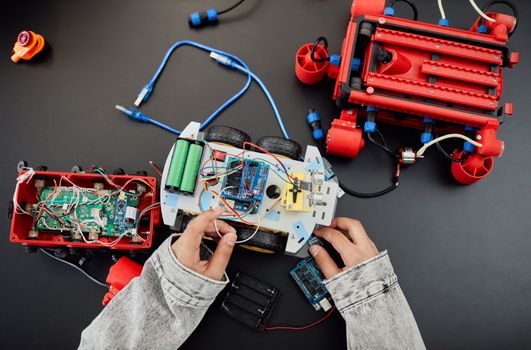
The open ROS 2 / Navigation2 stack wins on transparency and on avoiding vendor lock — the developer can read the BT XML, port the code to a new chassis, and run a custom WMS adapter in days rather than months [S1][S7].
Closed commercial stacks (OTTO 100/750, MiR250/600/1350, Locus, Fetch Freight100/500) win on integration time, certified safety packaging, and pre-built WMS adapters for SAP EWM, Manhattan and Blue Yonder — typically shaving 6–10 weeks off site commissioning [S2]. The same four decision criteria line up cleanly below.
For a developer-led research cell under 5 robots, the open stack is the rational bet; for a 30-robot production cell tied to a 2026 WMS upgrade, the closed stack is almost always the lower-risk bet [S1][S2].
Verifiable Spec Checklist Before PO
Pin these in the purchase spec so procurement can verify line-by-line: rated payload at cruise speed, peak LiDAR scan rate in Hz, safety PLd category with certificate number, R15.08/ISO 3691-4 risk-assessment file, fleet API endpoint list, battery cycle-life to 80% SOC, and floor-flatness precondition the vendor is willing to put in writing [S1][S2][S5].
A second short verbatim pull: a ROS 2 developer platform datasheet states the autonomy stack "allow[s] you to build your own autonomous systems based on ROS & ROS 2 easily" — that sentence is the contractual basis for demanding an open ROS 2 interface, not a vendor-proprietary SDK, on any 2026 build [S1]. For further reading on adjacent warehouse hardware decisions, the Pallet Rack Sizing and Selection guide and the pallet rack supplier map are the two follow-on articles an AMR-cell designer typically reads next.
Trackable signals to watch over the next two quarters: the next ISO 3691-4 amendment cycle (current edition published 2020, surveillance reviews run on a five-year cadence) and the first wave of 48 V LiFePO4 opportunity-charge AMRs entering mass production from the major Chinese chassis makers; both will reset cost-per-pick baselines for cells specified in late 2026 and 2027 [S2].
For component-level specifications, see mobile crane, agv robot, and amr robot.