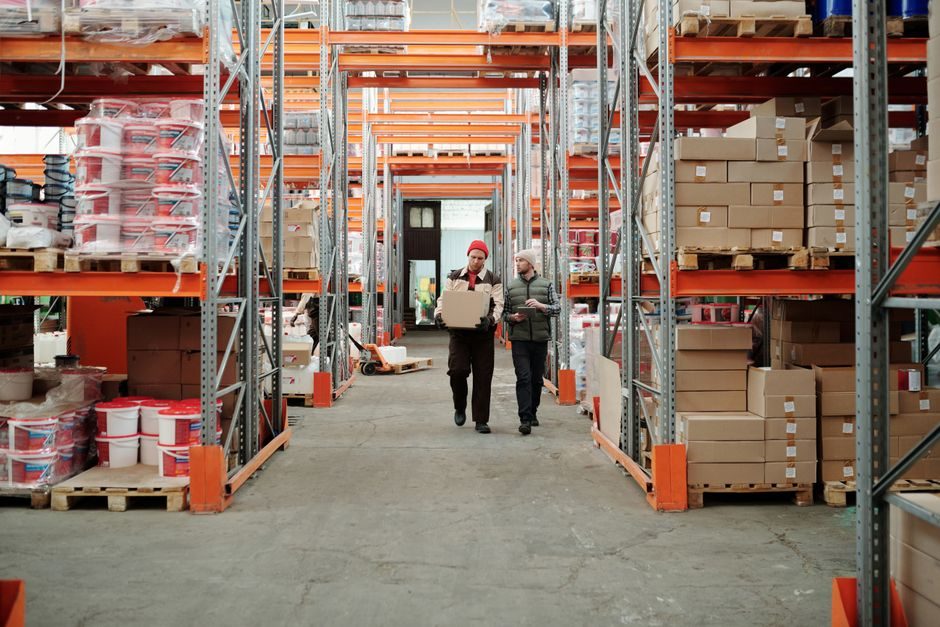
Pallet rack selection is a load-physics problem before it is a purchasing problem: pallet footprint, unit load weight, lift-truck free lift, and floor flatness set the beam pitch, frame gauge, and anchor pattern long before brand or price is discussed [S1][S4].
The dominant North American structural standard is RMI MH16.1 (Specification for the Design, Testing, and Utilization of Industrial Steel Storage Racks), referenced together with CSA A344 in Canadian builds and with AS 4084 in Australian builds [S8]. For seismic zones, AISC 360 + the IBC seismic design category govern the base-plate and anchor-bolt layout; for forklift interaction, ANSI/ITSDF B56.1 sets the truck-side envelope the rack must respect.
Inputs You Must Lock Before Sizing
The four mandatory inputs are pallet size (GMA standard is 48 × 40 in / 1219 × 1016 mm; ISO pallets are 1200 × 800 mm Euro or 1200 × 1000 mm), unit load weight including pallet (typically 1000–2500 lb / 450–1135 kg for general DC stock, 3000–5000 lb for industrial SKUs), clear ceiling height, and the lift equipment's collapsed-mast height plus required clearance [S1][S6]. Beam pitch is then the pallet height plus 4–6 in (100–150 mm) vertical clearance, stacked over the number of beam levels the ceiling allows.
Frame depth is the lesser of two pallet dimensions for selective rack — 42 in (1067 mm) for GMA, 1100 mm for Euro-pallet — to keep the load centred between the uprights. For double-deep, push-back, or drive-in rack the geometry changes, but the rule of centring the load on the lowest shelf still controls deflection [S1]. Heavy-duty galvanised frames from suppliers such as Böckelt are rated for long/strip loads (pipes, sheet metal, building materials) that exceed typical pallet-rack unit loads and are specified as a separate heavy-load product line, not a substitute for selective pallet rack [S1].
Frame, Beam and Bracing: What Carries the Load
Upright frames are roll-formed or structural C-channel sections. Roll-formed teardrop frames (e.g. the "TearDrop" pattern stocked by US distributors) use a 3- or 4-bolt beam-to-column connection, with column gauge typically 14–12 gauge and frame capacities ranging from ~20,000 lb per pair (light selective) to 40,000+ lb per pair (heavy selective) [S6]. Structural frames use hot-rolled C-channels welded into bracing patterns and run heavier — 50,000–70,000 lb per pair is common for coil or drum storage [S10].
Beams are box-welded or step-beam sections, rated per pair (not per beam). Common capacities: 4000 lb/pair at 96 in (8 ft) beam length, 5500 lb/pair at 108 in (9 ft), 6500 lb/pair at 120 in (10 ft), with longer beams at proportionally lower ratings. Capacity drops as the beam length-to-section-modulus ratio grows, which is why 144-in (12 ft) beams for wide-pallet applications are almost always step-beam with wire-mesh decking rather than solid channel [S6][S10].
For seismic design categories D0–D2 in the US, expect base-plate anchors to be 1/2-in or 5/8-in wedge or expansion anchors at 4–6 in embedment, with a defined minimum slab thickness (typically 4 in or 6 in) and a required concrete compressive strength f'c of at least 3000 psi per ACI 318. Cross-aisle ties and row spacers become mandatory at frame heights above ~20 ft to control sway [S8].
Selective vs Drive-In vs Push-Back vs Pallet Flow

Push-back rack uses a wheeled cart on inclined rails inside the frame; LIFO, 2–6 deep, ~85% selectivity, pallet sits on rolling carriages. Pallet flow (gravity flow) rack uses skate-wheel or roller tracks, FIFO, 2–10 deep, requires a downhill pitch of roughly 1/2 in per foot of run, and is the spec of choice for high-throughput dated-stock operations [S9]. Cantilever rack, sold alongside pallet rack by most US distributors, is a separate structural type for long/strip stock — lumber, pipe, bar — and is not a substitute for pallet rack [S1][S10].
The HVAC and HVAC-coil case, covered in a related spec walkthrough, illustrates the heavy end of this trade space and is worth reading for any unit-load spec above 3000 lb best pallet rack for HVAC.
Floor Flatness, Anchors, and the Often-Missed Details
Floor flatness and floor levelness (F<sub>F</sub> / F<sub>L</sub>) per ACI 117 are the silent limit on rack safety. Selective rack operating with standard lift trucks wants F<sub>F</sub> ≥ 35 and F<sub>L</sub> ≥ 25; VNA (very narrow aisle) wire-guided trucks want F<sub>F</sub> ≥ 50 and F<sub>L</sub> ≥ 45. Out-of-spec floors cause beam twist, pallet hang-up, and frame racking that no increase in frame gauge will fix [S8].
Column protectors, end-of-aisle guards, and row spacers are not optional. A typical US supplier stocks 12-in H-column protectors in yellow or black, end-of-aisle guard rail at 42-in height, and back-to-back row spacers in 6-in and 8-in lengths; these are the items most often missed at the spec stage and most often responsible for the rack damage that triggers a re-inspection under RMI MH16.1 [S7][S8]. For storage rack calibration intervals, load-decking checks, and what to log in the annual inspection, a working maintenance procedure is laid out in the related spec reference storage rack calibration and maintenance.
Certifications, Codes, and What to Demand on the PO
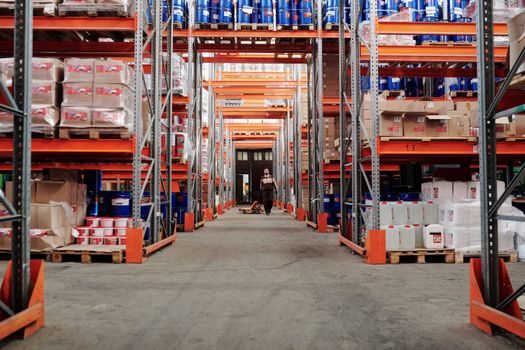
Demand three documents on every PO: (1) a signed engineering drawing stamped by a P.E. or P.Eng. in the install state or province, showing the seismic design category, k-factor, and base-plate reaction loads; (2) a manufacturer letter of compliance to RMI MH16.1 (US) or CSA A344 (Canada); (3) a galvanising or paint spec with cycle and salt-spray hours, critical for cold-store or food-grade installs [S3][S8].
Used rack is a real cost lever — most US distributors keep uprights in heights from 8 ft to 24 ft and beams from 96 in to 144 in in stock for immediate pick-up, at roughly 40–60% of new pricing — but used material must be inspected for bent columns, fractured welds, and missing anchor bolts before it is signed off [S4][S6]. One well-known caveat: if you mix used frames and new beams (or vice versa), the listed capacity is only as good as the lower-rated component, and the combined system should be re-rated against the worst case.
Lead Time, Sourcing, and 2026 Market Reality
Lead time is the practical spec in 2026. Domestic US distributors running "48-hour quick-ship" teardrop programmes stock new uprights and beams and ship from 8 US locations, which is the fastest realistic path for general-DC and light-industrial buyers [S6]. Bespoke structural frames, galvanised cantilever, or seismic-rated heavy frames still run 4–8 weeks, occasionally longer for non-standard colours or powder-coat cycles. Lead time for the storage rack itself is far shorter than the lead time for the floor slab to cure to a verifiable F<sub>F</sub>/F<sub>L</sub>, so build the slab spec before you build the rack spec [S7][S8].
Containerised transport-rack systems (separate from fixed warehouse pallet rack) are sold for vehicle and shelved-goods moves in 20–53 ft containers, typically handling 2–4 sedans per container, and use a bolt-together support frame rather than welded structural sections — that product is a logistics accessory, not warehouse storage rack, and the load cases and codes are not interchangeable [S2].
Decision Matrix: What to Spec When

Use selective teardrop when pallet mix varies, throughput is moderate, and every pick is operator-driven. Use selective structural when unit loads exceed 4000 lb or you have coil/drum storage. Use drive-in when you have 5+ pallets per SKU, undamaged GMA pallets, and an experienced reach-truck driver. Use push-back when you have 3–6 pallets per SKU and need higher density than selective but better selectivity than drive-in. Use pallet flow when stock is date-sensitive and FIFO is mandatory. Use cantilever when the SKU is long (lumber, pipe, bar) — the answer is never "make a longer beam" [S1][S9][S10].
For HVAC-coil, duct, and unit-load applications above 3000 lb, the heavy end of this matrix is treated in detail at the spec level — beam gauges, frame section moduli, and seismic anchor patterns all shift best pallet rack for HVAC. The reference walkthrough for rack certification cycles, deck inspections, and load-label placement runs alongside any new install at storage rack calibration and maintenance. The wider industrial-equipment buying playbook — including how to read lead-time variance and minimum-order-quantity levers — sits in the broader engineering reference at industrial gear buying guide 2026.
Trackable signals for the next 90 days: (1) whether 48-hour quick-ship teardrop programmes extend from 8 to 10+ US locations — an indicator of whether domestic stocking has caught up with the 2024–2025 demand wave; (2) revisions to RMI MH16.1 commentary on seismic k-factor treatment for tall narrow frames, which is the most active spec debate in the rack engineering community right now [S6][S8].
For component-level specifications, see pallet rack, linear guide, and storage rack.