
OSHA 29 CFR 1910.106(e)(6)(ii) requires bonding and grounding when Class I flammable liquids, defined as liquids with a flash point below 100°F (37.8°C), are transferred between containers, with conductive drums larger than 4 L (1 gal) and plastic drums in the 5 to 60 gallon range both falling under the rule per OSHA's 1999 interpretation letter and NFPA 77 guidance [S1][S4].
The 4 L (1 gal) threshold is the consensus trigger below which most institutions waive bonding: the University of Kentucky's Chemical Safety Committee policy, approved February 10, 2026, and Wayne State University's OEHS guidance both treat containers at or under 4 L as exempt for routine lab transfer [S2][S3]. Above that volume, a ground path to earth of less than 10 ohms is the engineering target carried in NFPA 77, and the clamp interface must be bare metal, free of paint, rust, and dirt [S3][S6].
Bonding vs. Grounding: Two Distinct Electrical Actions
Bonding is the process of connecting two or more conductive objects with a conductor so that they sit at the same electrical potential, not necessarily at earth potential, while grounding ties one or more of those objects to earth so the charge dissipates to zero potential, a distinction Wayne State University draws explicitly in its lab-safety guidance [S2].
In a drum-to-drum transfer the two actions are sequential: first a bonding wire equalizes the drum and the receiving vessel, then a grounding cable drains that common potential to a verified earth point [S4][S6]. A bonded pair that is not grounded still holds charge as a system, and a grounded drum that is not bonded to its receiving vessel still holds a voltage difference between the two, so OSHA's rule and the NFPA 30 / NFPA 77 framework both treat the steps as complementary rather than interchangeable [S3][S4]. Common lab hardware is a 10 ft plastic-coated coiled grounding cable with clamps on both ends, paired with a shorter 3 ft braided bonding cable with alligator clips, sized to reach from a dispensing vessel to a floorplate or receiving container [S3].
Container Conductivity and the 4 L Threshold
Container material is the first decision branch: metal and approved conductive-plastic containers can be bonded directly with clamps, whereas polyethylene, glass, and other non-conductive containers cannot be equalized by a clamp on their body and must rely on a grounded metal fill tube, funnel, or grounding rod inserted into the liquid to reach the bulk charge [S3].
Kentucky's policy is explicit that non-conductive containers shall not be used for transfers greater than 4 L, so any plastic or glass vessel above 4 L is excluded from routine flammable-liquid transfer under that institution's rules [S3]. The OSHA interpretation letter goes further on size: NFPA 77-1993 language, cited by OSHA as meeting the intent of 29 CFR 1910.106(e)(6)(ii) and (d)(2)(iii), states that containers of glass or other non-conductive materials of five gallons or less capacity are usually filled without special precautions, but special techniques are suggested for plastic containers of 5 to 60 gallons [S1].
Scope: Class I Liquids and the Flash-Point Cutoff
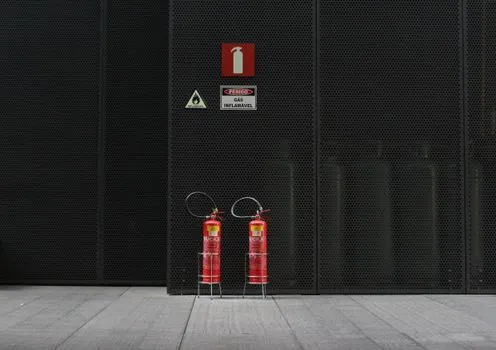
OSHA's bonding mandate under 29 CFR 1910.106(e)(6)(ii) is anchored to Class I flammable liquids, the OSHA hazard classification covering liquids with flash points below 100°F (37.8°C), a group that includes gasoline, acetone, toluene, and most common lab solvents [S4].
For liquids above 100°F flash point, the rule changes: Wayne State University's OEHS guidance states that bonding and grounding during transfer is required only if the liquid has been heated above its flashpoint, which means a warm kerosene or diesel transfer may be exempt while the same liquid at room temperature still does not trigger the rule [S2]. Kentucky maps the same logic onto the GHS framework, applying its policy to GHS Flammable Categories 1, 2, and 3, which together cover flash points up to 199.4°F (93°C) under GHS but narrows the bonding mandate to liquids at or below 100°F flash point for routine unheated transfer [S3]. For operators comparing the two reference frames, the choice comes down to which classification system is cited on the Safety Data Sheet, Section 2 hazard information or Section 9 physical properties, and whether the liquid is being handled at or above its flash point [S2][S3].
Drum-Scale Hardware: Clamps, Cables, and Floorplates
For 55 gallon (220 L) steel drums, the canonical setup runs a grounding cable from the drum to a verified building static grounding system or ground rod, then a bonding cable either directly to the receiving vessel or through a metallic floorplate that also acts as secondary containment against a spill [S2][S4].
The clamp interface is the weak point and is treated as such across every guidance document reviewed: EMC Insurance's loss-control tech sheet specifies that all connections must be made to clean, bare metal, with no paint, rust, or coating, and the Justrite industry guide reiterates that the bond path is only as good as the metal-to-metal contact [S5][S6]. Stainless or zinc-plated clamps with serrated jaws are the common hardware; the 10 ohm earth-ground target from NFPA 77 is the pass/fail number used by Kentucky's policy when commissioning a new grounding point [S3]. For sites specifying anti-static equipment on a procurement document, the relevant accessory set is a bonding-and-grounding assembly with insulated jumper cables, heavy-duty drum clamps, and a confirmed low-impedance ground rod, not a generic earthing strap.
Failure Modes: When the Bond Is Present but Defective

The most common failure is a clamp biting through paint or a powder-coated drum shell, which leaves a non-conductive film in the contact path and silently disables the bond; the visible hardware looks correct, but resistance at the interface climbs well above the 10 ohm target [S3][S6].
The second failure mode is bonding without grounding: a charge-equalized pair of drums still holds a common potential relative to earth, and any ungrounded conductor that approaches the pair can act as a spark path to a different potential, including a person or a nearby fixture [S2][S4]. A third documented mode is reliance on a non-conductive receiving container, such as a polyethylene jug, above the 4 L cutoff, where a clamp on the outside of the jug does nothing to drain the charge on the liquid inside and the fill tube itself must be metal and grounded [S1][S3]. Splashing and free-fall are the operational triggers to control, since liquid falling through air separates charge at the liquid-air boundary, and a fill tube that reaches the bottom of the receiving container eliminates the air gap and the charge separation that comes with it [S2].
Documentation, Training, and Cross-Reference to Other Standards
The citable procedure to keep on file is the OSHA standard interpretation letter at 29 CFR 1910.106(e)(6)(ii) paired with the current edition of NFPA 77 (the 2024 edition is cited in Kentucky's policy, which references both NFPA 77 and NFPA 30 alongside OSHA 29 CFR 1910.106) [S3][S4]. The University of Minnesota's health-safety resource repeats the 4 L cutoff and the 100°F flash-point number, giving auditors a second institutional confirmation of the same threshold [S9].
For facilities already managing an NDT equipment program, the static-control discipline overlaps with electrical safety in explosion hazard areas, since both rely on a verified low-impedance earth path and metal-to-metal clamp practice, though the verification test for a bonding station is a resistance measurement rather than an NDT inspection. Sites also handling large dispensing volumes alongside construction machinery and equipment refueling should note that the same drum-bonding rules apply to mobile fuel transfers, not just fixed lab or shop setups [S2][S4]. Two trackable signals for the next 6 months: any revision notice to NFPA 77, and any OSHA Standard Interpretation updating the 1999 letter on plastic-container transfers, are the publications that would shift the rule set cited here.
This topic is covered further in Ribbed-Top Anti-Slip Safety Mat Spec Guide for Industrial Floors.