
ANSI Z89.1-2014 and EN 397 both govern industrial hard hats, yet they set different impact zones, force ceilings, and electrical thresholds; Type II ANSI helmets must pass off-centre penetration and chin-strap tests, while EN 397 only certifies a single top-impact profile at 5 kN max force [S1][S2].
Specifiers comparing the two for transatlantic projects or multinational EPC work need to see test mass, drop height, electrical class, and temperature range side by side, since a hard hat purchased as "EN 397" in the EU is not automatically OSHA-compliant in the US under 29 CFR 1910.135 [S3][S4].
Impact Attenuation: 5 kN vs 1,000 lbf Ceilings
EN 397 drops a 5 kg striker from 1 m onto the helmet crown, and the force transmitted to the headform must not exceed 5 kN, roughly 1,124 lbf [S1]. ANSI Z89.1-2014 sets the corresponding limit at 1,000 lbf transmitted force for a single sample, with the conditioned-hot/cold/ambient average capped at 850 lbf [S2][S3]. The two limits are within 12 percent of each other, but only EN 397 mandates a 5-second-after-flame self-extinguish flammability test on the outer shell, while ANSI requires no visible flame for 5 seconds after the test flame is removed [S1][S2].
Direction of impact is the bigger differentiator. EN 397 shock absorption is vertical only, struck on the crown [S1][S2]. ANSI Z89.1 splits helmets into Type I (top impact) and Type II (top, front, back, and sides above a designated test line), and Type II must also pass an off-centre penetration test where the penetrator cannot contact the headform at any rotated angle [S2][S4].
Penetration, Chinstrap, and Flammability Tests
EN 397 penetration uses a 3 kg pointed striker dropped 1 m onto the crown; contact with the headform is a fail [S1]. ANSI Z89.1's apex penetration test for both Type I and Type II follows the same pass criterion, no contact with the top of the headform, but Type II adds an off-centre variant that rotates the helmet above a designated test line [S2][S3]. Chinstrap testing is optional under EN 397 (only required if a chinstrap is fitted), whereas ANSI Z89.1 only invokes chin-strap retention testing on Type II hard hats that ship with a strap, and the strap must not stretch beyond 1 inch in length [S1][S2].
For users migrating between standards, a related PPE comparison on full-body harnesses under EN 361 vs ANSI Z359.11-2021 shows the same pattern: EN tends toward "if fitted then test" wording, while ANSI writes the retention requirement as a conditional on supplied accessory. Flammability criteria are aligned within a second: EN 397 self-extinguish in 5 s, ANSI Z89.1 no flame visible 5 s after burner removal [S1][S2].
Electrical Classification: 2,200 V vs 20,000 V Buckets
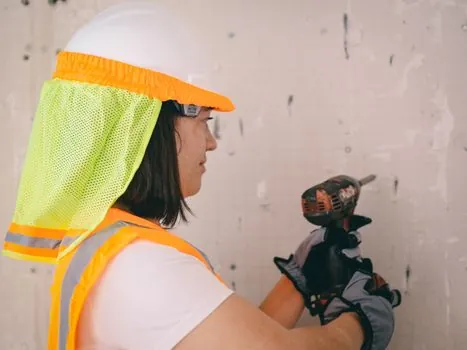
ANSI Z89.1 defines three electrical classes. Class G (General) is proof-tested at 2,200 V for 1 minute with maximum leakage of 3 mA; Class E (Electrical) is proof-tested at 20,000 V for 3 minutes with maximum leakage of 9 mA; Class C (Conductive) provides no electrical insulation and is not tested [S2][S3]. EN 397 historically used a 440 V optional marking for electrical insulation, well below the ANSI Class G and Class E thresholds, so a European CE-marked EN 397 helmet is not a direct substitute for a US Class E hard hat on a 7,200 V panel board [S1].
The practical decision rule: if the worksite has live parts above 600 V and the spec calls for head-to-ground isolation, specify ANSI Z89.1 Class E at 20 kV proof, and confirm the helmet shell also carries the date code and "Class E" mark inside the shell per the ANSI/ISEA marking rule [S3]. For process-plant instrument cabinets and MCC rooms, see the related alarm-delay and signal-averaging trade-off when nuisance trips on insulation monitoring are a concern, since a Class E hard hat paired with a properly set alarm avoids unnecessary PPE breaches.
Temperature Range and Optional Markings
EN 397 covers -10°C to +50°C as standard, with optional "MM" (molten metal) and "LT" (-20°C or -30°C low-temperature) markings on shells that pass the additional tests [S1]. ANSI Z89.1 uses three bands: -18°C to 49°C is unmarked baseline, -30°C carries an "LT" label, and +60°C carries an "HT" label, with -30°C to +60°C as the full optional span [S3]. The ANSI low-temperature mark matches EN 397's most common "LT" floor almost exactly (-30°C vs -20°C in EN), while the ANSI HT ceiling of 60°C runs 10°C above EN's +50°C baseline.
Cold-climate and hot-mill buyers should treat the marking as a hard requirement, not a marketing claim: a shell without the "LT" stamp has not been drop-tested at -30°C on the conditioned sample, and ANSI conditioned-sample averaging (hot, cold, ambient) is the rule that makes that data trustworthy [S2][S3].
Selection Decision Matrix: Type I vs Type II, Class G/E/C
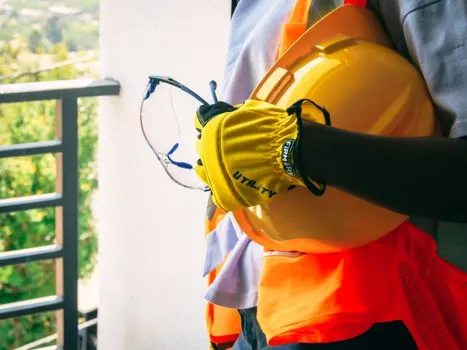
For ground-level construction with overhead hazards only, an EN 397 helmet or an ANSI Z89.1 Type I Class G is sufficient, and these two are roughly equivalent in crown impact and flammability [S1][S2]. For work that includes lateral impact risk (steel erection, confined-space entry, sloped-roof tasks), the only compliant choice is ANSI Z89.1 Type II Class G or E, because EN 397 has no lateral test [S2][S4]. For live electrical work above 600 V, specify Type II Class E at 20 kV proof; for climbing or work-at-height with a chinstrap, also confirm chin-strap elongation under 1 inch [S2][S3].
OSHA's November 2023 Safety and Health Information Bulletin on safety helmets specifically recommends them for construction, oil and gas, electrical work, and work-from-heights, which aligns with the Type II Class E profile and reinforces the move away from legacy Type I caps in those tasks [S4]. For non-head PPE context, see the spec guide on diaphragm valve body patterns, which follows a similar "match the hazard, not the legacy spec" decision logic on the process side.
OSHA Acceptance of EN 397 in US Facilities
OSHA 29 CFR 1910.135 incorporates ANSI/ISEA Z89.1 by reference, which means a CE-marked EN 397 helmet is not automatically compliant in a US general-industry facility without third-party certification to the Z89.1 test battery [S3]. Many US safety managers accept EN 397 helmets for visiting European contractors on a case-by-case basis through the manufacturer's third-party Z89.1 certificate, but the burden of documentation falls on the employer, not the worker [S3][S4].
The reverse path is cleaner: an ANSI Z89.1-2014 certified Type II Class E helmet that also carries a CE mark and EN 397 test report is broadly accepted in EU EPC projects, because the Type II profile is a superset of the EN 397 top-impact test [S1][S4]. Specifiers writing multinational bid packages should therefore call out the higher bar (Type II Class E) to avoid dual procurement and to keep the same SKU usable on both sides of the Atlantic.
Field Failure Modes and Inspection Cues
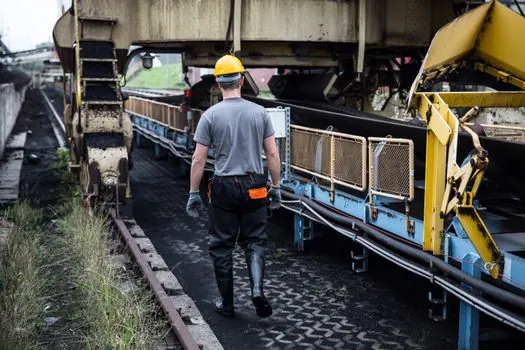
Both standards rely on the same physical failure mechanism: shell crazing from UV exposure, suspension webbing fatigue, and chin-strap elongation past 1 inch on Type II helmets [S2][S3]. ANSI Z89.1's mandatory inside-shell marking, manufacturer, date of manufacture, ANSI designation, Type, Class, and head size range, is the fastest field check, since a missing date code or class letter should fail the helmet out of service regardless of visual condition [S3]. EN 397 shells are typically marked with the CE year and the EN 397 number, plus any optional codes (MM, LT, 440 V) [S1].
OSHA's 2023 bulletin notes that 684 US workers died from head injuries in 2022 and fewer than half of those who suffered a fall-related head injury were wearing any head protection, a figure that argues for retiring unmarked, un-dated legacy shells on sight, not on schedule [S4]. For complementary inspection practice on adjacent safety hardware, the decision guide on valve limit switch box indication applies a similar "verify the marking before trusting the device" logic to a different piece of safety equipment.
Next node: track the OSHA rulemaking docket on Z89.1-2024 alignment and any EU move to align EN 397 with EN 12492 lateral-impact clauses, both of which would change the selection matrix in 2027 spec packages.
Spec-level background on the components involved: pressure transmitter, flow meter, and industrial valve.