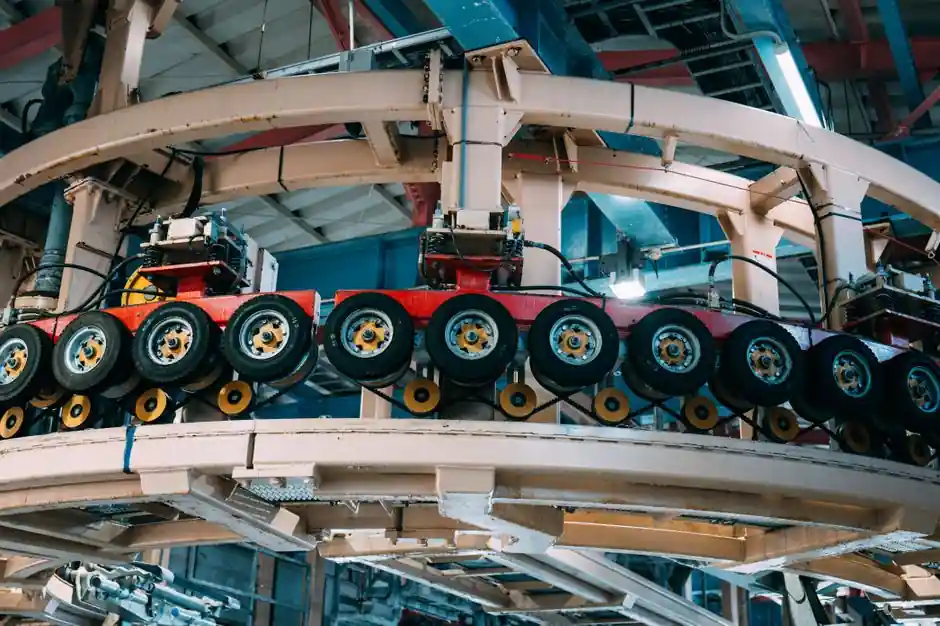
Anti-static equipment for a single production line can be sourced as line-level packages that combine ionization, grounding hardware, ESD workbenches, and Type D FIBCs [S1][S3][S4][S7].
The total budget for a complete static-control retrofit scales with the ATEX/IECEx zone classification, line length in meters, and the number of operator stations, with mature lines in powder and bulk-solid handling commonly running a four-figure equipment spend per station [S1][S5][S6].
Where the Spend Actually Goes: Six Cost Drivers
Material grade is the single largest cost driver: static-dissipative polymers with surface resistivity in the 10⁶ to 10⁹ ohm range cost 2 to 4 times more per kilogram than general-purpose polyethylene, because the formulation requires carbon-loaded or surfactant-treated compounds to hit the controlled-dissipation window [S5]. Conductive metal-plated connectors and static-dissipative flexible hoses for powder transfer sit at the top of the per-meter price stack, while bulk ESD foam and matting sit at the bottom [S1][S3].
Certification scope moves price more than most buyers expect: a passive grounding strap is a commodity item, but a hazardous-area ionizing bar or a Type D FIBC carries documented test data against ATEX 2014/34/EU and IEC 61340-4-4 ESD packaging protocols, and that paperwork is built into the unit price [S1][S5][S7]. Volume tier is the second-strongest lever, with wholesale anti-static foam typically priced 20–30% below retail when ordered in full pallet quantities rather than case quantities [S3].
Lead time is the hidden multiplier: standard ESD workbenches and grounding hardware from US-based suppliers ship in 1–3 weeks, while certified Type D bulk bags and explosion-proof ionizing bars routinely run 6–10 weeks, and any expedited airfreight adds 8–15% to the landed cost [S4][S7]. Installation labor is usually the largest line item outside the equipment itself, because every ionizing bar, wrist-strap station, and grounded connector has to be verified with a static meter on commissioning, and that verification step is non-negotiable in regulated facilities [S1][S6].
Spec Comparison: Passive Grounding vs Ionization vs Type D FIBCs
Passive grounding hardware (straps, bonding cables, dissipative mats) is the cheapest layer and the first thing any line should install, but it only works on conductive or static-dissipative surfaces, so it cannot resolve charge on bare plastic rollers, film web, or isolated powder streams [S1][S5]. Active ionization bars and blowers from suppliers such as Simco-Ion add a second, more expensive layer that neutralizes charge on insulators, which is the typical failure mode in powder coating, pharmaceutical, and film-converting lines where grounding alone leaves 5–15 kV residual charges on non-conductive webs [S1][S6].
Type D antistatic FIBCs are a category of bulk bag in their own right, with a quoted-price-per-bag model and documented use cases for flammable solvents, fine polymer powders, and grain dust where the MIE (minimum ignition energy) is below 1 mJ [S7]. For a full line retrofit, the three options are complementary rather than substitutable: grounding is the floor cost, ionization is the mid-tier add-on for non-conductive process points, and Type D packaging is a per-shipment consumable that protects the load during transfer rather than the line itself.
ESD foam and packaging consumables form a fourth, often-overlooked cost stream: high-density anti-static polyethylene foam is typically ordered in full pallet or full truckload quantities for a measurable per-cubic-foot discount, and the price gap between retail and wholesale grows with order size, with 1,000+ square-foot orders reaching the best published tiers [S3].
Who Needs the Full Stack, and Who Can Skip Layers
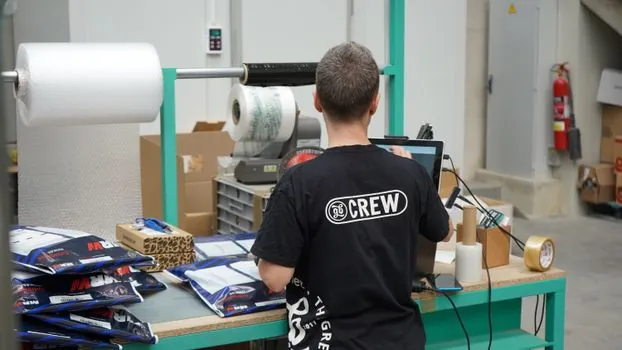
Electronics assembly lines, SMT shops, and any facility handling ESD-sensitive devices at the component level need the full stack, including ESD flooring, wrist-strap monitoring, dissipative work surfaces, and ionizers, because a single 100 V human-body discharge is enough to damage unprotected ICs [S2][S5]. Powder-coating, pharmaceutical, and grain-handling lines need grounding plus ionization plus Type D FIBCs, but typically do not need full ESD flooring unless the line also packages electrostatic-sensitive devices [S1][S7].
General manufacturing lines that handle only insulative materials with no flammable atmosphere can usually stop at grounding and dissipative matting, skipping both ionization and certified packaging, which keeps the retrofit in the low hundreds of dollars per station rather than the low thousands [S1][S4]. Bulk-bag filling and discharge stations handling combustible dust are a special case: they almost always require Type D FIBCs regardless of the rest of the line, because the bag itself becomes the ignition source if charge accumulates during fill or discharge [S7].
Realistic Per-Line Budget Ranges
A small electronics assembly cell, roughly 4 to 6 operator stations, typically lands in the $8,000–$20,000 range for a fully equipped ESD-safe setup including workbenches, wrist-strap monitors, dissipative flooring tiles, and overhead ionizers, before installation labor [S2][S4]. A mid-size powder-handling line of 15–25 m length, with 3 to 5 transfer points and one bulk-bag discharge station, commonly runs $25,000–$60,000 for grounding hardware, ionizing bars at each transfer point, and an initial inventory of Type D FIBCs [S1][S6][S7].
Anti-static foam and ESD packaging consumables are usually budgeted as a recurring line, with published entry-level pricing for an ESD-safe workbench mat starting around $25–$60 per linear meter and a 250-sheet pack of ESD-safe document or component handling sheets quoted at roughly $51.99 per pack at retail [S4].
Total Cost of Ownership: What the Quote Doesn't Show

Energy draw from active ionizers is small but not zero: a typical benchtop ionizing blower consumes 20–50 W continuously, so a line with 10 ionizing heads runs roughly 1.5–4 kW of always-on load, which adds $800–$2,000 per year in electricity at typical US industrial rates [S1][S6]. Recalibration and verification is the second TCO line: static meters and ionization testers need annual verification, and most suppliers recommend a field check every 6 months in dusty or high-throughput environments, which is usually a service-contract line item rather than a one-time purchase [S1][S6].
Consumable replacement is the third TCO line: wrist-strap cords, grounding strap coils, and dissipative mat surfaces all wear out on a 2–5 year cycle in active production, and Type D FIBCs are a per-shipment consumable that should be costed into the per-ton handling cost rather than the equipment budget [S3][S5][S7]. Buyers who treat anti-static equipment as a one-time capex line consistently overrun on year 2 and year 3, while buyers who build a 3-year TCO model with consumables, energy, and verification baked in typically come in 10–20% under the reactive-purchase baseline.
Selection Criteria and Sourcing Standards
Surface resistivity is the first-pass filter for any dissipative material: the controlled-dissipation window for ESD-safe work surfaces and packaging is 10⁶ to 10⁹ ohms, with values outside that range either discharging too fast (conductive, risk of spark) or too slow (insulative, no protection) [S5]. For hazardous-area lines, the equipment should be specified against ATEX 2014/34/EU for the EU and the equivalent IECEx scheme for global projects, with the zone classification (Zone 1, Zone 2, Zone 21, Zone 22) called out on the datasheet and matched to the line's actual gas or dust group [S1][S6].
Type D bulk bags should be specified against IEC 61340-4-4 for electrostatic protection and the relevant FIBC safety standard for the handling environment, with documented safe-use guidance for flammable atmospheres with MIE below 1 mJ [S7]. General-purpose anti-static foam and ESD packaging should be sourced with a published surface-resistivity test report and, where the foam contacts finished electronics, compliance with a recognized ESD packaging protocol is the minimum bar [S3][S5]. Buyers comparing supplier quotes should normalize on certification scope, not unit price, because a $40 grounding strap with full test documentation is usually a better buy than a $25 strap with no traceable data [S2][S4].
Industrial buyers comparing line-level anti-static spend against other process equipment budgets can frame the line cost per meter against the cost-per-meter benchmarks used in adjacent process equipment, for example by referencing the same kind of per-kW and per-meter cost breakdown used in fiber laser price bands and the long-lead procurement logic in early equipment procurement strategy when the ionization bars and Type D FIBCs hit the 6–10 week lead-time window [S4][S7].
Component reference pages worth checking: anti static equipment, bulk bag, and order picker.