
Engineers specifying factory-floor consumables routinely conflate two safety families: anti-static equipment, which dissipates or neutralises electrostatic discharge on the order of kilovolts at micro-joule energy, and insulated tools, which are rated to protect a technician from mains-level electrical contact at joule-level energy [S2][S4]. The two address different failure modes, different test methods, and different audit standards — and sourcing the wrong family leaves either the PCB or the operator unprotected.
Anti-static gear is built around the ESD control triangle: a grounded work surface, a grounded operator (wrist strap or foot grounder), and ionised airflow to bleed off charges on insulators that cannot be grounded [S4]. Insulated hand tools — VDE-rated screwdrivers, pliers, cutters, cable knives, torque wrenches — are drop-forged chrome-vanadium or Cr-Mo steel with a dual-layer polymer sleeve tested to IEC 60900, with a dielectric rating of 1000 V AC and 1500 V DC marked on every shank. They are not ESD-safe; the polymer sleeve is an electrical insulator by design and will accumulate static charge if used on a bench that requires static control.
What Each Family Actually Protects Against
Anti-static equipment is sized for the 100 V to 5 kV / nanojoule-to-microjoule discharge regime that destroys MOSFET gates, MEMS sensors and LED dies long before a human feels a shock [S2]. Meech's 904 series AC/AC high-voltage power supply, for example, is a dedicated ioniser driver rated for continuous operation on production lines that need to neutralise surface charges on non-conductive film, PCB carriers and tray stacks [S1]. MISUMI catalogues the category as "antistatic foreign matter removal tools" — sticky rollers, air blowers, ionising guns and wrist-strap kits — engineered to prevent damage to electronic products and circuits from electric discharge and to keep dust from migrating onto bare die [S2].
Insulated tools protect the operator, not the workpiece, from 50 Hz / 60 Hz mains contact and from DC battery-bus work. VDE 1000 V marking means the tool has passed a 10 kV dielectric test under IEC 60900 and is approved for live-line work up to 1000 V AC and 1500 V DC. The rated parts are the working tips, the handles, and the insulation barriers between them; the tool is not certified for ESD-sensitive components and should be kept off the ESD workbench except in dedicated hybrid stations with separate mats.
Selection Criteria: Match the Tool to the Hazard
Three decision questions separate the two families cleanly. First, what is the threat: a 3 kV human-body-model discharge on a bare PCB, or a 400 V phase-to-earth contact on a switchgear busbar? Second, what energy budget applies: nanojoules for ESD, joules for mains contact. Third, what audit regime applies: ANSI/ESD S20.20 for the electronics cell, IEC 60900 plus regional standards (VDE, GS, ASTM F1505) for the electrical workshop. [S1]
For ESD cells, the typical kit includes a grounded ESD mat (10^6 to 10^9 Ω surface resistance), a wrist strap with 1 MΩ current-limiting resistor, an ioniser bar or bench-top ioniser, ESD-safe trays, and dissipative packaging [S4]. ULINE's anti-static category explicitly groups grounders, static-control equipment, and consumables into one procurement family for buyers who treat ESD as a turnkey system rather than a loose bundle of wrist straps [S4].
For live electrical work, the procurement list is 1000 V VDE-insulated screwdrivers (Slotted, Phillips, Pozidriv, Torx), 1000 V VDE pliers (combination, side cutters, long-nose, water-pump), 1000 V VDE cable knives, 1000 V VDE torque wrenches with insulated drives, and insulated socket sets on insulated ratchets. Each tool is marked with the year of manufacture, the double-triangle VDE symbol, and the test voltage, and is individually batch-tested.
Product-by-Product Comparison on Four Decision Criteria

On the four criteria that drive a buyer's choice — hazard addressed, test standard, working-environment fit, audit deliverable — the two families line up as follows. Anti-static equipment addresses ESD damage (kV / nJ to µJ); is governed by ANSI/ESD S20.20 and IEC 61340-5-1; is intended for electronics assembly, semiconductor back-end, SMT lines, and cleanrooms; and produces a measured resistance-to-ground log and ioniser decay-time chart at audit. [S2]
Insulated 1000 V hand tools address electric shock (50/60 Hz / DC, J-level); are governed by IEC 60900 (VDE 0682-201), ASTM F1505 and the equivalent EN 60900; are intended for switchgear, panel building, PV combiner boxes, battery-pack assembly, and field service on energised equipment; and produce a VDE batch certificate and a visual re-test sticker (year-stamp) at audit. A tool cannot meet both audit deliverables with one set of markings.
Real Use Cases and Station-Level Integration
A typical electronics assembly line runs on ESD discipline only: a static-dissipative floor, wrist straps, ionising bars over conveyor sections, and dissipative packaging. Insulated tools appear at the burn-in rack where mains-powered test fixtures are wired, but only on a separate bench with its own safety boundary. MISUMI positions its anti-static foreign-matter tools as a "series of items that prevent damage to electronic products and circuits due to electric discharge machining and protect them from dust", explicitly an electronics-cell category [S2].
A switchgear or panel-building shop is the inverse: insulated tools are the primary kit, and ESD control is irrelevant because the workpieces are steel enclosures, copper busbars and cable glands. The only anti-static equipment that crosses over is ionised air at the final test station, where sensitive protection relays and metering PCBs are installed.
Hybrid stations — battery-pack assembly, EV service bays, PV inverter work — need both. Battery-pack lines handle 400 V and 800 V DC busbars, which mandates 1000 V VDE tools, and they also handle BMS PCBs that demand ESD mats and wrist straps. Procurement teams running these cells should keep the two kit families physically separate and label them, because the polymer handles of a VDE screwdriver are an ESD liability if a technician drops one on a dissipative mat and then returns to the electronics side without re-grounding.
Manufacturer and Sourcing Signals, 2025–2026
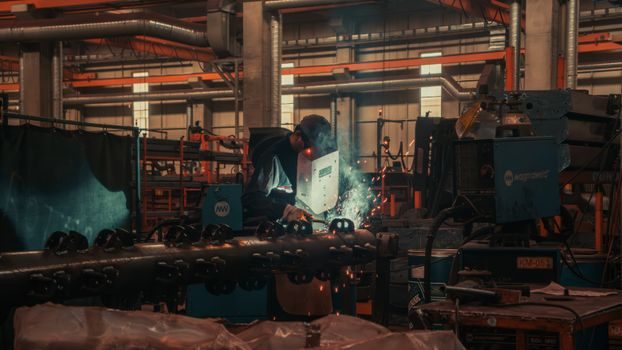
On the anti-static side, MISUMI India lists 31+ standard catalogue items in the foreign-matter-removal sub-category, with antistatic sticky rollers, ionising guns, and wrist-strap kits as stock lines for same-day dispatch [S2]. ULINE's North American catalog groups grounders, static-control equipment, and shielding bags as one buyable family aimed at small-batch electronics packers [S4]. On the insulated-tool side, the supply base is dominated by German and Taiwanese VDE-licensed makers (Knipex, Wera, Wiha, Stahlwille, Bahco) plus OEM programmes at MISUMI, RS Components and Grainger, with 1000 V screwdrivers typically shipping in the EUR 8 to EUR 40 band and 1000 V pliers in the EUR 20 to EUR 90 band.
Changzhou SanJing, a 1992-founded Chinese ESD-floor specialist with 25+ years of history, exports raised access floor and vinyl ESD floor systems for cleanroom and data-centre builds — a heavier-engineering end of the same anti-static family, useful when the cell requires a full 10^6 to 10^9 Ω floor rather than benchtop mats [S3]. For a deeper dive on industrial consumables cross-category sourcing, the Industrial Valve Global Production Capacity by Country: 2026 Output Map and Tier Breakdown map offers a useful analogy on how Chinese capacity leads volume tiers while German and Japanese makers hold the premium band. The Wiring Duct vs Cable Tray: Spec Bands, Use Cases and Selection Logic piece covers another control-panel consumable family that sits on the same hybrid station as insulated tools.
Failure Modes and Audit Risks When the Families Are Confused
The two most common field failures are predictable. First, an insulated screwdriver parked on an ESD mat creates a static reservoir; the next time a technician handles a bare PCB, the polymer handle discharges through the device. Second, a dissipative wrist strap used while torqueing a live DC busbar does nothing for electric shock, and the strap's 1 MΩ resistor becomes a parallel path to ground that masks the absence of proper insulated tooling. [S3]
Audit-wise, an S20.20 auditor will fail a cell that uses unmarked or non-ESD tools in the protected area, and a VDE/IEC 60900 audit will fail a panel shop that uses un-insulated drivers on energised equipment. Cross-contamination — anti-static gear in the electrical shop or insulated gear in the ESD cell — is the single most common root cause of repeat findings during combined ISO 9001 + ISO 14001 surveillance visits.
Standards, Test Methods and Markings to Demand
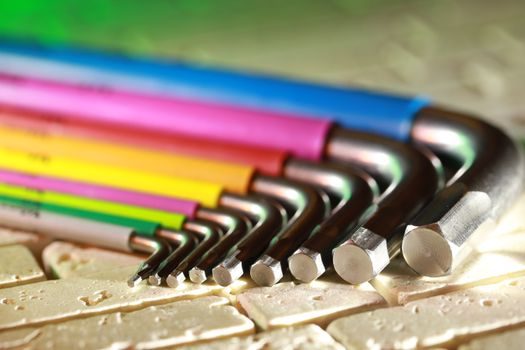
For anti-static equipment, demand the ESD triangle symbol on every mat, wrist strap and ioniser, the 1 MΩ resistor in every wrist strap, ioniser decay-time data on the commissioning sheet (typically ±1000 V to ±100 V in under 2 seconds for a benchtop unit), and surface-resistance data (10^6 to 10^9 Ω for dissipative mats, 10^3 to 10^6 Ω for conductive mats). For insulated tools, demand the VDE double-triangle, the 1000 V AC / 1500 V DC marking, the year stamp, and the IEC 60900 certificate — the global standard that supersedes the older VDE 0682-201 for 1000 V insulated hand tools. [S4]
Buyers should also reference anti-static equipment for the family-level taxonomy and insulated tools for the VDE/IEC 60900 specification frame before locking in a kit list, and treat the two as parallel rather than overlapping categories on the bill of materials.
Both will reshape 2026 procurement lists and audit scopes.
For component-level specifications, see static var generator.