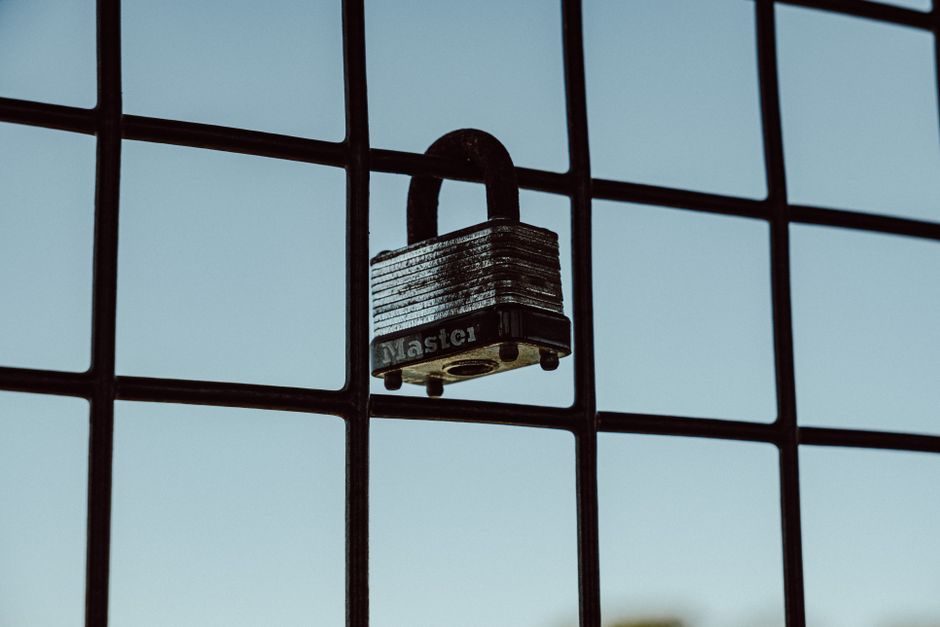
Perimeter alarm pricing in mid-2026 spans three orders of magnitude: a basic 6-beam laser intrusion detector on Made-in-China lists for FOB $500-$3,000 per set with 1-set MOQ [S2], while a passive-radar anti-drone perimeter station from a Hunan manufacturer sits at FOB $45,000 per set for UAV RF detection and FOB $70,000 per set for a 5,000 m detection-range model [S3]. Between those poles, AI-assisted video perimeter systems for harbour or correctional sites land near FOB $4,000 per set at the same supplier [S3], a useful midpoint when sizing a 4-8 zone commercial install.
Cost is driven less by "the alarm panel" and more by sensor mix, cable runs, integration to a fire alarm control panel or gas alarm controller, and the back-haul — fibre, Ethernet, or wireless. For an engineer doing a 2026 budget, treat the sensor unit cost as 30-50% of the installed total, with trenching, mounting hardware, power, and commissioning eating the rest.
Sensor Cost Bands by Technology
Outdoor perimeter sensors split into five families, each with a defensible 2026 cost band drawn from the open listings [S1][S2][S3]. Passive infrared and door/window contact kits (the consumer-grade "home perimeter" kit) sit at $50-$300 per zone, typically sold as 4-8 zone bundles with a panel [S1]. Photoelectric beam pairs in 2-6 beam configurations — the workhorse of fence-line detection — list FOB $500-$3,000 per set with 1-set MOQ on Chinese export channels, model pattern XD-B100FL being a typical 6-beam laser unit [S2]. Vibration/fence-mounted fibre or coaxial sensors run $80-$300 per linear metre installed, scaling sharply with run length. AI video analytics for perimeter (camera + edge inference) clusters around FOB $4,000 per set for a single-node harbour/jail deployment [S3]. Finally, RF/passive-radar and anti-UAV systems dominate the top band at FOB $45,000-$70,000 per set for 5,000 m detection-range units [S3].
For a rough project floor, a 200 m commercial fence with 8 dual-beam photoelectric pairs, an 8-zone panel, and basic integration commonly lands in the $4,000-$8,000 hardware bracket before labour — a useful sanity check before quoting.
Selection Criteria: Matching Sensor to Site
Specifying a perimeter alarm system is a false-alarm problem first and a price problem second. Four levers decide technology choice in practice: detection range required, environmental false-alarm sources (small animals, vegetation, weather), terrain linearity, and downstream integration target. Photoelectric beams (2-6 beam) are cheap and reliable on straight, clear fence runs of 50-200 m [S2]. AI video analytics pull ahead on irregular perimeters — corners, water edges, parking aprons — at FOB $4,000 per node [S3]. For sites where the threat model includes small commercial drones, RF/radar perimeter detection becomes mandatory: passive-radar UAV RF detection at FOB $45,000 per set and 5,000 m detection range [S3] is now the baseline, not the option.
For a small business under 100 m of fence, the cost-optimised stack is a 4-8 zone panel plus 2-4 photoelectric pairs, total hardware often under $3,000 [S1][S2]. For a 1-5 km utility or refinery perimeter, the same physics pushes you toward fibre/cable vibration sensing or radar, with a realistic all-in project cost of $80,000-$500,000 depending on redundancy and integration depth.
Comparison: Main Sensor Families on Four Decision Criteria
On cost per metre of protected run, photoelectric beams win at $5-$30/m installed, AI video at $30-$80/m, fence-mounted vibration at $80-$300/m, and radar/anti-UAV at $200-$1,000/m when amortised over a 5,000 m detection radius [S2][S3]. On false-alarm immunity in vegetated or animal-active sites, AI video and radar lead; photoelectric beams degrade sharply without careful alignment. On detection range, radar/anti-UAV reaches 5,000 m [S3], AI video typically 30-100 m per camera, photoelectric 50-200 m per pair [S2]. On integration effort to a fire alarm control panel or gas alarm controller, AI video and radar expose standard ONVIF/dry-contact outputs most cleanly, while photoelectric pairs often need a dedicated zone expander. Italian-origin perimeter burglar-alarm systems, such as those from GPS Standard, target the mid-market with a different trade-off — more integrated hardware, less raw FOB cost advantage [S4].
Who It Is For — and Who It Is Not For
A photoelectric-beam perimeter system is right for: a small warehouse, a single-fence industrial yard under 200 m, a residential perimeter where budget dominates and vegetation can be cleared. It is wrong for: any site with significant wildlife, a perimeter with multiple corners, or any facility where missed events carry a regulatory consequence. AI video perimeter is right for: irregular geometry, harbour or correctional perimeters (where one FOB-$4,000 node covers a curved dock section) [S3], and sites with existing IP camera infrastructure. It is wrong for: very long straight runs where cameras multiply cost without adding range. Radar/anti-UAV at $45,000-$70,000 per set [S3] is right only for: airports, correctional facilities, critical infrastructure, military or government perimeters where drone intrusion is in the threat model. It is wrong for: any site where that spend cannot be justified against the consequence of a single drone overflight.
For comparison, the industrial surveillance camera price guide 2026 covers the camera-only cost stack in similar depth — useful if AI video perimeter is the chosen path and you need to size the camera line-item separately from the analytics node.
Real Use Cases and Cost Anchors
Three anchors, all from current 2026 listings, let a process engineer sanity-check a budget. Anchor 1: a 6-beam outdoor laser alarm on a Chinese export channel at FOB $500-$3,000 per set, 1-set MOQ, model pattern XD-B100FL — this is the per-zone unit-cost reference for any beam-based install [S2]. Anchor 2: an AI video perimeter system for harbour or jail sites, FOB $4,000 per set from a Hunan high-tech-district manufacturer, single-set MOQ — this is the per-node reference for AI-assisted video perimeters [S3]. Anchor 3: a comprehensive anti-UAV radar with 5,000 m detection range, FOB $70,000 per set — this is the per-site reference for a top-band drone-defence perimeter [S3].
Layer in integration: a 4-zone perimeter feeding an 8-zone intrusion panel with relay outputs to a fire-alarm or gas-alarm control panel typically adds $1,000-$3,000 in interface hardware and $2,000-$8,000 in commissioning labour, depending on the existing panel's spare capacity. Per the Reolink home-perimeter guide, a typical home install also factors in power supply, backup battery, and smartphone/app integration, all of which add to the same $2,000-$50,000+ total installed envelope [S1].
Limitations, Failure Modes and Sourcing Levers
Three failure modes dominate 2026 perimeter-alarm field experience. First, beam misalignment on photoelectric systems: 6-beam units mitigate single-beam loss but still require rigid mounts and annual realignment, especially on long fence runs subject to thermal expansion [S2]. Second, false alarms on AI video systems in heavy weather — the same $4,000-per-node unit [S3] that excels in calm conditions can be swamped by snow, fog, or insect swarms unless the analytics firmware is tuned. Third, radar/anti-UAV false positives on bird flocks at the $45,000-$70,000 price band — RF classification is improving but remains a real commissioning issue [S3].
Standards, Sourcing Channels and Verifiable Signals
Two sourcing channels dominate the open 2026 listings: Chinese B2B export platforms (Made-in-China, Alibaba) carrying the photoelectric and radar suppliers with FOB pricing and 1-set MOQ [S2][S3], and European/Italian direct-oem channels such as GPS Standard, an Italian perimeter burglar-alarm maker targeting the mid-market [S4]. Italian-origin pricing is rarely published as FOB; expect a quoted project price, not a unit price, and a 4-8 week lead time.
For engineers tracking the market, three signals are worth watching through end-2026: (a) anti-UAV radar FOB pricing — current band is $45,000-$70,000 per set [S3], and incremental downward moves typically follow 12-18 months after a new radar chipset generation; (b) AI video perimeter node pricing, currently anchored at FOB $4,000 per set [S3] but under pressure as edge-inference silicon costs fall; (c) photoelectric beam FOB, stable at $500-$3,000 per set for 6-beam units [S2] and likely to remain so unless fibre-vibration sensors drop below $50/m installed.