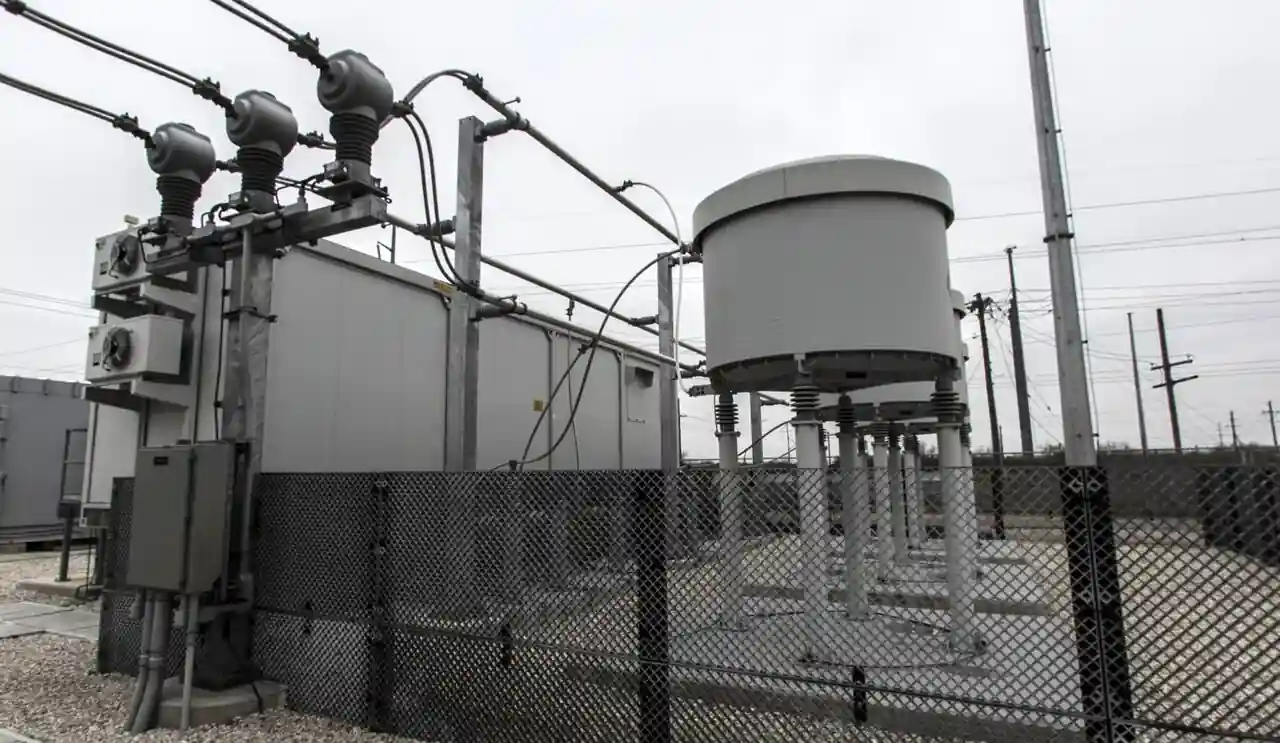
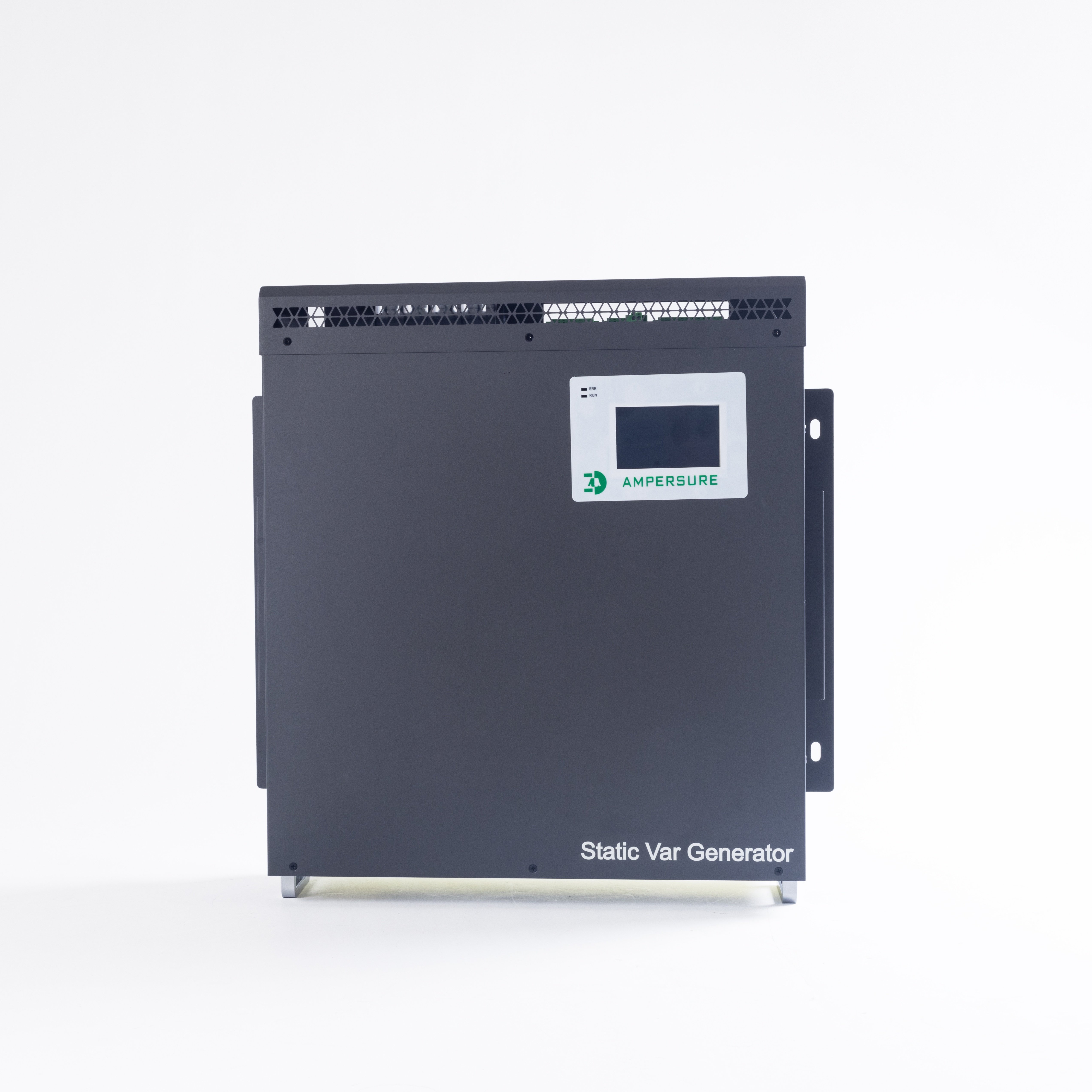
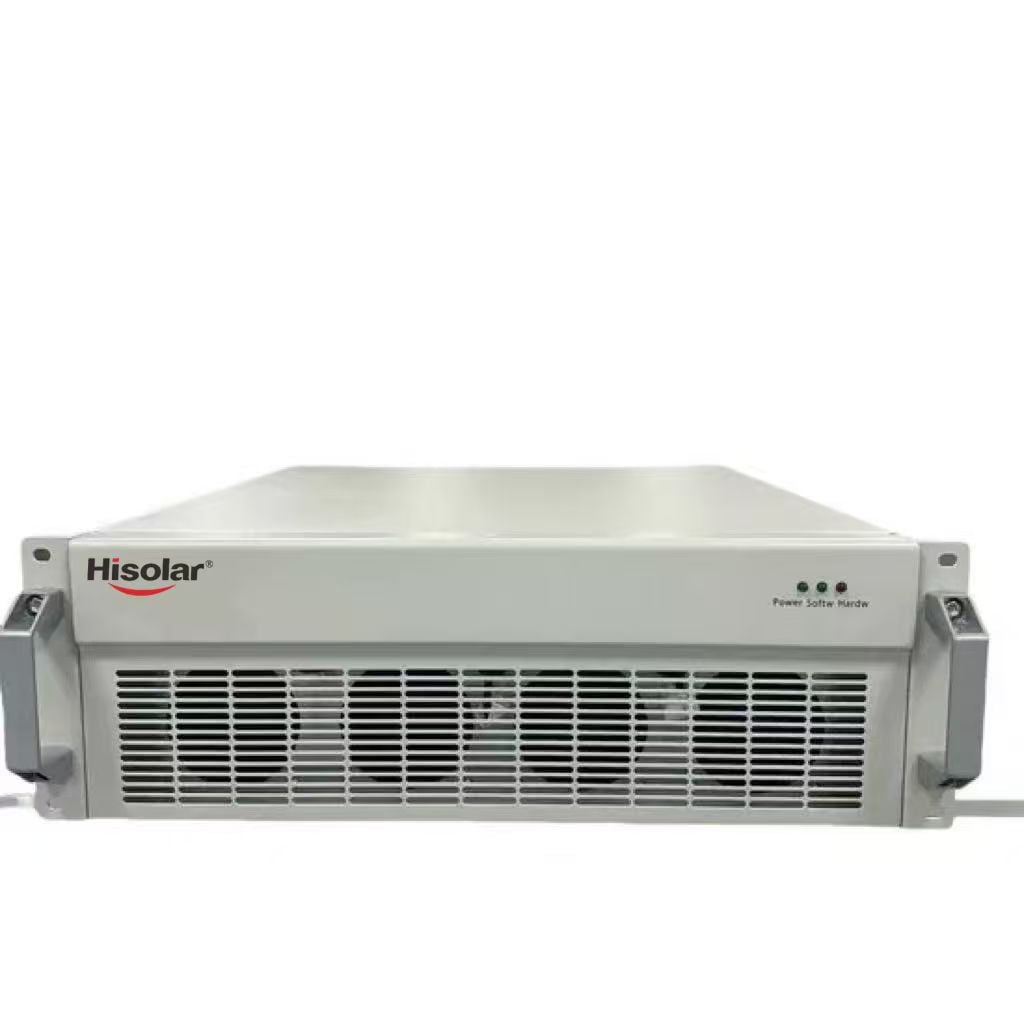
A static VAR generator (SVG) is a power-electronic device that supplies or absorbs reactive power continuously to correct power factor, stabilize voltage, and balance phase currents. At its core sits an IGBT voltage source converter that synthesizes a controllable AC current behind a coupling reactor, replacing the fixed steps of a switched capacitor bank with stepless, fast-acting compensation. The same architecture is called a STATCOM (static synchronous compensator) when applied at transmission and large industrial voltages, where it becomes one of the principal FACTS, or Flexible AC Transmission System, shunt devices.
This guide treats SVG and STATCOM as one technology viewed at different voltage levels. It is written for plant electrical engineers correcting a sub-unity power factor penalty, and for grid-connection engineers specifying dynamic voltage support for arc furnaces, wind farms, and weak-grid interconnections.
This guide is aimed at industrial purchasing engineers and power-system design engineers. It covers 6 chapters from what an SVG is, through converter topologies, technologies, sizing and standards, spec-sheet decoding, to selection decisions, with 7 selection FAQs and manufacturer comparisons. All parameters reference public standards including IEEE Std 1052-2018, IEC 62927:2017, IEEE Std 1531, IEEE Std 519, and IEC 61000-4-30.
Chapter 1 / 06
What is a Static VAR Generator
A static VAR generator is a shunt-connected power-electronic compensator that injects or draws reactive current to hold a target power factor or bus voltage. The word "static" distinguishes it from rotating synchronous condensers, which performed the same duty with a spinning over-excited or under-excited machine. "VAR" is the unit of reactive power, the volt-ampere reactive, which flows back and forth between inductive and capacitive elements of an AC network without doing net work but still loading conductors and transformers. The SVG manufactures that reactive current electronically, with no mechanical inertia and no switched bulk capacitors.
Functionally an SVG is a voltage source converter operated as a controlled current source. A DC-link capacitor holds an internal DC bus, and an array of IGBTs switches that DC voltage onto the AC terminals using pulse-width modulation, synthesizing a three-phase voltage at the grid fundamental frequency. The converter connects to the network through a coupling reactor or transformer. By making the synthesized voltage slightly larger than grid voltage, the device pushes leading current outward and supplies capacitive VARs; by making it slightly smaller, the device pulls lagging current and absorbs inductive VARs. Because there is no real power exchange in steady state beyond converter losses, the DC capacitor neither charges nor depletes, it simply circulates reactive energy.
The same device carries different names by market and scale. At low voltage, 220 to 690 V, packaged wall-mount or rack cabinets are sold as static VAR generators, rated in kvar. At transmission and large industrial medium-to-high voltage, the device is a STATCOM, a static synchronous compensator, rated in Mvar and counted among the FACTS family alongside the SVC, the TCSC, and the UPFC. Reference literature treats STATCOM as a shunt-connected reactive compensation device that uses a voltage source converter to act as a source or sink of reactive AC power. The control philosophy is identical at both scales; only the converter construction and the presence of a coupling transformer differ.
Historically, dynamic reactive support began with the rotating synchronous condenser in the early twentieth century. The first generation of static compensators, the thyristor-based static VAR compensator or SVC, arrived in the 1970s and switched or phase-controlled reactors and capacitor banks. The STATCOM emerged in the late 1980s and 1990s once gate-turn-off devices and then IGBTs made a self-commutated voltage source converter practical at power scale. The decisive advantage was that a voltage source converter holds its current capability even when bus voltage collapses, which a capacitor-based SVC cannot. In the 2000s the modular multilevel converter, or MMC, allowed transformerless or compact transformer-coupled STATCOMs at high voltage, while low-voltage SVG cabinets became a commodity for factory power-factor correction.
It helps to be precise about what reactive power is and why it matters commercially. In an AC circuit, inductive loads such as motors and transformers draw current that lags voltage, and that lagging component, the reactive current, transfers no net energy to the load yet still flows through every cable, breaker, and transformer between the load and the source. The result is a lower power factor, the ratio of real power to apparent power. A plant running at 0.80 power factor draws 25 percent more current than one at unity for the same useful work, wasting capacity and increasing losses. Utilities therefore meter reactive demand and levy penalties below a threshold, commonly 0.90 or 0.95. The SVG supplies the lagging reactive current locally so the upstream network does not have to carry it, raising the metered power factor toward unity.
Three engineering pressures keep driving SVG adoption. First, utility power-factor penalties and reactive-demand charges make continuous correction pay back quickly in plants with swinging loads. Second, the rise of inverter-based renewables on weak grids created a need for fast, voltage-independent reactive support that fixed capacitors cannot give. Third, modern nonlinear loads, variable speed drives, welders, and arc furnaces, create reactive demand that changes faster than any contactor-switched bank can follow, so only an electronically synthesized source can track them. It is worth noting what an SVG is not: in steady state it stores no real energy and supplies no active power, so it cannot back up a load during an outage the way a UPS or battery can. Its DC-link capacitor only buffers the instantaneous reactive exchange, not bulk energy.
Chapter 2 / 06
Device Types and Classification
Reactive compensation is a family, and the SVG sits at the fast, fully dynamic end of it. Confusing an SVG with a switched capacitor bank, or an SVC with a STATCOM, is the most common specification error, because the four devices share the goal of correcting VARs but differ enormously in speed, range, and behavior under voltage stress. The table below positions the four mainstream shunt compensation methods.
Device
Core Technology
Output Range
Typical Response
Behavior at Low Voltage
Switched capacitor bank
Contactor-switched capacitors
Capacitive, stepped
Seconds
Output falls with voltage squared
SVC
Thyristor-controlled reactor + capacitors
Inductive to capacitive
2 to 3 cycles
Output falls sharply, not used below 0.6 pu
SVG (low voltage)
IGBT voltage source converter
Inductive to capacitive, stepless
10 to 15 ms
Holds rated current, weak-grid capable
STATCOM (transmission)
MMC voltage source converter
Inductive to capacitive, stepless
1 to 2 cycles
Holds rated current to about 0.2 to 0.3 pu
Switched capacitor banks remain the cheapest way to correct a steady, predictable lagging power factor. A capacitance contactor stage delivers a fixed block of capacitive kvar, and a controller switches stages in and out. The weaknesses are inherent: correction is stepped, switching is slow and contactor-limited to a finite number of operations per hour, and a bank can only add capacitive VARs, never absorb them. Worse, a capacitor bank forms a resonant tank with system inductance, and if a harmonic order lands near that resonance the distortion is amplified. Detuning reactors mitigate but do not eliminate this.
The SVC, static VAR compensator, was the first electronic answer. It phase-controls a thyristor-controlled reactor, often paired with fixed or thyristor-switched capacitor banks and harmonic filters, to produce a smoothly variable net reactive output. The SVC responds in a few cycles and spans inductive to capacitive. Its limitation is fundamental to its construction: because the reactive elements are capacitors and reactors, the output current is proportional to bus voltage, so its reactive capability collapses precisely during the deep voltage sags where support is most needed.
The SVG and STATCOM break that dependence. Built from a voltage source converter, the device behaves as a controlled current source whose maximum current is fixed by the IGBT rating rather than by bus voltage. It therefore delivers near-rated capacitive current even into a collapsed bus, and it transitions seamlessly between supplying and absorbing VARs. Low-voltage SVGs and transmission STATCOMs are the same device at different scales. A closely related cousin, the active harmonic filter, uses identical converter hardware but is programmed to inject anti-phase harmonic current rather than fundamental reactive current; many units combine both functions and split their rated current between the two duties.
Chapter 3 / 06
Converter Topologies and Technologies
What separates a cheap low-voltage SVG cabinet from a utility-grade STATCOM is the converter topology. The topology sets how high a voltage the unit can reach without a step-up transformer, how clean its output current is, how many IGBTs are required, and how gracefully it tolerates a failed switching cell. Four topologies dominate, scaling from a two-level bridge for small low-voltage units to the modular multilevel converter for high-voltage transmission. The table below compares them.
Topology
Typical Voltage Class
Output Waveform Quality
Coupling Transformer
Typical Use
Two-level VSC
220 to 690 V
Coarse, needs filtering
None
Small LV SVG cabinets
Three-level NPC
400 to 690 V
Improved, lower dv/dt
None
LV SVG, active harmonic filters
Cascaded H-bridge (CHB)
6 to 35 kV
Near sinusoidal
Often direct-connected
MV STATCOM, transformerless
Modular multilevel (MMC)
Tens of kV and up
Excellent, low harmonics
Coupling transformer common
Transmission STATCOM
The two-level voltage source converter is the simplest topology: one IGBT pair per phase leg switches the DC bus to plus or minus a single level. It is compact and cheap, and it dominates small low-voltage SVG cabinets. The cost is waveform quality: a two-level output is a coarse pulse train that demands fast switching, on the order of tens of kilohertz, and output reactors to smooth the current. Higher switching frequency reduces distortion but increases IGBT losses and heat.
The three-level neutral-point-clamped (NPC) converter adds a clamped midpoint so each leg can output three voltage levels instead of two. This halves the voltage step seen by the load, lowers dv/dt stress and output filtering needs, and improves efficiency at the same switching frequency. Most modern low-voltage SVGs and active harmonic filters use a three-level NPC stage running its IGBTs around 20 kHz, which is why their output current distortion is low enough to correct harmonics up to roughly the fiftieth order.
The cascaded H-bridge (CHB) converter stacks many small single-phase full-bridge cells in series per phase, each with its own floating DC capacitor. Summing many cells produces a near-sinusoidal voltage with low harmonic content and lets the converter reach medium voltage, 6 to 35 kV, often without a step-up transformer. A practical advantage is fault tolerance: a failed cell can be bypassed and the unit keeps running at reduced rating. The control challenge is balancing the DC voltage of every individual cell capacitor, which dedicated modulation and balancing algorithms solve.
The modular multilevel converter (MMC) is the transmission-scale topology, built from a chain of identical sub-modules per arm. By switching sub-modules in and out it synthesizes a staircase voltage so fine that it is nearly sinusoidal, with very low harmonic generation and low switching loss per device. This is the basis of the leading utility STATCOM product lines, including Siemens Energy SVC PLUS and Hitachi Energy SVC Light, which use modular multilevel or chain-link voltage source converters. The MMC scales to the highest voltages and Mvar ratings, with redundancy designed in so that loss of individual sub-modules does not trip the system.
Chapter 4 / 06
Sizing, Applications, and Standards
Correct sizing is where most SVG projects succeed or fail. The single most common mistake is to size in kvar from a nameplate kW figure and an assumed power factor, instead of measuring the actual reactive demand. A static VAR generator earns its premium price only when it is sized to the dynamic reactive swing of the real load, so the sizing study, not the catalog, drives the rating.
The disciplined method is to log real power and reactive power over at least one complete production cycle with a power quality analyzer compliant with IEC 61000-4-30. From that record, read the worst-case reactive demand at the lowest power factor the utility will tolerate, then size the SVG to bridge the gap from that demand to the target power factor, conventionally 0.99. Size to the peak reactive swing rather than the average, because dynamic correction is the entire value proposition. Add 10 to 20 percent headroom for load growth. If the load is also distorting and the unit must cancel harmonics, allocate part of the rated current to harmonic duty, because in a combined SVG plus active filter the rated current is shared between reactive and harmonic compensation.
Applications span the full voltage range. At low voltage, SVGs correct power factor and balance phase currents in factories with welders, variable speed drives, elevators, and large motor banks, eliminating utility reactive-demand penalties. At medium and high voltage, STATCOMs provide dynamic voltage support and flicker suppression for electric arc furnaces, ride-through and reactive support for wind and solar plants connecting to weak grids, and voltage regulation on long transmission feeders. Reference product literature notes a transmission-class STATCOM can range across tens of Mvar from capacitive to inductive in steps as fine as about 1 Mvar.
The governing standards differ by scale and function. The table below maps the principal documents an engineer cites when specifying or testing an SVG or STATCOM. Always confirm the current edition and the local grid code, which sets the binding reactive and voltage requirements at the point of common coupling.
Standard
Scope
Applies To
IEEE Std 1052-2018
Specification of transmission STATCOM systems
Transmission STATCOM
IEC 62927:2017
Electrical type and production testing of VSC valves for STATCOM
Converter valves
IEEE Std 519
Harmonic current and voltage limits at the PCC
All, harmonic duty
IEEE Std 1531
Application and specification of harmonic filters
Filter and AHF design
IEC 61000-4-30
Power quality measurement methods
Commissioning, sizing study
IEC 61439
Low-voltage switchgear and controlgear assemblies
LV SVG cabinets
One subtlety on standards: IEEE Std 1052-2018 explicitly covers STATCOM systems built on forced-commutated voltage source converter technology, and recognizes hybrid arrangements that also incorporate thyristor-switched or mechanically switched inductors and capacitors. That matters because many real installations are hybrids, pairing a moderately sized STATCOM with mechanically switched banks to get both fast dynamic range and economical bulk VARs. The economic logic is straightforward: the fast converter is sized to cover only the rapid reactive swings, while cheap mechanically switched capacitors and reactors supply the slow-moving bulk of the reactive requirement. This keeps the expensive IGBT converter small without sacrificing dynamic performance, and it is why utility specifications under IEEE Std 1052 devote attention to the coordination and control of the hybrid elements rather than to the converter alone.
The reactive support delivered at the point of common coupling is also rated against the worst-case grid condition, not nominal voltage. Because a STATCOM holds rated current as voltage falls, its delivered Mvar drops only linearly with voltage, whereas a capacitor-based device drops with voltage squared. Engineering studies therefore evaluate the device against contingency cases, the loss of a parallel line or a nearby generator, where bus voltage is depressed and dynamic support is most valuable. The same studies set the required overload rating and the duration the converter must sustain it, since a brief transient overload capability often distinguishes a unit that rides through a fault from one that trips.
Chapter 5 / 06
Key Specification Parameters
An SVG datasheet can list dozens of lines, but a handful of parameters drive the buying decision. Reading them correctly, especially the way rated current is shared between reactive and harmonic duty, separates a unit that meets the contract from one that disappoints in service. The parameters below are the ones that matter most.
Rated voltage and configuration. Low-voltage SVGs are offered at 220, 400, 480, and 690 V at 50 or 60 Hz, in single-phase two-wire, three-phase three-wire, or three-phase four-wire variants. The four-wire variant adds neutral-current compensation for unbalanced and single-phase loads and requires extra converter capability, so confirm the wiring configuration matches the installation before comparing prices.
Rated reactive current or capacity. SVGs are rated either in amperes of compensating current or in kvar. Common low-voltage module ratings run from 30 kvar to 200 kvar per module, and modules parallel into cabinets reaching several hundred kvar, with vendor catalogs citing up to roughly 800 kvar per cabinet. Crucially, if the unit is a combined SVG and active harmonic filter, that rated current is shared, so 100 A devoted entirely to harmonic cancellation leaves no capacity for reactive correction. Always confirm whether the headline rating is reactive-only or shared.
Response time. Two figures appear and should not be confused. The full response time, the interval to reach full rated output after a step, is typically 10 to 15 ms for low-voltage SVGs and one to two cycles for transmission STATCOMs. The reaction or detection time, how fast the control loop senses a change, is far shorter, often quoted in microseconds. The full response time is the meaningful number for flicker and dynamic correction.
Power factor and compensation accuracy. A correctly sized SVG holds power factor at or above 0.99, and quality units regulate continuously across the range from leading to lagging, often cited as roughly 0.7 inductive to 0.7 capacitive. Because compensation is stepless, there is no residual over- or under-compensation between steps, unlike a switched bank.
Switching frequency and topology. Low-voltage units commonly use a three-level converter switching IGBTs near 20 kHz, which sets both the harmonic cancellation bandwidth and the converter losses. Higher switching frequency cleans the output but raises heat, so it is a deliberate design trade, not a free improvement.
Harmonic capability. For combined or active-filter units, the specification states the harmonic orders corrected, commonly the 2nd through the 50th, and the resulting current distortion, typically below about 5 percent THDi after compensation, judged against IEEE Std 519.
Efficiency, protection, and cooling. Converter efficiency is high but not unity; switching and conduction losses become heat that the cooling system must remove, so thermal design dominates reliability. Enclosure ingress protection ranges from IP20 for indoor cabinets to IP54 for harsher rooms. Cooling is forced air on low-voltage units and often liquid cooling on medium-voltage STATCOMs. The communication interface, commonly Modbus over RS-485 or Ethernet, matters for integration and monitoring.
Chapter 6 / 06
Selection Decision Factors
To turn the preceding chapters into a purchase order, follow the sequence below. Most selection failures come not from one wrong number but from deciding the rating before completing the measurement study. These eight steps form a reusable RFQ template.
Measure before you size: Log real and reactive power, and harmonic spectrum if relevant, over a full production cycle with an IEC 61000-4-30 compliant analyzer. Never size from nameplate kW and an assumed power factor.
Define the duty split: Decide how much of the unit must serve reactive correction versus harmonic cancellation. In a combined SVG plus active filter the rated current is shared, so the sum of both duties sets the rating, not either one alone.
Confirm voltage and configuration: Rated voltage 220 / 400 / 480 / 690 V and three-wire versus four-wire. Four-wire neutral compensation is needed for unbalanced or single-phase load mixes and costs more converter capacity.
Set the target and headroom: Choose the power factor target, conventionally 0.99, and the reactive swing the unit must cover. Add 10 to 20 percent headroom for load growth and size to the peak swing, not the average.
Match topology to voltage: Two-level or three-level NPC for low voltage, cascaded H-bridge for medium voltage often transformerless, modular multilevel for transmission. Topology drives waveform quality, efficiency, and fault tolerance.
Specify standards and grid code: Reference IEEE Std 1052-2018 and IEC 62927:2017 for STATCOM, IEEE Std 519 and IEEE Std 1531 for harmonic duty, IEC 61439 for LV assemblies, and above all the binding local grid code at the point of common coupling.
Environment and cooling: Confirm ambient temperature, altitude derating, enclosure ingress protection IP20 to IP54, and cooling method, forced air or liquid. Thermal margin, not headline kvar, governs IGBT life.
Total cost of ownership: Purchase price plus installation plus converter losses over the life of the unit plus maintenance. An SVG costs several times more per kvar than a detuned capacitor bank, so it is justified by dynamic loads, harmonic duty, or reactive penalties, not by static lagging loads a capacitor bank already handles.
One last dimension is often overlooked: serviceability and vendor depth. Local spare-part stock, field commissioning support, firmware update path, and the availability of the sizing study itself determine repair response after years in service. Transmission STATCOM lines from Siemens Energy (SVC PLUS), Hitachi Energy (SVC Light, PCS 6000), GE, and Mitsubishi Electric carry the engineering studies and global service that large grid projects require. At low voltage, packaged SVG cabinets from suppliers such as TDK (PQvar), Circutor, Schneider Electric, and ABB cover factory power-factor and harmonic duty. Match the vendor tier to the criticality of the load, and require the supplier to deliver the measurement-based sizing study, not just a catalog rating.
FAQ
What is the difference between a static VAR generator and a capacitor bank?
A switched capacitor bank delivers reactive power in fixed steps and can only supply capacitive (leading) VARs, so it over-compensates or under-compensates whenever the load sits between steps. A static VAR generator (SVG) is a voltage source converter that synthesizes reactive current continuously and stepless across the full range, from inductive to capacitive, and responds in roughly 10 to 15 ms at low voltage versus seconds for contactor-switched banks. Capacitor banks can also resonate with system harmonics and amplify distortion, while an SVG actively injects counteracting current and does not form a fixed resonant tank. The trade-off is cost: an SVG typically costs several times more per kvar than a detuned capacitor bank.
What is the difference between an SVG and a STATCOM?
They are the same family of device: a shunt-connected voltage source converter that exchanges reactive power with the grid. The label usually tracks the voltage level and market. STATCOM (static synchronous compensator) is the term used at transmission and large industrial voltages, where the converter is built from modular multilevel or chain-link topologies behind a coupling transformer, rated in tens to hundreds of Mvar. SVG (static VAR generator) is the term used for low-voltage 220 to 690 V cabinets and packaged medium-voltage units rated in kvar to a few Mvar, typically connected directly without a step-up transformer. Both rely on IGBT voltage source converters and identical control principles.
How does the SVG decide whether to supply or absorb reactive power?
The converter synthesizes a three-phase AC voltage behind a coupling reactor and controls its magnitude and phase relative to the grid. If the converter voltage magnitude exceeds grid voltage, current flows out and the SVG supplies capacitive (leading) reactive power. If the converter voltage is below grid voltage, the SVG absorbs inductive (lagging) reactive power. Because the device is current-controlled, the control loop directly commands the reactive current reference from a measured power factor or voltage target, then the converter tracks it within one to two cycles. No mechanical switching is involved, so the transition between supplying and absorbing is continuous and bumpless.
How do I size a static VAR generator in kvar?
Measure the actual reactive demand, do not guess from nameplate kW. Log real and reactive power for at least one full production cycle with a power quality analyzer, then read the worst-case reactive demand at the lowest acceptable power factor. The SVG rating in kvar must cover the gap between that demand and your target power factor, usually 0.99. A common rule is to size the SVG to the peak reactive swing rather than the average, because the value of an SVG is dynamic correction. If the load is also distorting, decide how much harmonic current the unit must absorb, since shared SVG plus active filter capacity is allocated between reactive and harmonic duty. Leave 10 to 20 percent headroom for load growth.
Can a static VAR generator also filter harmonics?
A pure SVG corrects reactive power and balances phase currents but is tuned for fundamental-frequency current. Harmonic mitigation is the job of an active harmonic filter (AHF), which uses the same IGBT converter hardware to inject anti-phase harmonic current and typically corrects orders 2 through 50, bringing current distortion below about 5 percent THDi. Many vendors sell a combined or hybrid unit that splits its rated current between reactive compensation and harmonic cancellation, set by a configuration parameter. If you buy a combined unit, remember the rated current is shared: 100 A allocated fully to harmonics leaves nothing for VARs, so size it for the sum of both duties.
What standards apply to static VAR generators and STATCOM systems?
At transmission scale, IEEE Std 1052-2018, the Guide for Specification of Transmission Static Synchronous Compensator (STATCOM) Systems, defines functional requirements, studies, and testing. IEC 62927:2017 governs electrical type and production testing of the VSC valves themselves. Harmonic performance is judged against IEEE Std 519 and IEC 61000-4-30 for measurement, while IEEE Std 1531 guides application and specification of harmonic filters. Reactive limits at the point of common coupling are usually set by the local utility grid code. Low-voltage cabinets additionally follow IEC 61439 for assemblies and IEC 61000 series EMC requirements.
Why does a STATCOM outperform an SVC during voltage sags?
An SVC is a thyristor-controlled current source built from reactors and capacitor banks, so its reactive output falls with the square of voltage: at 0.5 per unit voltage it can deliver only about a quarter of its rated VARs, exactly when the grid needs support most. A STATCOM is a voltage source converter whose maximum current is set by the IGBT rating, not by the bus voltage, so it can supply close to its full rated capacitive current down to roughly 0.2 to 0.3 per unit voltage. This makes the STATCOM far more effective for ride-through, flicker suppression on arc furnaces, and weak-grid renewable interconnection. The trade-off is higher converter cost and switching losses.
Static VAR Generator Manufacturers
Source-backed product routes. Open a company dossier for procurement scope and cited evidence.
Company Profile Shanghai Yingtong(YT) Electric Co., Ltd is a holding subsidiary of the listed company CSG Smart Science & Technology Co., Ltd. (Stock Code: 300222).