
Architectural hardware covers the visible, operable and decorative metalwork on a building envelope or interior — hinges, lever sets, mortise locks, door closers, push plates, kick plates, pulls, coordinators, exit devices and matching trim — and is normally specified under builders'-hardware sections (typically CSI Division 08) rather than under structural-fastener sections [S1].
Expansion anchors are a subset of post-installed concrete fasteners: sleeve, wedge, drop-in, undercut and shell-type bodies that develop load capacity by expanding against the bore wall in hardened concrete, grout-filled masonry or structural brick. The two product families are not interchangeable, and conflating them is a common specification error on thermal-cycling façades, sun-exposed lintels and heated-side parapet fixings where the building skin moves several millimetres per metre over a seasonal swing.
What each product family is actually designed to do
Architectural door hardware is rated for cycle life, finish retention, security grade and code-listed fire / accessibility compliance; for example, UL-listed fire-door hardware has to survive a documented cycle count and a fire-endurance test on the door assembly, not a load test against a substrate [S1]. Manufacturer catalogues group these items by function (hinge, lock, closer, exit device, trim) and by grade (residential, commercial, architectural, heavy-duty architectural), with the heavy-duty tier being the minimum on high-traffic commercial openings [S1].
Expansion anchors are rated by tension and shear capacity in cracked and uncracked concrete, with published design strengths keyed to a specific embedment depth, edge distance and anchor spacing; thermal movement is handled by oversizing the clearance hole in the attached part, by using a sleeve configuration that allows the sleeve to follow the part, or by switching the connection to a slotted-hole/slot-and-bolt detail that accepts in-plane movement without bending the anchor shaft.
Selection criteria where the two families overlap in the field
On a sun-exposed curtain wall or a metal-cladding panel, the engineer is choosing between (a) fixing a bracket to the structure with an expansion anchor and leaving the architectural hardware (hinge, lock, closer bracket) to move with the panel, or (b) allowing the hardware itself to slide on a slotted plate so the panel can grow. In both cases the architectural hardware is selected for cycle count and finish, while the anchor is selected for tension/shear capacity, base-material condition (cracked vs uncracked concrete) and corrosion class; thermal growth is absorbed in the bracket-to-anchor interface, not in either component alone [S1].
For corrosion-exposed façades (coastal, pool deck, chemical-plant perimeter), the comparison is between stainless-steel architectural hardware (commonly 304 or 316 grade depending on chloride exposure) and stainless or hot-dip-galvanised expansion anchors. The two specifications are written separately and tested separately: hardware is salt-spray rated for finish and function, anchors are rated for sustained tension load in a corrosive environment, and mixing a zinc-plated anchor with 316 stainless hardware creates a galvanic-couple risk that is independent of the thermal-expansion design.
Who should specify which family, and who should not

Architectural-hardware schedules are the province of the architect, hardware consultant and Division 08 specifier, with input from the door-and-frame supplier on prep templates; expansion-anchor selection belongs to the structural engineer of record or a qualified fastener engineer, with anchor layout signed off against the project's structural drawing set. A finish carpenter or door-and-hardware installer does not have the substrate data (concrete compressive strength, presence of rebar, masonry grout condition) needed to size an anchor, and a structural detailer should not be choosing lock functions or closer sizes [S1].
For the specifier evaluating a thermal-movement detail: an expansion anchor is appropriate when the attached item is fixed in position and the surrounding structure moves; an architectural-hardware item (hinge, continuous hinge, pivot) is appropriate when the attached item must articulate relative to the structure. Using an expansion anchor as a hinge pin, or using a decorative hinge as a structural fixing, is a category error that shows up in field callbacks.
Comparison of the main expansion-anchor types on thermal-movement duty
The four common types — wedge, sleeve, drop-in and undercut — behave differently under cyclic movement. Wedge anchors hold by a clip that bears on the bore wall; small cyclic movements tend to walk the clip and reduce preload. Sleeve anchors distribute expansion around a full-length sleeve and tolerate more cyclic movement, at the cost of lower ultimate tension capacity per diameter. Drop-in (setting-tool) anchors are internally threaded and rely on a deformed sleeve; they are best in static, overhead-suspended applications and are not a good choice where the connected part will slide relative to the substrate. Undercut anchors (e.g. self-undercutting designs) develop capacity at the bottom of the bore and are the most tolerant of cyclic and thermal movement, but require a matched drill-and-undercut tool and a higher-quality installation inspection regime. [S1]
A practical decision matrix: for a sun-exposed metal bracket carrying only its own weight and wind load, a stainless sleeve anchor on an oversize clearance hole is the usual spec; for a high-tension guardrail post on a heated swimming-pool deck, an undercut or a through-bolt with a stainless bonded washer is the more conservative choice. A wedge anchor in the same deck application is the lowest first-cost option but the worst choice for cyclic movement because the clip is the only friction element and it does not recover preload after a thermal cycle.
Real installation cases and failure modes
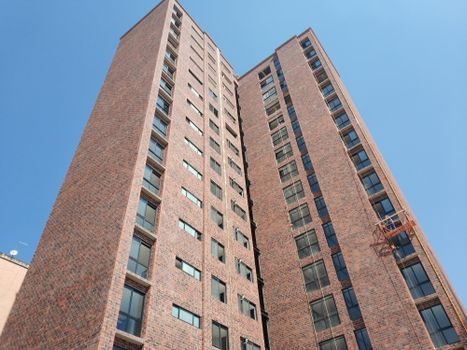
The recurring failure mode on thermal-cycling details is loose hardware on otherwise sound anchors: the anchor has not pulled out, but the connected bracket has walked enough that the nut, screw or hinge pin is no longer tight. The fix is rarely "use a bigger anchor" and almost always "decouple the connection so thermal movement is absorbed in a slot, oversized hole or sliding clevis, with the anchor only resisting perpendicular load." This is the same logic that drives slotted-base-plate details in steel-connection design, applied at a smaller scale to architectural hardware. [S2]
A second failure mode is substrate failure: an expansion anchor installed in the face-shell of a hollow concrete masonry unit, or in brick rather than in the grouted cell, will not develop the published tension value and will loosen visibly within a single seasonal cycle. Manufacturer data sheets for expansion anchors list base-material categories (concrete, grout-filled CMU, solid brick, hollow masonry); selecting a fixture and anchor combination without confirming the actual base material is the most common source of thermal-movement callbacks on retrofit work [S1].
Standards, sourcing and what to verify before ordering
Architectural hardware is commonly specified against BHMA/ANSI grade standards for cycle and strength, against UL listings for fire-door assemblies, and against ADA / ICC A117.1 for accessibility; finish and corrosion performance are covered by BHMA and by the project's own environmental classification. Expansion anchors used in concrete are typically designed against ACI 318 Appendix D (or its successor clauses in newer editions) for cracked-concrete anchorage, with published design strengths derived from AC193 / AC106 evaluation reports; for seismic regions the design is upgraded to ductile or deformation-controlled categories, which is a separate decision from the thermal-expansion question. [S3]
Before ordering, verify three items on the same drawing: (1) the architectural-hardware schedule lists the correct grade, function, fire label and finish for each opening, with keying grouped correctly; (2) the anchor schedule lists the exact anchor type, diameter, embedment, edge distance and corrosion class, matched to the base material actually on site; (3) the bracket or plate that joins the two has either an oversized clearance hole, a slotted hole, or a sliding-clevis detail, with the amount of slot dimensioned against the calculated thermal growth of the façade so the slot does not run out of travel in the hottest or coldest week of the year.
One trackable signal for the next review cycle: cross-check the hardware and anchor submittal packages against the structural fastener log when both are issued for the same opening, since mismatches between the two (zinc anchor + 316 hardware, wedge anchor on a moving bracket, anchor in the wrong base material) are the items that get caught in coordination and almost never get caught in the field.
Related: pressure transmitter, flow meter, industrial valve.