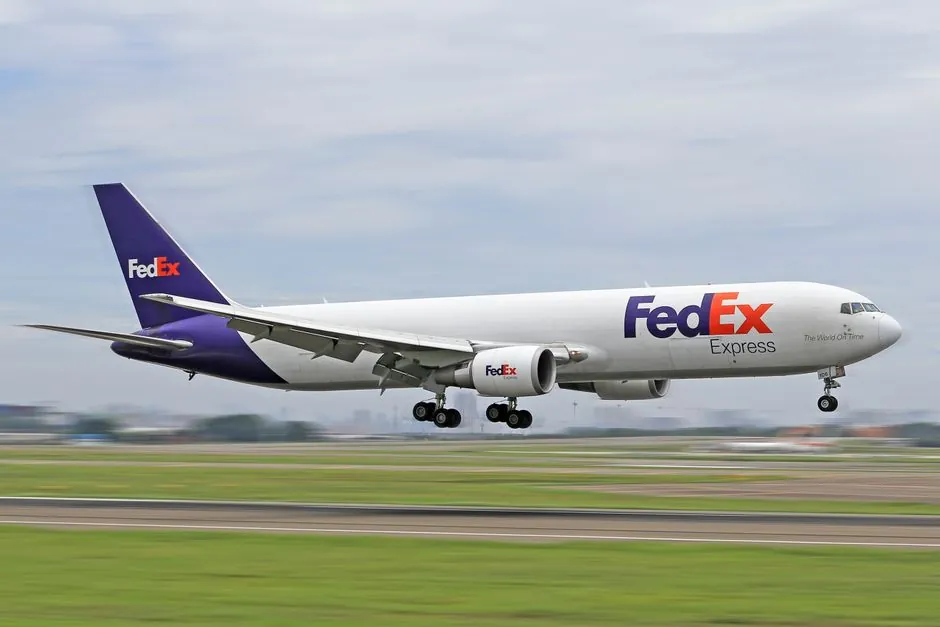
An AS/RS in air cargo is justified when a terminal needs to compress Cargo Dwell Time (CDT) and raise pallet throughput, with McKinsey reporting that implementing automated warehouse systems reduces OPEX around 20% and improves throughput by 15-20% [S2].
The 2026 air-cargo market context reinforces the case: 12% of global air cargo capacity was removed in early 2026 after the Iran conflict, demand fell 3% in March before rebounding through June, and Xeneta projects full-year air freight rates 5-15% higher [S3]. For terminals planning capacity additions this year, an AS/RS system selected against dwell-time and density KPIs is the difference between scaling throughput and running an automation black box [S1].
Cargo Dwell Time Is the Decisive KPI
AS/RS in air cargo must be evaluated on a single end-to-end metric: the "Wheels Down to Ready-to-Deliver" Cargo Dwell Time, defined as the closed loop from aircraft touchdown to cleared, sorted, ready-for-dispatch cargo [S1]. A pallet that sits idle for 48 hours after an AS/RS install is a system that has moved the bottleneck rather than removed it; high CDT also drives "ghost energy" costs for climate control, lighting, and security, which scale nonlinearly for pharmaceutical and cold-chain airport cargo [S1]. The fix is flow-oriented orchestration, not faster machines, with on-demand dispatching, dynamic task allocation, continuous routing between aircraft, warehouse, and landside, and fleet-wide coordination through a centralized Fleet Management System [S1].
Storage Density and Retrieval Speed: Selection Criteria
The two engineering criteria that map directly to throughput gain are storage density and retrieval speed, and AS/RS improves both by reducing travel distance and increasing storage capacity versus manual or semi-automated pallet handling [S2]. Comparing the main option classes against four decision criteria gives a working matrix: unit-load AS/RS scores high on density and pallet weight (up to multi-tonne ULDs) but lower on flexibility; mini-load AS/RS scores high on retrieval speed for totes and small parts but lower on ULD compatibility; vertical lift modules score high on footprint and operator access but capped on throughput; and horizontal carousels score high on low-cost retrofit but lowest on density [S2]. For air-cargo ULDs and palletized build-up, the unit-load or pallet-flow variants aligned with shuttle system architecture remain the dominant choice.
Manual vs Semi-Automated vs Fully Automated Pallet Handling
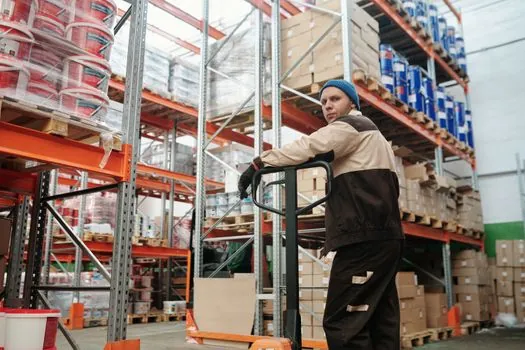
Manual pallet handling carries higher safety risk, relies heavily on forklifts, and produces inconsistent flow, with the HSE reporting approximately 13,600 people injured across 2024/2025 from being hit by moving vehicles during loading [S2]. Semi-automated layouts add conveyors, transfer units, palletisers, depalletisers, stretch wrappers, and pallet magazines, but still depend on operator-driven handoffs [S2]. Fully automated handling adds AS/RS plus AGV/RGV movement, removes the largest manual bottlenecks, and is what unlocks the 15-20% throughput uplift cited for automated warehouse systems [S2]. The selection rule is straightforward: if your current bottleneck is pallet flow between zones, start with conveyors and loaders; if it is storage density plus retrieval speed at the cell, move directly to AS/RS with shuttle support.
Integration Risk and the Automation Black Box
Capital intensity is not the same as performance: research cited in the air cargo automation community shows automation projects frequently deliver lower-than-expected cost savings and in some cases raise per-unit handling cost because of integration complexity, fragmented data flows, and inconsistent operating conditions [S1]. A common failure mode is "vanity tech" where the system runs only during VIP tours or needs a small manual crew to fix exceptions [S1]. Mitigations are concrete: unify data across the cargo warehouse so the AS/RS and AI sorting systems share one event stream, then layer an AI-driven dispatching platform over a centralized FMS to remove the dwell that accumulates between systems rather than inside them [S1].
2026 Market Signals That Shape the Sizing Decision
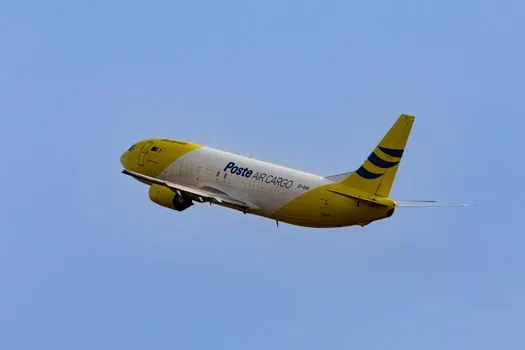
Global air cargo demand rose 4% year over year at the end of June 2026, tracking above the 2-3% forecast issued earlier in the year, and AI-related cargo is fueling growth on the Transpacific lane [S3]. The operational implication for an AS/RS sizing case is asymmetric: H2 2026 volumes are biased upward by ocean reliability issues and inventory pull-forward, but elevated frontloaded inventories may dampen Q4 peak-season demand, so a terminal specifying new storage height should size against the upper-end demand band, not the mid-point [S3]. A warehouse automation spec guide walkthrough of cell height, aisle width, crane speed, and ULD envelope tolerances is the right starting point before vendor selection.
Limitations and Failure Modes to Spec Against
AS/RS in air cargo underperforms when the upstream sortation cannot feed the crane at its rated cycle, when ULD dimensional variance exceeds the cell tolerance window, and when the WMS cannot resolve two simultaneous flight-priority requests without queueing. The HSE forklift-injury figure of about 13,600 incidents in 2024/2025 is the safety baseline AS/RS replacement is measured against in a credible ROI case [S2]. Pairing pallet conveyors with air solenoid valve-controlled diverters at the AS/RS in-feed keeps the throughput assumption honest, and a shuttle system layer is the standard answer to high-density, low-cycle storage where crane-only AS/RS cannot meet the 15-20% throughput target [S2]. For a broader look at how these cells tie into tooling and component flow on adjacent lines, the molding line selection guide covers comparable flow-orchestration logic for hardware manufacturing.
Trackable next nodes: the Q4 2026 Xeneta Air Freight Outlook update for realized rate movement against the 5-15% guidance, and any 2026 H2 IATA fuel-price revision that changes the ghost-energy cost line in the CDT model.