
Mini-load AS/RS configured for totes and cartons now anchors most new pharmaceutical distribution centres, pairing shuttle-based storage with goods-to-person stations that keep pickers off the floor and operators inside a validated GxP envelope [S2]. Unit-load stacker-crane systems remain the workhorse for full-pallet API and finished-goods buffers, with single-aisle throughput typically quoted between 30 and 120 transactions per hour depending on rack height and crane acceleration [S2].
The 2026 buying question is no longer "AS/RS or not" but which family, what throughput target, and which controls stack handles the audit trail. KNAPP's 2026 pharma blog documents camera-based check processes and seamless identification layered over shuttle storage and pocket sortation, illustrating how vision, traceability, and WMS hooks are now baseline rather than optional [S1]. For a deeper primer on the hardware families in play, see the AS/RS system overview.
System families and where each one fits
Mini-load systems are designed for smaller items, cartons, or totes, and explicitly serve pharmaceutical distribution, e-commerce fulfilment, and parts warehousing, frequently incorporating goods-to-person picking stations that remove walk-and-pick time from the operator cycle [S2]. Unit-load AS/RS handle full pallets or large containers and excel in manufacturing, FMCG, and bulk distribution, with stacker cranes travelling fixed rails to storage positions with precision measured in millimetres [S2]. Shuttle and AMR-based topologies, including overhead shuttles such as the Evo Shuttle class and autonomous mobile robots in the Open Shuttle line, add redundancy and decouple storage from a single aisle, which matters when a regulated line cannot tolerate a single point of failure [S1].
For a pharmaceutical site the typical split is unit-load cranes for inbound pallet reserve and finished-goods staging, mini-load or shuttle for pick-face totes, and AMR or conveyor for last-meter handoff to packout. A read on how a related spec, like the conveyors feeding these systems, is selected in a different vertical appears in the air cargo conveyor sorting line guide, which uses the same throughput-per-aisle logic on a heavier load class.
Throughput, footprint, and density numbers that drive the decision
Unit-load crane throughput in the 30 to 120 transactions per hour per aisle band is the most defensible benchmark to anchor a capacity model on, and it scales with rack height, load weight, and crane acceleration, not with the WMS [S2]. Mini-load and tote-handling systems are positioned for high-SKU environments where slot density and pick-rate per operator dominate the ROI case, since the goods-to-person model collapses walk time to a fixed cycle at the station [S2]. Stacker-crane racking is routinely built to 30 m or more of clear height, converting otherwise dead overhead volume into active storage positions, a number that should be checked against local seismic, floor slab, and sprinkler zoning rules before the layout is frozen [S2].
Bearings inside stacker cranes and shuttles take a continuous duty hit and are commonly specced as pillow blocks on the travel wheels and redirect pulleys, the same selection logic used across material handling lines and covered in the pillow block bearing selection guide for material handling. The shuttle and crane duty cycle is the right place to confirm lubrication interval, dynamic load rating, and seal choice before you sign the URS, not after FAT.
Selection criteria a pharma DC actually grades on

Five criteria consistently separate a serious pharma AS/RS proposal from a generic one: validated traceability, chain-of-custody ID at every pick, deterministic throughput per aisle, cleanroom or cold-chain compatibility, and software stack openness. Camera-based check processes and seamless identification are now called out as the precision layer in picking, packing, and shipping, with the vision system tied into the WMS/WCS so each tote carries a verified identifier end-to-end [S1].
Control software is the brain of any storage and retrieval system and is expected to manage inventory locations, optimise retrieval sequences, coordinate multiple machines simultaneously, and integrate with the broader WMS, a list that is the minimum bar for GxP audit trails [S2]. The hardware envelope for a regulated zone typically includes emergency stops, collision avoidance, and access controls, plus power infrastructure that supports either continuous or battery-backed operation depending on the redundancy class the site requires [S2].
Comparing the main options against decision criteria
The decision is clearer when the three dominant families are lined up against the same axes. Unit-load cranes win on bulk-pallet density and on holding 1,000+ kg loads at height, but lose on SKU granularity and on the walking-pick productivity of the operator. Mini-load systems win on pick rate per operator via goods-to-person stations and on high-SKU density, but cap out on load weight and require tight tolerances on tote dimensions. Shuttle and AMR topologies win on redundancy and on decoupling storage from a single aisle, but add a software and traffic-management layer that has to be validated alongside the WMS. [S1]
On throughput per aisle, unit-load is the 30 to 120 transactions per hour band, mini-load is benchmarked on operator pick rate rather than crane cycles, and shuttle systems scale by adding vehicles rather than aisles, so a capacity model that assumes one aisle equals one bottleneck is wrong on day one [S2]. On auditability, all three need a WMS/WCS layer that can replay every move; the differentiator is whether the vision and ID layer is closed-loop with that software, which is exactly the architecture KNAPP describes with its integrated check processes [S1].
Standards, validation, and the audit trail
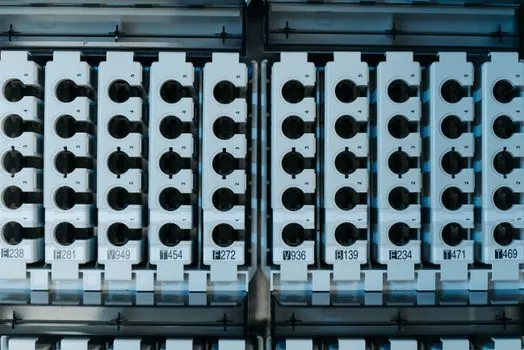
No named GxP clause from this research should be quoted as the binding requirement; the practical rule is that every pick, every tote, and every crane cycle has to be reconstructable from the WMS log, and the AS/RS control layer has to expose the events needed to do that. Hardware-side, emergency stops, collision avoidance, and access controls are baseline safety controls inside the system, and power infrastructure must be specified for continuous or battery-backed operation depending on how the site classifies its tolerated downtime [S2]. The vision and ID layer is what closes the loop, with camera-based check processes and seamless identification delivering the precision that picking, packing, and shipping audits rely on [S1].
Cold-chain integration is the most common reason a pharma AS/RS project slips: the storage structure, the retrieval mechanism, and the controls all have to be rated for the temperature and humidity window, and that is normally a custom engineering path rather than a catalogue line. Density figures like 30 m clear-height racking are workable but must be reconciled against sprinkler zoning and any local high-pile storage rules before the racking is procured [S2].
Limitations and failure modes to plan around
AS/RS does not remove operational discipline, it concentrates it. The classic failure modes are single-aisle dependency in a crane-only design, software-version drift between WMS and WCS after a Go-Live, and tote or carrier dimensional drift that quietly degrades pick accuracy. Mini-load and tote systems depend on consistent tote dimensions; unit-load systems depend on consistent pallet quality, and both expectations have to be enforced at goods-in, not discovered at the pick face [S2].
Redundancy is the cheapest insurance: shuttle and AMR topologies decouple storage from a single aisle so a faulted vehicle or bay does not stop the line, which matters most on a regulated shipping wave where a missed dispatch window is a contractual event [S2]. A useful proxy for hardware-side reliability on the crane and shuttle moving parts is the bearing and seal logic used in adjacent material handling lines, summarised in the pillow block bearing selection guide for steel mills, which applies the same duty-cycle and contamination thinking to a heavier load class.
Who AS/RS is, and is not, for
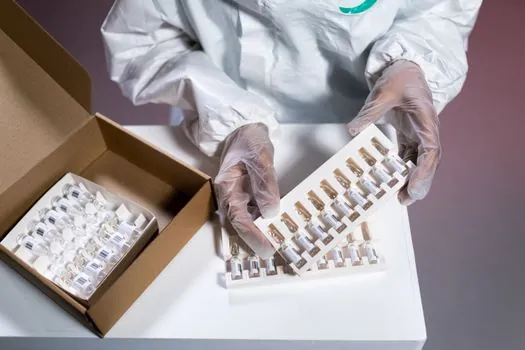
An AS/RS is for a pharma DC that has stabilised its SKU master, its pack formats, and its order profiles enough to model throughput per aisle with confidence, and that can fund the controls integration without starving validation. It is not for a site still reshaping its trade-item data, its carton specs, or its carrier mix every quarter, because the ROI math collapses when the input geometry keeps moving. A related decision pattern, where spec discipline has to be locked before the equipment order, is the polycarbonate selection guide, which walks through how changes upstream force redesigns downstream. [S1]
For sites that are not yet ready, the path is to stabilise master data and tote/pallet standards first, then layer AS/RS in behind a controlled goods-in gate. For sites that are ready, the 2026 playbook is mini-load or shuttle for the pick face, unit-load crane for the pallet buffer, and a WMS/WCS stack that can replay every move on demand. Three signals worth tracking into the next planning cycle are vendor releases of validated GxP reference architectures, published throughput benchmarks for shuttle fleets in regulated DC builds, and any updates to high-pile storage and sprinkler rules that change the 30 m rack-height assumption [S1][S2].
The underlying component specifications are covered under distribution cabinet, and power distribution.