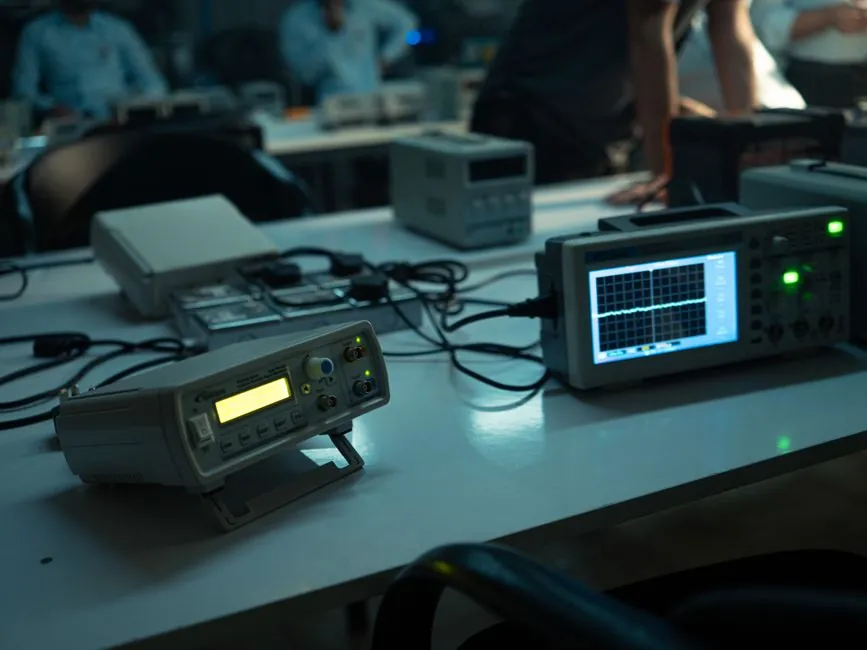
For a 2026 everyday-carry decision, the core choice between an analog moving-iron tong tester and a digital clamp meter is a question of signal character: a moving-iron pointer resolves fluctuating and rippling AC loads that a numeric LCD cannot, while a digital clamp wins on accuracy, input impedance, and DC measurement [S4][S5].
Both instruments measure current without breaking the conductor, but they differ in sensing element, display, and ergonomics; a moving-iron tong tester deflects a coil against a calibrated scale, while a digital clamp converts the clamped field to a numeric reading through an ADC and autoranging [S4][S5].
Display physics: why a needle still wins on a flickering load
An analog meter can resolve quantities changing in the few-Hz range because the eye averages the needle swing, while a digital display becomes unreadable when the value shifts on every update, a forum example being flicker between 6.99 and 7.00 [S1]. A digital meter with averaging mode hides the swing but loses the peak information that a moving coil shows directly [S1].
The moving-iron tong tester is a moving-coil galvanometer with internal damping, a calibrated scale, and a manual range selector, giving it a small, robust, no-battery display path [S5]. The same moving-iron element delivers the traditional AC current measurement that defines a classic tong tester, with the pointer deflection proportional to the RMS force in the jaw.
Where the digital clamp meter pulls ahead
Digital clamp meters carry high input impedance, autoranging, and direct numeric readings, and they extend measurement to capacitance, frequency, and temperature in addition to voltage, current, and resistance [S4][S5].
A digital multimeter is fundamentally a voltage-measuring tool that adds current ranges, while a clamp meter is fundamentally a current-measuring tool, so the clamp form factor removes the need to break the circuit for ampere readings on energised panels [S2]. For DC work, Hall-effect jaws let a digital clamp read both AC and DC amperage, a capability the classic moving-iron tong tester does not provide.
Failure modes and field ergonomics
Analog meters are more delicate than digital units: overcurrent through the movement coil can damage it, so the user must confirm the range before applying the jaws, and mechanical shock can knock the movement out of calibration [S1]. The reading itself is also subject to parallax error unless the operator uses the mirror scale, and even a careful reader gets at best a few hundred counts of resolution [S1].
Field ergonomics are a separate failure source: a small clamp on a compact meter can end up oriented so the display points up or down once the jaw is on a wire, which is a recurring complaint in electrician practice and is exactly why remote-clamp and bottom-display body styles exist [S3]. One-handed panel work is where a true clamp meter form factor pays back, with the jaw reaching the conductor while the body remains readable.
Decision matrix: pick by load character and signal type
Use this four-criterion comparison to pick the right body style for the work order: stability, accuracy, DC capability, and panel ergonomics. [S5]
1. Stability of the reading: an analog moving-iron tong tester is the better tool when the load is rippling or motor-starting, because the needle shows both the average and the swing, while a digital clamp will either flicker or average the swing out of the result [S1]. 2. Accuracy and input impedance: a digital clamp meter wins on numeric precision and presents a high input impedance that does not load the circuit under test, while an analog meter has lower voltage-mode impedance [S4][S5]. 3. DC current measurement: only a digital clamp with a Hall-effect jaw reads DC amps directly; a moving-iron tong tester is AC-only by construction [S3][S4]. 4. Contact resistance testing: analog meters put out a substantially higher test current on the resistance scale, around 125 mA on a Simpson 260 RX1, versus roughly 640 µA on a modern Agilent U1272A DMM, which is enough to stress and read contactor and relay contacts that a low-current DMM cannot fully exercise [S1].
Use cases that force the choice
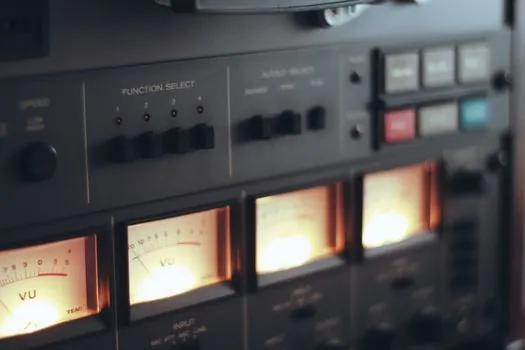
For commissioning a soft-starter or watching a motor accelerate, the analog tong tester is the faster diagnostic because the pointer sweep shows the inrush envelope directly; a digital clamp meter will need MIN/MAX or inrush mode to capture the same peak [S1][S4]. For troubleshooting a control board with mixed AC and DC signals, the digital clamp is the only practical option, because the work order will include capacitance, frequency, and DC current measurements that an analog meter cannot make [S4][S5].
For everyday carry on a residential or light-commercial service truck, the digital clamp is the default pick in 2026 because of autoranging, multimeter-style versatility, and one-handed panel access; the moving-iron tong tester is a specialist tool that still earns its slot on a motor-shop or generator-repair bench [S2][S3]. A useful companion reading is the compound-accuracy behaviour write-up, which explains why a ±2% of reading digital clamp can outperform a higher-count analog scale on a real load.
Selection rules for the 2026 spec
Specify a digital clamp meter when the job card lists DC current, capacitance, frequency, or temperature, when the operator needs autoranging, and when the reading will be logged or compared against a setpoint, since direct numeric output is what data-logging workflows expect [S2][S4][S5]. Specify an analog moving-iron tong tester when the load is fluctuating in the few-Hz range, when contact-resistance testing on relay or contactor coils requires a high test current, and when the working environment makes a moving-coil movement more rugged than an LCD against voltage transients on the jaw [S1][S5].
For a shop standard, the practical answer is to carry both, since the digital clamp covers 80-90% of daily troubleshooting and the analog tong tester is the right tool for trend watching and contact-resistance work; if only one is allowed, the digital clamp meter is the 2026 default because the digital multimeter feature set has subsumed the bulk of what an analog meter used to do on a service truck. One trackable next signal: watch for the next round of Hall-effect jaw digital clamps to add higher DC current ranges and Bluetooth logging, which will further narrow the moving-iron tong tester's remaining niche.
For component-level specifications, see digital panel meter.