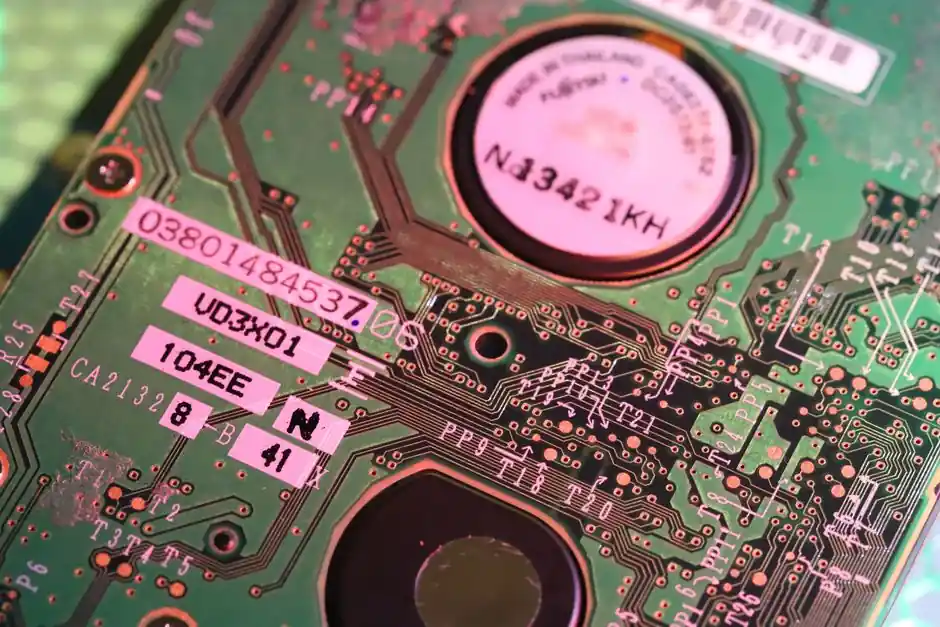
Up to 600,000 fewer vehicles are projected to be built globally in 2026 because AI data center demand is pulling foundry capacity away from the mature-node silicon automotive electronics depend on, with UBS warning that disruption escalates into significant production halts in 2027 and 2028 [S1].
The structural conflict is now visible in purchasing data: power management IC lead times have extended beyond 50 weeks in Europe, automotive-grade microcontrollers are appearing on mid-cycle end-of-life notices, and Toyota suspended new orders for selected hybrid SUV models in early 2026 when component supply could not keep pace [S2]. Unlike the 2020–2021 pandemic shock, this cycle is driven by capital reallocation, not by demand collapse.
Why 2026 differs from the 2020–2024 shortage
The 2021–2024 automotive chip shortage was a demand-shock event amplified by fragile just-in-time supply chains, generating an estimated $500 billion in global losses and removing 19.6 million vehicles from production between 2021 and 2023 [S1][S5]. The 2026 cycle is structurally different: it is a permanent reallocation of wafer capacity toward AI workloads, not a temporary logjam. Memory alone is now worth more than the entire market was forecast to be a year earlier.
The auto industry's exposure is magnified by its product mix. About 95% of the chips used in vehicles are older, less profitable "foundational" parts built on mature nodes, and the average modern car requires 1,400 to 1,500 chips, with some architectures consuming up to 3,000 [S1][S5]. As foundries pivot capex toward advanced AI nodes, capacity for these legacy processes is at risk, a vulnerability flagged by S&P Global Mobility [S1].
Foundry capex is following the AI dollar, not the car
Hyperscaler spending on data centers and AI capacity is already above $150 billion annually and is projected to exceed $1 trillion by 2028, giving cloud buyers structural leverage over foundries [S1]. TSMC, which controls over 90% of the world's most advanced chip manufacturing, is the most consequential gatekeeper. While the industry plans to invest $400 billion in 300 mm fab equipment between 2025 and 2027, that capital is overwhelmingly targeting advanced nodes and High-Bandwidth Memory, not the 28 nm, 40 nm, and 90 nm processes that produce the MCUs, analog ICs, and power devices manufacturing industries rely on [S1][S2].
The financial asymmetry is stark. The mature-node overflow is real, and Tier-1 suppliers are absorbing it; the Tier-1 distress reshaping 2026 automotive capex Tier-1 supplier distress reshaping 2026 capex and equipment demand is a downstream symptom of the same wafer-allocation shift.
Mature-node parts: which categories are tightest
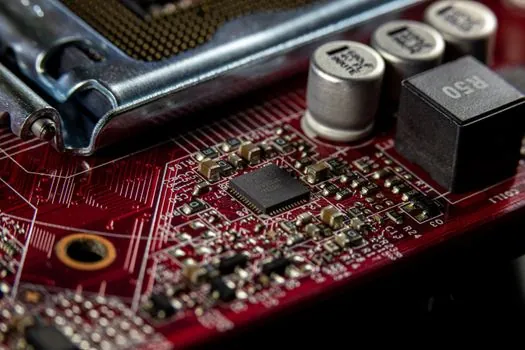
As of September 2026, the most constrained categories in Europe are power management ICs, automotive-grade microcontrollers, and battery-management devices for EVs, parts that compete directly with industrial, medical, and general electronics manufacturers for the same fab output [S2]. Power management ICs and battery control systems for EVs are the most affected categories per OEM guidance published in May 2026 [S2].
Geopolitics tightens the squeeze further. US–China trade restrictions continue to limit access to certain chip families, Taiwan is responsible for approximately 60% of advanced chip production and remains a geopolitical risk point, and Chinese foundries account for nearly 70% of new mature-node capacity expansion in 2026, which concentrates risk rather than relieving it [S2]. For European OEMs sourcing through DACH, this is the binding constraint: the parts exist, but the allocation window is closed.
Vishay, Onsemi, Infineon: how specific suppliers are positioned
Entering 2026, Vishay's overall supply position is more stable than during the peak shortage years, with discrete semiconductor and passive lead times moderating as the company works through expanded 300 mm partnerships [S3]. Onsemi continues to be a primary source for automotive-grade power devices and SiC discretes, with demand outpacing the fab output the company can allocate to non-strategic customers. Infineon's exposure is concentrated in power management ICs and body-electronics MCUs, exactly the categories European buyers report as most constrained [S3].
For procurement teams, the practical implication is that lead-time visibility on a single supplier no longer predicts the build schedule. Multi-source qualification work that was deprioritised in 2022–2024 is now back on the engineering critical path, and PCN/EOL notices on MCU families are arriving mid-cycle rather than at the customary 12–18 month horizon [S2].
Comparison: 2020–2021 shock vs 2026 structural squeeze

Four decision criteria separate the two cycles. Trigger: 2020–2021 was a demand rebound hitting fixed wafer capacity, while 2026 is foundry capital reallocation toward advanced AI nodes. Node affected: 2020–2021 hit mainstream automotive MCUs and analog broadly, while 2026 is concentrated on 28–90 nm mature nodes and power management ICs. Lead-time signal: 2020–2021 peaked at 10–12 months across most auto part numbers versus a 3–4 month baseline, while 2026 is over 50 weeks on power management ICs with select automotive MCUs on EOL [S2][S5]. Recovery shape: 2020–2021 normalised as consumer demand fell and foundries rebalanced, while 2026 has no natural re-balancer because AI demand growth absorbs any released mature-node capacity.
What procurement and design engineers are doing now
Three tactics are visible across European OEMs. First, multi-sourcing is being pushed back into the design phase, with second-source qualification targeted at power management ICs and battery management devices before EOL notices arrive. Second, software-rewrites and pin-compatible MCU substitutions are being used to absorb single-source allocation gaps, an extension of the 2021–2024 retrofitting playbook [S4]. Third, longer-term wafer reservations and capacity deposit agreements are being negotiated directly with foundries for mature-node output, a structural change from the spot-market behaviour of 2020.
The 14-week, roughly 700-step microchip assembly process is unchanged, and crystal growth remains the binding physical constraint, so no procurement strategy can compress raw cycle time [S4]. What can change is the queue position, and that is where 2026 differs from 2021: queue priority is now set by margin, not by contract length. Foundries will continue to allocate mature-node output to the highest-paying customer, and AI infrastructure is that customer. The design and supply-chain choices European automotive OEMs make in the next two quarters will determine whether the 2026 vehicle-loss forecast stays at 600,000 or climbs toward the 2027–2028 production-halt scenarios UBS has flagged [S1].
For the relevant spec sheets and selection criteria, see power supply, dc power supply, and switching power supply.