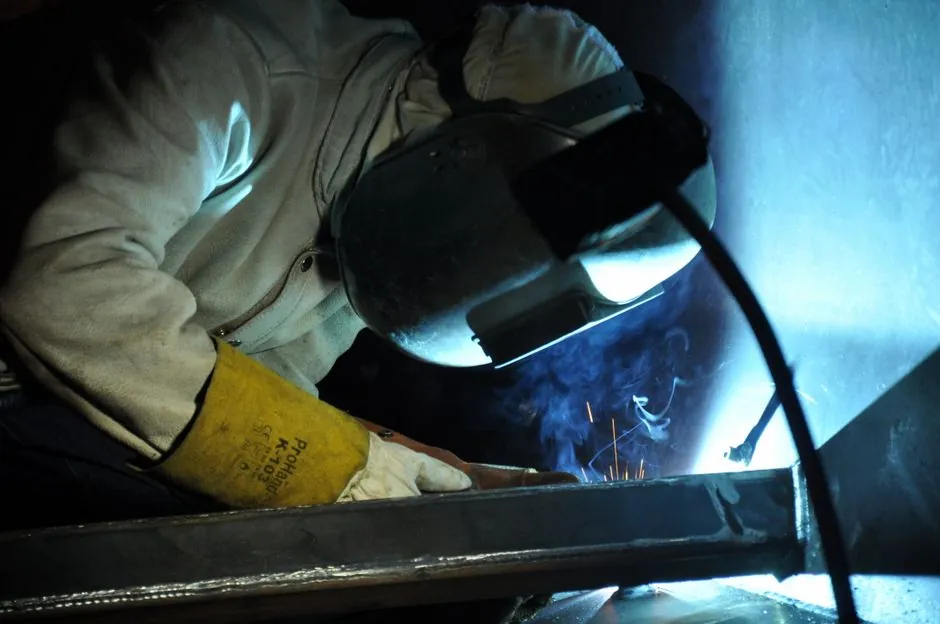
ASME-authorized fabrication capacity is tightening in 2026 as the US welding workforce gap reaches an estimated 400,000 workers, with the American Welding Society projecting demand for over 330,000 welders by 2027 and current enrollment pipelines falling short of that target [S4][S7].
The bottleneck is not steel, robotics, or shop floor space; it is the number of hands qualified to weld to ASME Section IX, AWS D1.1, and API 1104 simultaneously, and the certified welding inspectors (CWIs) who must sign off on Procedure Qualification Records (PQR) and Welder Performance Qualifications (WPQ) [S2][S3].
Workforce Gap: 400K Short, Median Age 55
Welder Support data published on 2025-11-29 puts the US welding trade at a 400,000-worker shortage in 2025, with the average welder age at roughly 55 versus 42 for the general workforce, a gap that drives overtime pay, retention bonuses, and direct labor pass-through on every code job [S7].
Weldwars, citing American Welding Society projections, states the US will need more than 330,000 welders by 2027 and 320,500 new welding professionals by 2029, equal to roughly 64,100 new welders entering the trade each year, against a 2024 employed base of 771,000 welders [S4]. Vocational enrollment has not kept pace, and over 50% of currently active welders are over the age of 55, so the retirement wave, not the recruitment funnel, sets the capacity ceiling [S4].
ASME Section IX vs AWS D1.1 vs ISO 3834: Which Standard Governs the Job
A single ASME-authorized code shop routinely runs three qualification frameworks in parallel: ASME Section IX for pressure piping and vessel welds, AWS D1.1 for structural steel, and ISO 3834 for European customer purchase orders, each with its own WPS, PQR, and WPQ documentation chain [S2]. The Standards Navigator 2026 guide stresses that operations and quality must agree in writing, before production starts, on which standard governs which work scope, because assumptions about which code applies are the most expensive single error mode in fabrication [S2].
For a procurement engineer sourcing pressure equipment, the practical rule is straightforward: if the deliverable carries a U-stamp, S-stamp, or R-stamp, the procedure and welder qualifications live in ASME Section IX; if the deliverable is structural only, AWS D1.1 governs; if the customer is European and the PO references ISO 3834, treat ISO 9606 (welder qualification) and ISO 15614 (procedure qualification) as binding in parallel [S2][S3]. A shop like M. Davis & Sons, holding U, S, and R stamps plus API 1104 and Section IX qualifiers, illustrates the multi-code staffing model that buyers must now look for when qualifying fabricators [S3].
Stamps, Stamps, Stamps: U, S, R, and NBBI Coverage
ASME Section IX is the qualification and certification standard for welding procedures and welders; the U-stamp authorizes fabrication of pressure vessels, the S-stamp covers fabrication of boiler parts, and the National Board R-stamp authorizes repairs and alterations to pressure-retaining items, each requiring a separately documented quality program and a roster of qualified welders tied to specific WPS ranges [S3].
The M. Davis & Sons code shop profile is representative: 100+ Section IX and API 1104-qualified welders, 10 Certified Welding Inspectors, 50+ visual and liquid penetrant examiners on 24/3 service, and a 30-year code-work track record, a staffing density that most regional shops cannot match and that becomes a buyer-side selection criterion rather than a marketing detail [S3].
Capacity Math: Welder-Days Drive Lead Time
ASME code shop throughput is not a function of floor area; it is a function of qualified welder-hours, CWI-hours, and NDT bay availability, all of which scale linearly with the complexity of the WPS matrix on the shop floor. A shop running, for example, six Section IX-qualified WPS combinations across SMAW, GMAW, GTAW, and FCAW, with positional coverage on carbon steel, stainless, and chrome-moly, needs a bench of welders whose WPQ coupons cover every essential variable range, otherwise each new job triggers requalification cost [S1][S2].
Codeware's Shopfloor software documentation published 2025-12-09 confirms the administrative drag: WPS generation, PQR matching, essential-variable and supplementary-essential-variable checks, and thickness/base-metal qualification ranges are the recurring friction points, and shops that automate these checks report fewer duplicate requalifications and faster audit cycles, which translates directly into usable capacity [S5]. For reference, a typical structural weld procedure specification audit cycle, from PQR through WPQ to production weld, runs in weeks rather than days when a shop does not maintain a clean qualification matrix.
Buyer-Side Selection Criteria in a Tight Market
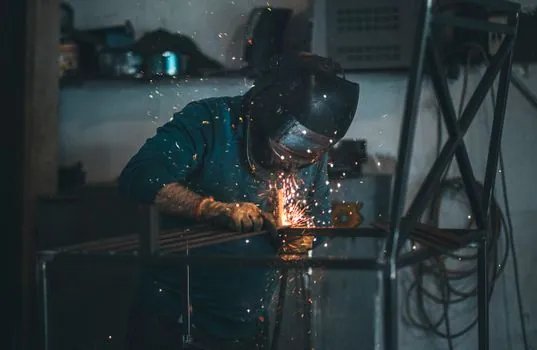
When qualifying an ASME code shop in 2026, a process engineer's checklist should read: (1) which stamps are active (U, S, R, NBBI) and the expiry status; (2) headcount of Section IX-qualified welders and the WPS range each one is qualified to; (3) CWI count and NDT capability (VT, PT, UT, MT) in-house versus subcontracted; (4) documented cross-qualification to AWS D1.1 and API 1104 if the project mixes structural and pressure work; and (5) average welder tenure and apprentice intake, the proxy for whether capacity is sustainable or borrowed [S3][S4].
Buyers should expect labor-driven pricing pressure on fabricated products for the rest of 2026, with overtime, per-diem, and retention bonus costs flowing through unit rates on U-stamp vessels, B31.1 and B31.3 piping spools, and S-stamp boiler components [S7]. A useful sanity check is to ask for the shop's weld procedure specification index and welder qualification expiry matrix before issuing an RFQ; a shop that cannot produce that in 24 hours is already running beyond its qualified capacity.
Failure Modes and Risk Controls
The dominant failure mode in a constrained code-shop market is not bad welds, it is wrong welds: a WPS referenced on the traveller that does not match the PQR's essential variable range, or a welder assigned to a position or process outside their WPQ envelope [S2][S5]. Codeware's documentation flags exactly this class of error, with built-in essential-variable and supplementary-essential-variable checks during WPS creation designed to catch missing or out-of-range parameters before they reach the floor [S5].
A secondary risk is auditor-driven rework: if an external ISO 9001 or ASME audit pulls a PQR for a weld in progress and the documentation does not line up, the production weld is nonconforming and may have to be cut out, an outcome that costs days of crane time and welder-days on heavy-wall vessels [S2][S5]. For sites procuring construction machinery and equipment sub-assemblies that are welded into a larger mechanical package, the same audit exposure applies to the supplier's shop, so the weld qualification matrix is a contractual deliverable, not a shop-internal document.
Standards, Documents, and What to Put on the PO
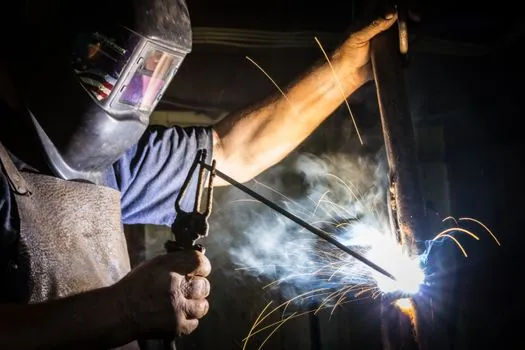
For a 2026 ASME code job, the purchase order should explicitly cite ASME Section IX for welding procedure and performance qualification, ASME B31.1 (power piping) or B31.3 (process piping) for the piping scope, the appropriate U, S, or R-stamp scope as applicable, and AWS D1.1 only where structural carbon steel is in scope and not covered by the ASME work [S2][S3]. For European deliveries, layer ISO 3834-2 or 3834-3 for quality requirements, ISO 9606 for welder qualification, and ISO 15614-1 for procedure qualification, and resolve in writing which standard takes precedence on any overlapping clause [S2].
As a final cross-check, request the shop's most recent ASME and NBBI audit responses, the list of active WPSs with revision dates, and a sample PQR/WPQ package redacted for a recent project of similar scope, the three documents that separate a sustainable code shop from one running on borrowed capacity. See also the weld procedure specification reference and the arc welder qualification guide for the equipment-side parameters that flow into Section IX essential variables.
Trackable signals to watch through the rest of 2026: the AWS 2027 demand projection update, any Section IX edition change that tightens essential-variable ranges, and shop-level announcements of apprentice cohort sizes, since apprentice intake is the only leading indicator that the 400,000-worker gap is beginning to close [S4][S7].
Related analysis: Dump Truck Box Dimensions vs Payload Capacity: 2026 Spec Guide.