Westomat automatic aluminum dosing furnaces consume up to two-thirds less energy than ladle-based systems for melt transfer and delivery and have a proven uptime of up to 98% [S2].
The comparison covers a closed dosing furnace against a holding furnace with manual or automatic ladling, including capital cost drivers, energy, metal yield, installation, maintenance, and operating risk.
What automatic dosing changes
An automatic dosing furnace stores liquid aluminum and delivers a controlled quantity to each die-casting machine or mould, whereas a holding furnace maintains molten metal temperature and provides a buffer before transfer [S5].
Westomat is a crucible-free, closed holding and dosing system for liquid aluminum, with a stated metal yield of 99.04%, more than 5,000 installations worldwide, and proven uptime of up to 98% [S2].
This distinction matters because the equipment comparison is functional rather than simply a choice between two furnace shapes. A melting furnace converts solid charge into metal, a holding furnace controls temperature, and a dosing furnace combines melt availability with repeatable delivery [S5].
Price and operating-cost drivers
No comparable purchase-price figures are available in the research, so automatic dosing should be evaluated through cost drivers rather than an unsupported equipment sticker price.
Westomat reports energy consumption for melt transfer and delivery up to two-thirds lower than with ladle-based systems [S2].
These percentages come from different equipment suppliers and operating conditions, so they should not be combined into one universal saving. A purchase comparison should normalize them by tonnes delivered, cycles served, metal temperature, duty hours, local power prices, and the labor model used.
Manual ladling versus automatic dosing
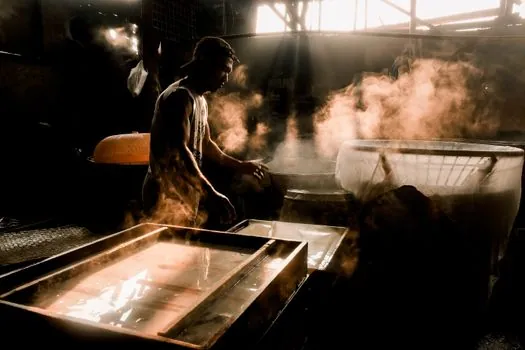
Manual ladling transfers metal through a ladle and depends on operator coordination, temperature control, and consistent shot quantity. Automatic dosing uses a closed dosing system to deliver measured metal directly to the die-casting machine or mould, reducing exposure to air and the associated temperature loss and oxidation risk [S2].
The choice is driven by three decision criteria. First, repeatability favors automatic dosing because Westomat specifies accuracy up to ±1.5% [S2]. Second, thermal efficiency favors closed dosing, with energy consumption for melt transfer and delivery reported as up to two-thirds lower than with ladle-based systems [S2]. Third, metal utilization favors dosing, with a stated metal yield of 99.04% [S2].
Manual ladling remains appropriate where batch work, low volume, alloy changes, or operator-led pouring favor direct control. Automatic dosing fits repeated, high-utilization cells where shot consistency, reduced metal loss, and lower manual handling justify a more integrated system.
Total cost beyond purchase price
Total ownership cost includes installation, controls integration, maintenance, energy, metal loss, labor, and production availability. A closed automatic furnace may require a larger capital package, but its operating case rests on transferring fewer heat losses and reducing the labor, dross, and spillage associated with repeated ladling [S2][S4].
Aluminum alloy production has a material cost problem because melt loss is a significant furnace-selection factor [S4]. This shifts the comparison from energy alone to recovered metal value: each avoided kilogram of lost aluminum adds value when alloy and metal prices are high, while dosing accuracy can reduce overfill and avoidable downstream cleanup.
Maintenance planning should include pumps, dosing elements, heating elements, refractory interfaces, controls, and backup power arrangements. For installations using a crucible furnace as part of the melt route, the interface between melting, holding, and dosing equipment also needs review, because one furnace can combine several functions depending on its construction [S5].
Best fit for automated casting
Automatic dosing is strongest where each cell requires repeatable delivery, low temperature variation, and controlled exposure of aluminum to air. Westomat furnaces are used for high-pressure die casting, gravity die casting, and green-sand applications, including production of aluminum components for automotive, new-energy-vehicle, and electric-vehicle applications [S2].
The system is less compelling for occasional pours, very small campaigns, or operations without stable demand. It is also unsuitable where the proposed automation cannot be maintained, where alloy chemistry changes require frequent manual intervention, or where upstream melt quality is inconsistent. A dosing furnace can deliver a measured quantity, but it cannot correct contamination, alloy segregation, or an unstable upstream process by itself.
For magnesium applications, the same operational logic exists with different safety and process requirements. An MDF magnesium dosing furnace melts magnesium alloys, keeps them warm, and doses melt into a cold chamber [S6], but aluminum cost data cannot be transferred to magnesium without separate validation.
Specification questions for suppliers
Specify the required metal delivery rate, dosing accuracy, temperature range, cycle time, furnace capacity, available footprint, power supply, and number of casting cells. Request measured energy consumption per tonne, metal-loss rate, uptime history, control protocol, refractory life, element or burner service intervals, and installation requirements. [S2]
For automatic dosing, require evidence from comparable aluminum service conditions rather than generic furnace claims. Westomat reports up to 98% uptime, 99.04% metal yield, more than 5,000 installations worldwide, and energy consumption for melt transfer and delivery up to two-thirds lower than ladle-based systems [S2].
For the holding-furnace alternative, specify whether the existing furnace already serves automatic or manual ladle bale-out systems, launder connections, and pump connections. Compatibility can reduce installation cost, but it does not remove the need to compare metal loss, energy, labor, and dosing repeatability [S8].
Track two procurement signals before ordering: a measured comparison of delivered metal cost per valid shot and supplier evidence that the proposed furnace meets the required cycle rate without exceeding its stated temperature and metal-loss limits. Those indicators link capital selection to production yield rather than treating furnace price as the entire decision.