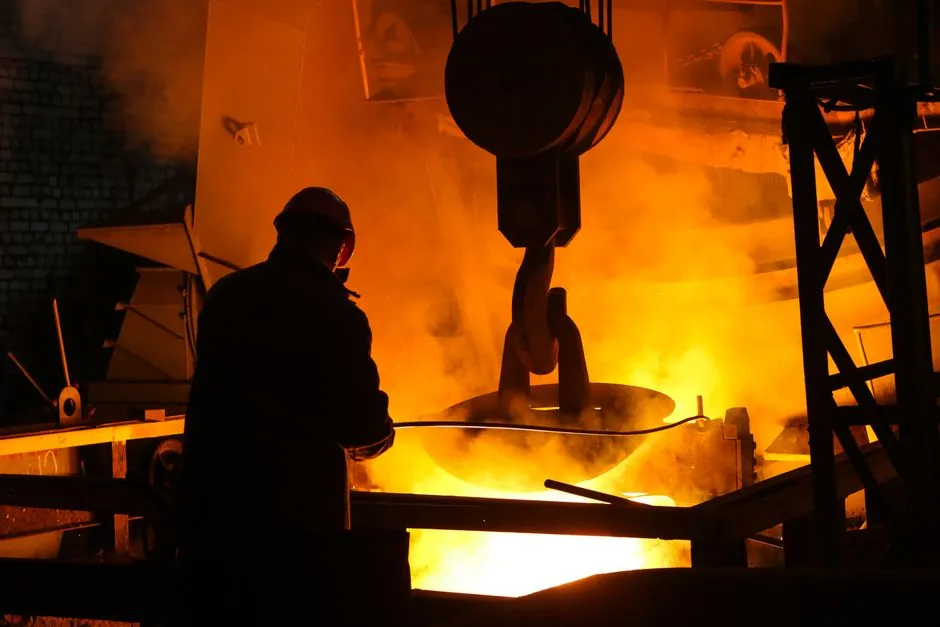
An industrial holding furnace conversion from electric to gas heating should be evaluated on installed cost, fuel consumption, thermal efficiency, maintenance, and production reliability rather than equipment price alone. Gas systems can reduce operating cost where natural-gas prices are favorable, while electric systems generally have lower installation complexity [S1].
The comparison applies to furnaces used to hold molten metal at process temperature. It is a decision framework, not a universal savings claim: furnace size, alloy, temperature, duty cycle, electricity tariff, gas supply, and existing infrastructure determine the commercial result.
Electric-to-Gas Conversion: What Changes
Electric resistance elements convert electricity into heat at the point of use and are generally rated at 100% AFUE, while gas furnaces burn natural gas or propane and transfer combustion heat through a heat exchanger [S1]. In industrial holding service, the practical comparison is not simply 100% versus 100%, because the delivered efficiency of the electric system depends on the resistance elements, furnace construction, insulation, and surrounding heat losses.
Gas conversion replaces the resistance-heating circuit with burners, a gas train, combustion controls, a pilot or ignition system, and suitable flue or vent arrangements. A gas-fired conversion also requires confirmation that the site has adequate gas pressure, capacity, piping, ventilation, and combustion-safety provisions. Electric resistance equipment generally needs adequate electrical service and wiring but does not require gas piping or combustion venting [S1].
The existing holding furnace configuration determines whether conversion is a burner-and-controls replacement or a larger rebuild. Refractory, vessel integrity, door seals, charging and discharge arrangements, slag or metal inclusion control, and temperature measurement must be checked separately from the heating system.
Cost Drivers: Installation, Fuel, and Capacity
Upfront cost usually increases when gas infrastructure is absent. Gas furnaces require a fuel supply and combustion venting, while electric furnaces require adequate electrical service and wiring [S1]. For an industrial conversion, the capital estimate should include the burner package, gas train, control system, flue or vent modifications, electrical changes, refractory work, commissioning, and any required structural or safety work.
Residential benchmarks illustrate the scale of the equipment and infrastructure difference, not a direct industrial quotation.
The main conversion cost drivers are therefore ranked as follows: first, new gas supply and pressure-upgrade work; second, burner, combustion-control, and flue modifications; third, electrical and control changes; fourth, refractory and furnace-shell work; and fifth, commissioning, testing, and production downtime. If the plant already has suitable gas infrastructure and a serviceable furnace body, the burner-and-controls share of the project becomes more significant. If gas piping, metering, pressure regulation, or venting must be added, conversion cost can move sharply.
Purchase price alone is not the correct comparison. The project should include total cost of ownership: energy, maintenance, electrical demand charges, gas infrastructure, burner service, controls, refractory inspection, downtime, and the effect of any production interruption during conversion.
Gas Versus Electric: Decision Criteria

AGA analysis found natural gas more affordable than electric heat pumps in 41 of 50 states when comparing ENERGY STAR systems, and the least efficient natural gas furnace was cheaper to heat with than the most efficient electric heat pump in 36 states. The comparison becomes more useful when the alternatives are lined up against fuel price, infrastructure, operating complexity, and load profile.
For a foundry, the thermal capacity and holding duration matter more than a residential efficiency label. A furnace that holds a large bath for long periods may benefit from lower fuel cost, but it also needs careful burner sizing, turndown control, and heat-loss calculations. A short-cycle furnace with frequent heating cycles may favor the responsiveness and control simplicity of electric elements.
Operating Cost and Total Ownership
Annual fuel cost should be calculated from the furnace’s actual heat load, not from nameplate capacity. Required inputs include metal mass, starting and holding temperatures, cycle hours, heat losses, burner or element efficiency, and the prices of electricity and gas. The residential comparison tools published by Efficiency Maine and VGS both require users to enter fuel costs, system efficiency, and distribution assumptions before calculating annual costs [S3][S4].
AGA analysis found natural gas more affordable in 41 of 50 states when comparing ENERGY STAR natural-gas furnaces with ENERGY STAR electric heat pumps, and the least-efficient gas furnace was cheaper to heat with than the most-efficient electric heat pump in 36 states [S2]. These figures are residential and cannot be used as industrial savings percentages. They do support the underlying engineering point: delivered energy cost and system efficiency must be evaluated together, not by equipment efficiency alone.
For the industrial case, the ownership equation should include gas burner service and combustion inspection, versus electrical heating-element replacement and associated power-system requirements. Electric heating has fewer combustion-related maintenance items [S1]. Gas may still win when fuel savings exceed the added maintenance burden and infrastructure amortization, but the result depends on local tariffs and the furnace’s actual duty cycle.
Electricity demand charges, peak-load management, power-supply reliability, and backup-power requirements can materially change the comparison. Gas-fired equipment also introduces combustion risks that must be addressed through proper burner design, gas-tight piping, flame supervision, ventilation, interlocks, and operator procedures. The relevant requirements should be selected from the applicable local codes and the plant’s safety program rather than inferred from a generic furnace comparison.
Conversion Suitability and Failure Modes
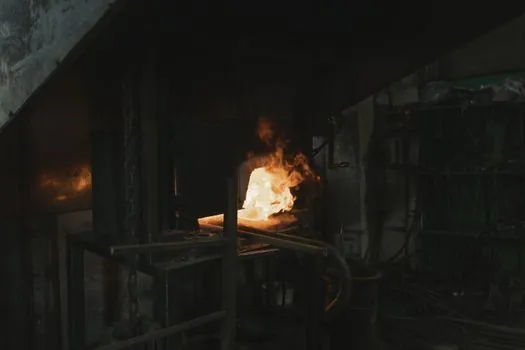
Conversion is most suitable when the furnace shell, refractory, doors, seals, and temperature-control loop are in good condition, gas infrastructure is available, and the expected operating hours justify the modification. It is less suitable when the furnace is near the end of its mechanical life, gas service would require a major capacity upgrade, or the load is too small or intermittent to recover the conversion investment. [S1]
Three failure modes deserve separate engineering checks. First, burner sizing or turndown mismatch can cause poor temperature control, local overheating, excessive oxidation, or unstable combustion. Second, inadequate venting or combustion-air provision can create unsafe operating conditions. Third, changes in heating distribution can disturb metal temperature uniformity, which can affect alloy composition, inclusion levels, and downstream processing.
An electric-to-gas project should not be approved from furnace nameplate data alone. Verify the existing electrical load, gas pressure and flow, burner fuel input, combustion-air arrangement, vent path, refractory condition, furnace atmosphere, and process-temperature control requirements. A commissioning plan should test low-load operation, setpoint stability, burner sequencing, flame protection, power-loss behavior, and metal-temperature uniformity before normal production is restored.
Specification and Standards Discipline
Specification work should separate three questions: what the furnace must heat, how the burner system must be protected, and how the installation must be accepted. The research material supports the distinction between electric resistance heating and combustion-based gas heating, including the need for fuel supply, venting, and combustion-system inspection for gas equipment [S1]. It does not provide an industrial burner model, firing rate, service factor, or a complete industrial cost range, so those values must come from the furnace manufacturer, burner supplier, and site engineering data.
The comparison should record equipment identity, furnace mass and metal capacity, holding temperature, duty-cycle hours, fuel prices, electrical demand charges, gas infrastructure costs, burner output, expected efficiency, control philosophy, refractory scope, vent requirements, and commissioning acceptance criteria. These fields make the estimate auditable and prevent a residential AFUE figure from being presented as an industrial performance guarantee.
For adjacent furnace decisions, compare gas and electric options against the operating constraints of the specific furnace family, including the induction furnace for electrically heated melting and the crucible furnace for small-batch or laboratory-scale service. The closest related industrial comparison is Induction vs Gas-Fired Casting Furnaces: Energy Decision Map, which can help frame the energy decision before the holding-furnace project is priced.
What Makes the Conversion Pay
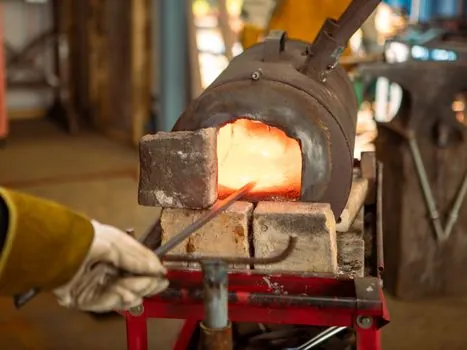
The electric-to-gas holding furnace conversion pays when the furnace has sustained operating hours, local gas pricing creates a credible energy advantage, and existing gas, controls, and venting infrastructure reduce the capital burden. It can fail to pay when gas supply work, burner commissioning, controls, downtime, and combustion maintenance consume the expected fuel savings.
Track two signals before final approval: the actual furnace duty cycle in hours per year and the quoted delivered-energy cost for electricity and gas over the planned operating period. A third decision gate is the mechanical condition of the furnace shell and refractory, because replacing a worn vessel during a fuel conversion can make the project uneconomic regardless of the energy tariff.