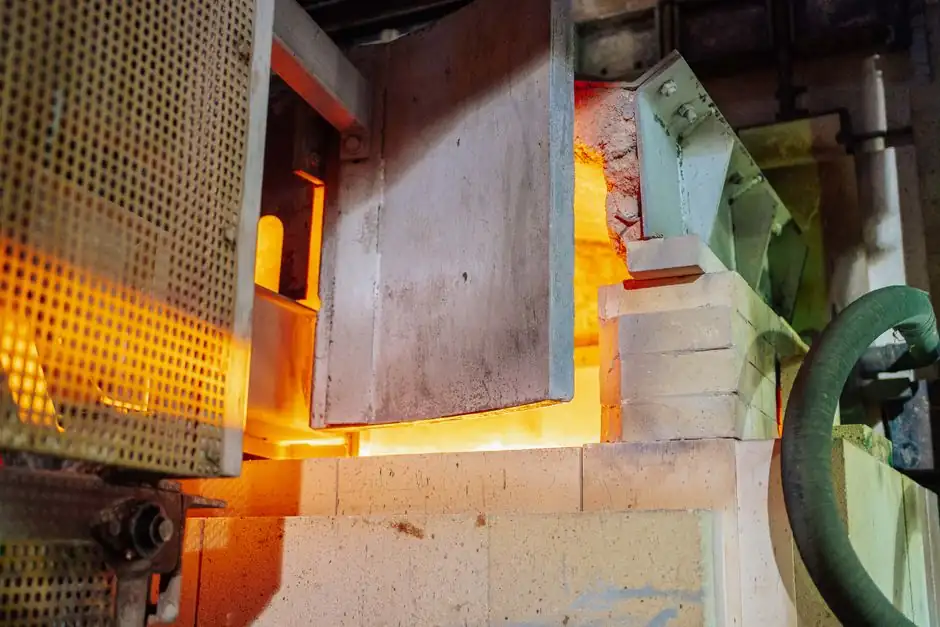
A steel-casting heat-treatment operation with an average 2-hour cycle consumes 100–400 kWh per ton, corresponding to about $8–$32 per ton at the cited electricity rate [S2].
Across casting applications, the energy cost is one part of a larger furnace operating model that includes fuel, load size, temperature uniformity, cycle time, maintenance and yield.
Reference Energy Cost for a Treated Casting Ton
The most directly relevant operating reference is the 2-hour steel-casting cycle: 100–400 kWh of electrical energy is used to replace heat losses, and the resulting energy cost is $8–$32 per ton [S2]. This is an energy figure, not a universal quotation for every furnace, alloy, temperature profile or utility contract.
The calculation is directly reproducible as energy cost per ton multiplied by tonnes processed. At 200 kWh/ton, a 10-ton treatment batch uses 2,000 kWh; at 400 kWh/ton, the same batch uses 4,000 kWh [S2]. A production target expressed as dollars per ton should therefore be checked against both the measured furnace energy and the effective utility price, including demand charges and peak-period rates where applicable.
That figure covers a wider metalcasting energy accounting boundary than the 100–400 kWh/ton steel heat-treatment example, so it should not be treated as a direct heat-treatment tariff without reconciliation of process scope.
What Drives the Cost per Ton
Process temperature and holding time set the size of the energy requirement: the cited steel-casting case used an average heat time of 2 hours, with 100–400 kWh/ton needed to make up furnace heat losses [S2]. Furnace selection, atmosphere, load mass, throughput and recovery from opening the doors can then determine how much of that heat reaches the casting rather than the flue, atmosphere and surrounding equipment.
Fuel price is a direct multiplier. Natural gas and electricity are both identified as energy carriers for heat-treatment furnaces [S4]. Published furnace guidance also distinguishes gas-fired systems from electric-heated systems and notes that fuel choice changes operating cost [S5]. A gas quotation must include gas rate, net calorific value and furnace efficiency, while an electric quotation must use the actual tariff and account for load factor and demand.
Volume tier changes the economics. Heat-treatment furnaces range from several thousand dollars to several million dollars, so spreading fixed furnace cost over more tonnes can materially reduce cost per ton [S5]. Conversely, a small batch that leaves a large furnace underloaded can carry the same heater capacity with a higher unit cost. The relevant comparison is cost per qualified ton, not cost per hour of furnace availability.
Maintenance and reliability belong in the calculation because furnace purchases are capital-intensive and heat-treatment operations are energy-intensive [S8]. Refractory replacement, burners or elements, atmosphere controls, fan maintenance, instrumentation and downtime all affect the number of qualified tonnes produced by each unit of fuel.
Gas, Electric and Integrated Furnace Options
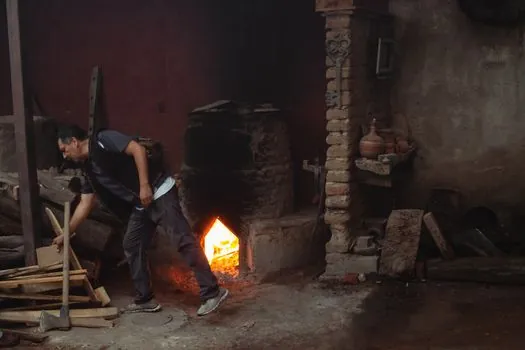
Steam systems are typically used to supply low- to medium-temperature heat up to 500°C, while furnaces can generate process temperatures above 1000°C [S4].
On cost alone, gas-heated furnaces generally have lower energy costs than electric-heated furnaces, as reflected in the furnace-type comparison [S5]. That ranking is not universal: electricity price, production volume, cycle time, recovery efficiency, power capacity and local gas infrastructure can reverse the result. A bankable comparison should calculate annual fuel cost, maintenance, depreciation and yield on identical production tonnage.
That figure includes sand recovery and pollution controls, not just furnace fuel, and it should not be applied to a standalone batch furnace without a like-for-like process boundary.
Who Fits Which Heat-Treatment Route
A batch furnace is appropriate when casting geometry, volume or treatment requirements change enough to justify recipe-controlled charging. A continuous conveyor can fit stable production with repeatable load mass, residence time and temperature; the batch vs continuous conveyor furnace selection guide provides a structured comparison for those operating variables. [S4]
Integrated casting lines fit foundries that want heat treatment connected to molding, cooling, decoring and sand reclamation. CEC describes conveyor-based systems for aluminum cylinder heads, engine blocks and wheels, including systems handling more than 57 million castings annually by 2018 [S3].
These routes are not interchangeable for every casting. Small, variable or specification-sensitive work may favor flexible batch control, while high-volume production with stable baskets can support continuous handling. Vacuum furnaces serve controlled-atmosphere processing, but the vacuum reference treats energy costing as a broader facility calculation that must include the specific vacuum process rather than substitute a generic furnace rate [S7].
Total Cost Beyond the Energy Bill
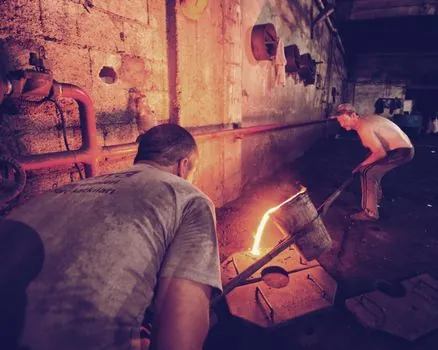
Installation cost includes foundations, power or gas infrastructure, controls, quench handling, atmosphere equipment, ventilation and safety provisions. It should be amortized over actual qualified output, not nominal furnace capacity. The cited equipment range of a few thousand to several million dollars makes this allocation material for lower-volume lines [S5].
Maintenance cost includes refractory, burners or heating elements, fans, seals, thermocouples, atmosphere control and planned shutdowns. Energy-saving measures can reduce consumption materially: one commercial treatment example reduced total energy from 1,020 kWh to 648 kWh, a saving of 324 kWh per processed unit [S10]. The equipment context and duty cycle must be verified before transferring that saving to a casting line.
Yield remains a cost multiplier because heat treatment can reject or distort castings. A low-energy furnace that produces more scrapped castings may cost more per saleable ton. The heat treatment furnace price per ton per hour calculation is useful as a separate purchasing metric, but energy cost per ton remains an operating metric and should not be confused with furnace price.
Benchmarking the Furnace and Controlling Energy
Measure energy at the furnace boundary and normalize it by qualified casting mass, not by gross charged mass. For a gas furnace, record gas volume, meter correction and calorific value; for an electric furnace, meter kWh. A reference period of 100–400 kWh/ton can test an operating assumption for a comparable 2-hour steel-casting cycle [S2], while 500–800 MJ/ton steel is a separate benchmark for tunnel-furnace energy intensity [S4].
Separate theoretical process energy from avoidable losses. The DOE metalcasting benchmark identifies 43.05 million Btu per ton of gray-iron castings shipped as an average tacit energy consumption figure [S1], while the steel heat-treatment example isolates 100–400 kWh/ton for heat-loss replacement over a 2-hour cycle [S2]. Neither figure alone is a guaranteed target, but together they provide an upper-level screening range when an installation has no operating history.
The most reliable cost model keeps four variables visible: kWh or fuel units per ton, utility price per unit, qualified tonnes per year and annual fixed operating cost. A plant can reconcile the reference figures by calibrating model energy use to meter data and then applying its own contracted tariff. Track furnace availability, rejected tonnes and energy per qualified ton monthly; a falling energy rate does not prove lower total cost if yield or utilization deteriorates.