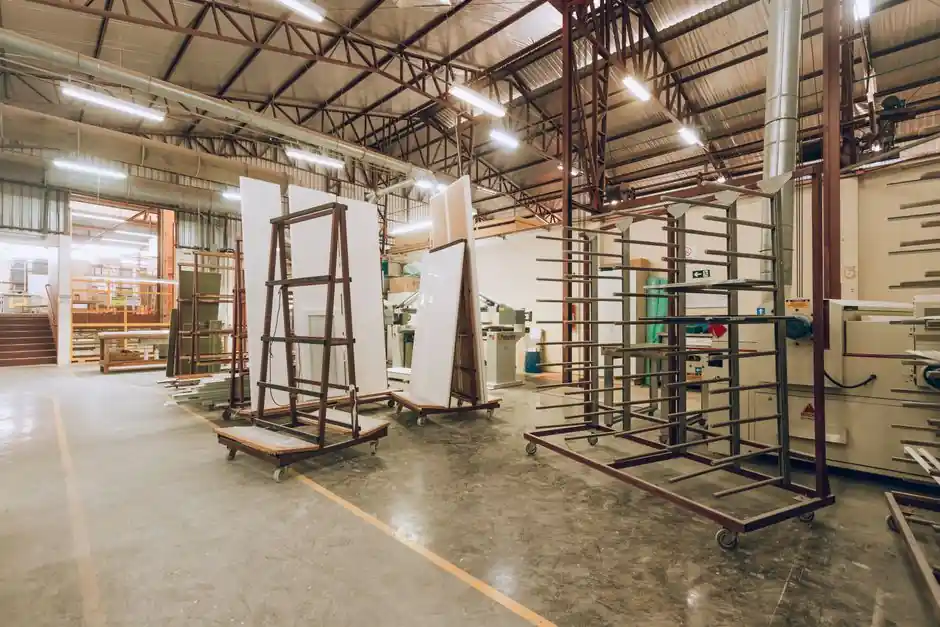
Automotive ceramics is a USD 2.60 billion market in 2025, projected to USD 4.67 billion by 2035 at 6.03% CAGR, with Asia Pacific as the largest and fastest-growing region [S4].
For UK buyers, the same logic compresses into a smaller pool: USD 73.89 million in 2023 expanding to USD 97.27 million by 2028 at 5.7% CAGR [S3].
Material Family Map: Alumina, Zirconia, SiC, Si3N4, AlN
Five material families dominate automotive specification: alumina, zirconia, silicon carbide, silicon nitride, and aluminum nitride, each tied to a specific failure mode the engineer is buying against [S3]. Zirconia (3Y-TZP) trades lower dielectric performance for fracture toughness of 8-10 MPa·m½, the highest of standard technical ceramics, which is why it shows up in wear-loaded bearings and valve seats rather than insulator bodies [S5].
Silicon carbide and silicon nitride sit at the high-temperature, high-cycle end of the map: silicon carbide for pump and seal faces where wear and corrosion stack, and silicon nitride for cyclic mechanical load [S5]. Aluminum nitride enters where the bottleneck is heat extraction from power-module dies, not electrical isolation.
Selection Criteria: Temperature, Dielectric, Wear, and Geometry
Ceramitec's industry brief puts the temperature ceiling for thermally insulating ceramics at over 1,000°C in exhaust and high-voltage components, which is the threshold where polymers and most metals drop out of contention [S1]. Below that ceiling, the question becomes electrical: if the part sits in an EV high-voltage bus, volume resistivity above 10^14 Ω·cm and dielectric strength in the 10-20 kV/mm band are the pass-fail lines for alumina and aluminum nitride [S5].
Wear selection is its own axis. For bearing and seal faces under sustained load, silicon carbide and zirconia are the two reference choices; for sliding and low-friction structural parts, silicon nitride handles cyclic mechanical load where alumina would risk brittle fracture [S5]. Geometric tolerance is the constraint that quietly prices a part: production runs quoted at ±0.01 mm held tolerance are the working assumption when matching metal-equivalent assemblies [S5]. Engineers who skip the ordered questions tend to over-spec zirconia for an insulator job, or under-spec silicon carbide for a pump seal, both of which inflate unit cost without buying useful performance.
Where Each Material Fits: Application-to-Grade Mapping
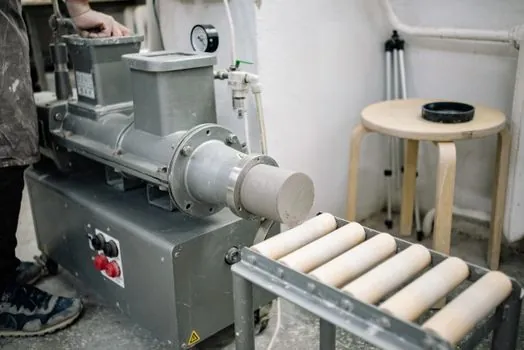
Automotive ceramics concentrate into four application clusters, and the material-to-application map is consistent across the 2026 supplier guidance reviewed. Thermal management (heat sinks, power-module carriers, water-pump and valve bodies) takes alumina and aluminum nitride where conductivity without electrical conduction matters [S2][S5]. Electrical insulation and high-voltage systems (insulating sleeves, connector bodies, sensor housings, feedthrough insulators, DBC ceramic substrates for power modules) are dominated by high-purity alumina, with aluminum nitride used where thermal conductivity through the substrate is the limiting factor [S2][S5].
Structural wear and low-friction parts (bearings, sealing rings, valve seats, water-pump bodies) split between 3Y-TZP zirconia for fracture-toughness-critical geometries, silicon nitride for high cyclic load, and silicon carbide for chemically aggressive pump and seal faces [S5]. The same research also flags automotive electronics as the fastest-growing application at 9.73% CAGR, which is a signal that EV power-module DBC and substrate demand will pull more alumina and aluminum nitride volume through 2035 [S4]. For an engineer selecting today, the practical answer is: pick alumina by default for any insulator or substrate job, upgrade to aluminum nitride only when die-junction temperature is the binding constraint, and reserve zirconia, silicon carbide, and silicon nitride for wear and cyclic-load assemblies where alumina's fracture toughness is the weak link.
Standards, Certification, and Supplier Audit Filters
Quality-system certification is the first-pass filter on any automotive ceramic supplier. ISO 9001:2015 is the floor; IATF 16949:2016 is the automotive-specific QMS requirement that Tier-1 and OEM buyers will demand, and both are listed by established custom-ceramic suppliers serving the sector [S2]. The UK market, in particular, is described as benefiting from stringent emissions regulation and the transition to electric and hybrid powertrains, which is a regulatory pull on advanced ceramic content rather than a push from voluntary specification [S3].
For high-voltage EV insulators, dielectric strength in the 10-20 kV/mm band and volume resistivity above 10^14 Ω·cm are the published reference data points engineers should see on a supplier's datasheet for Al2O3 at 25°C [S5]. Geometric tolerance should be quoted against an explicit callout (e.g. ±0.01 mm held tolerance) rather than a generic "precision machining" claim [S5]. A 24-hour engineering response window is a soft indicator of a supplier's prototyping cadence, useful when comparing custom shops [S5].
Limits, Failure Modes, and Where Ceramics Are the Wrong Choice

Ceramics are the wrong answer when the load case is dominated by tensile or impact stress rather than compressive or wear stress; this is the structural reason zirconia and silicon nitride are used selectively rather than universally, even though their toughness is the highest in the ceramic family [S5].
Manufacturing constraints matter as well. Tight tolerance (held at ±0.01 mm), small-batch custom runs, and complex internal geometry push suppliers toward grinding and lapping cycles that are slower than metal machining, so lead time is the usual trade-off when a design team wants both a custom profile and a fast ramp. Process engineers should treat additive ceramic as a geometry enabler, not a free upgrade in material performance.
Sourcing Signals Worth Tracking
Three signals are worth watching through the rest of 2026. First, the EV power-electronics segment is the fastest-growing application at 9.73% CAGR, which means DBC alumina and aluminum nitride substrate capacity is the most likely supply bottleneck for new EV programs [S4]. Second, U.S. ceramic-substrate producers were reported to be expanding capacity in 2025-2026 for EV power electronics and emission-control applications, which is a trackable sign of regional supply diversification away from Asia Pacific dominance [S4].
For readers mapping adjacent specification problems, the same material-fit logic (load case, dielectric, tolerance, certification) shows up in polyurethane elastomer selection for energy equipment and in fire extinguisher selection for oil and gas facilities, where application-to-grade mapping drives the decision more than brand. The material reference page on industrial ceramic covers the underlying property data, while additive manufacturing material is the relevant background for the printed-ceramic trend noted above [S1].
Component reference pages worth checking: industrial adhesive.