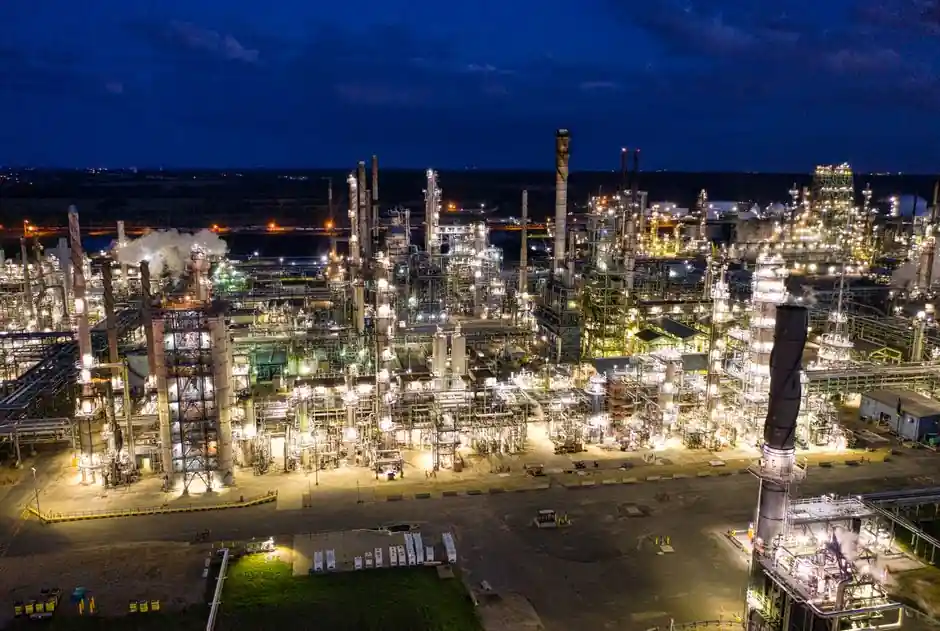
Oil and gas sites carry at least four overlapping fire risks at once: flammable hydrocarbon liquids (crude, diesel, solvents, hydraulic fluid), flammable gases (LPG, propane, methane, butane), energized electrical equipment (motors, switchgear, control panels), and hot-work sparks in dry vegetation, so a single-class extinguisher strategy fails within minutes of an incident [S1][S3].
Portable extinguishers are explicitly a first-aid tool for incipient-stage fires and are not a substitute for fixed deluge, foam pourers, or gas-detection systems; the portable layer is what buys evacuation time and limits asset loss until the fixed system or mutual-aid brigade takes over [S1][S2].
Fire Classes and What Actually Burns on a Well Site, Refinery, or Pipeline Station
Class B covers flammable and combustible liquids including gasoline, diesel fuel, oil, paint, solvents, alcohol, and hydraulic fluids, and is the dominant risk class for separators, treaters, compressor skids, and tank farms [S1]. Class C (in NFPA/EU practice) covers energized electrical equipment such as switchgear, control panels, transformers, and server rooms, and demands a non-conductive agent because water-based media on a live circuit create a secondary electrocution hazard [S1][S3].
Class A hazards (wood, paper, cloth, rubber, many plastics) exist wherever there are offices, warehouses, container labels, or PPE storage, so a facility cannot strip Class A coverage just because hydrocarbons dominate [S1]. Class K (wet chemical) is restricted to commercial cooking oils and is irrelevant outdoors, but applies to any on-site canteen or camp kitchen where deep fat fryers run [S3][S6].
Agent-by-Agent Comparison for Hydrocarbon and Electrical Risk
Foam (AFFF) extinguishers carry a cream label and cover Class A plus Class B, forming an oxygen-starving blanket over spilled liquid; many modern units are also rated for limited electrical use up to 35 kV, which is a useful dual-purpose for process areas that mix cabling and hydrocarbon equipment [S3].
Dry powder (ABC) extinguishers carry a blue label and cover Class A, B, and C with a single monoammonium phosphate agent that interrupts the chemical chain reaction of combustion, making them the common default for general commercial areas; a typical 5 lb unit retails in the $40-$80 band, with wholesale around $25-$45, and is the OSHA-construction benchmark [S1][S5].
Carbon dioxide (CO2) extinguishers carry a black label, cover Class B and electrical fires, leave no residue, and are the right pick for control rooms, laboratories, and precision instrumentation, but a typical 10 lb CO2 unit runs $200-$300 and provides no cooling, so deep-seated Class A fires can re-ignite after discharge [S3][S5].
Halotron and other clean-agent units are described in field reports as residue-free, low-maintenance, and effective on liquid and electrical fires, with street prices quoted under $1,000 when on sale or bought in volume, but they are not a substitute for foam on large hydrocarbon pool fires [S4].
Selection Criteria Specific to Oil and Gas Operations
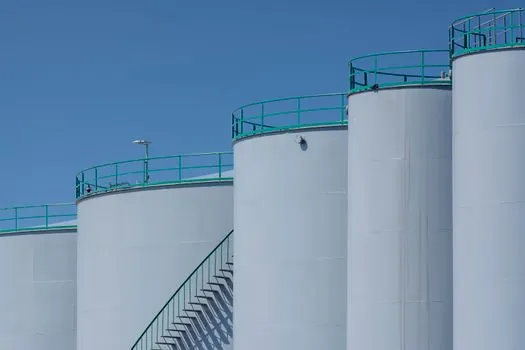
Match the agent to the worst-case fuel at each location: foam or dry powder for open process areas and tank farms, CO2 or clean agent for switchgear rooms and SCADA cabinets, dry powder for vehicle fleets and refueling islands, and a separate wet-chemical Class K unit inside any on-site kitchen because water, foam, or CO2 on cooking oil will spread the burning liquid [S1][S3][S6].
Capacity and travel distance matter as much as agent type: extinguishers should be reachable within typical commercial travel-distance rules (commonly 50 ft / 15 m for Class A and similar spacing for Class B in higher-hazard areas), and wheeled foam units of 50 L or larger are normally specified for hydrocarbon bulk storage rather than handheld portables [S2][S7].
Maintenance and inspection drive real-world reliability: a working dry-powder extinguisher is typically opened, emptied, shifted, refilled with a new stem O-ring, repressurized, and certified annually, and ABC powder can clump from humidity over a 6-year cycle, so a stored unit that has never been serviced is treated as a probable failure rather than a safety device [S4][S5].
Where Class B Extinguishers Are and Are Not the Right Answer
Class B agents (foam, CO2, dry chemical) are correct for flammable and combustible liquids such as gasoline, diesel fuel, oil, paint, solvents, alcohol, and hydraulic fluids, and are commonly installed in manufacturing facilities, automotive service centers, maintenance shops, fuel storage areas, and industrial plants, which describes most upstream and midstream oil and gas sites [S1][S2].
Class B is the wrong pick for any fire involving energized electrical equipment unless the specific unit is also rated for that class, because the wrong agent can make the fire worse, create additional hazards, or place operators in danger, and a water extinguisher on a live circuit is the canonical example of an incompatible choice [S1][S3].
Limitations, Failure Modes, and Misuse Risks
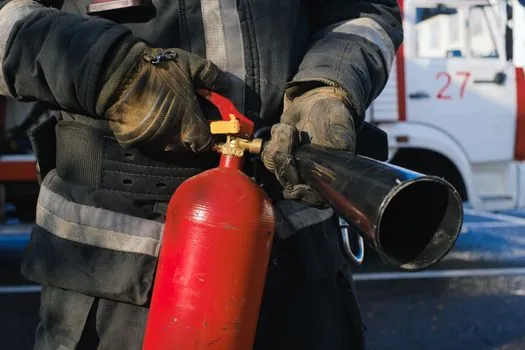
Using the wrong extinguisher is the dominant failure mode: water, foam, or CO2 on a Class F cooking-oil fire can cause the burning oil to spread or worsen the incident, dry powder in an enclosed room creates a visibility-killing cloud, and CO2 in a closed space carries an asphyxiation risk, so labelling and segregation by hazard zone are part of the selection, not an afterthought [S3][S5][S6].
Residue and secondary damage are real costs: ABC powder is corrosive to electronics and can contaminate instrumentation, which is why clean-agent and CO2 units exist for control rooms, while field users of small dry-powder units report catastrophic pressure loss after a single rough handling event, reinforcing the case for annual service rather than shelf-stored units [S4][S5].
Standards, Sourcing, and the 2026 Buying Reference
Facilities should anchor the extinguisher schedule to a formal hazard analysis that lists every fuel class present in each zone, then map each zone to an agent type, capacity, and inspection interval, with annual service and 6-year powder overhaul treated as the floor rather than the ceiling for hydrocarbon-handling sites [S4][S5].
The 2026 commercial-buyer guidance distilled from the referenced guides is: ABC dry chemical as the general-purpose default at $40-$80 retail for a 5 lb unit, CO2 at $200-$300 for a 10 lb unit for electronics-protected zones, foam (AFFF) for hydrocarbon pool and spill risk, and a dedicated wet-chemical Class K unit wherever a commercial kitchen sits inside the perimeter, with portable units framed strictly as incipient-stage response ahead of the fixed system [S1][S3][S5].
Track these signals over the next planning cycle: any shift in the OSHA construction-site extinguisher rule, any NFPA 10 revision affecting Class B spacing at hydrocarbon facilities, and the publish date of the next edition of the EU EN 3 extinguisher standard, since those three documents set the floor for legal compliance on most oil and gas sites [S1][S2][S5].
For broader facility-protection reading, see our industrial facility partition panel selection guide and our note on safety fence selection for electrical work, which sit alongside extinguisher spec in any oil and gas EHS package. For an overview of portable extinguisher categories, the fire extinguisher reference covers agent types and label conventions, and the gas fire suppression reference covers clean-agent fixed systems that pair with portable Class B coverage on a process skid.
Component reference pages worth checking: oil seal.