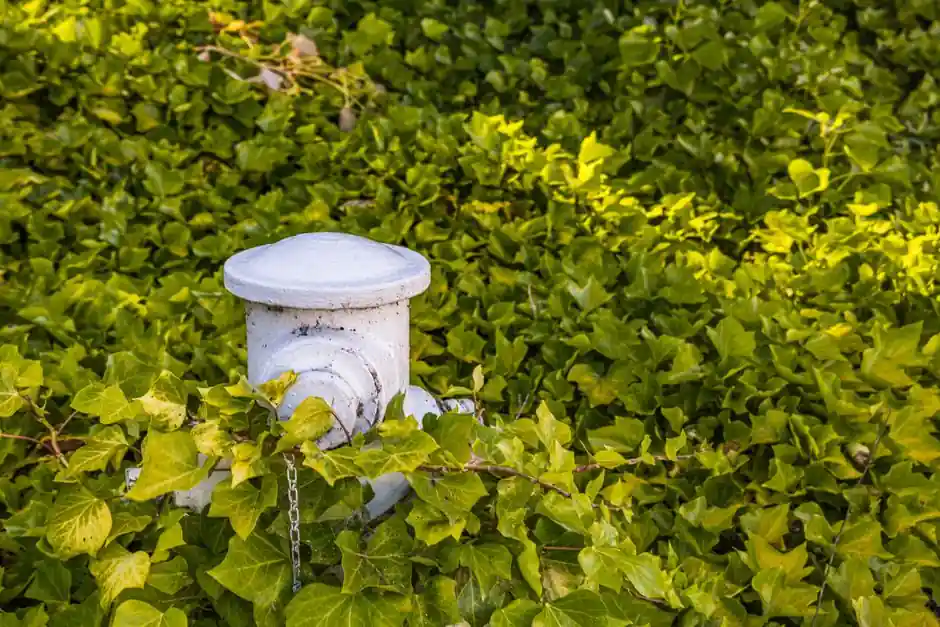
AWWA C502 is the American Water Works Association standard that defines minimum requirements for post-type, dry-barrel fire hydrants, including compression shutoff (opening against or with the pressure) or gate shutoff configurations intended for municipal fire-protection service [S1][S3].
Hydrants built to C502 are the cold-climate default across North American municipal water systems, with the main valve located below the frost line at the base and the above-grade portion kept empty by a small drain weep hole to prevent freeze damage [S2]. A standard C502 hydrant is rated to deliver 1000 to 1500 gpm through a single 4½-inch pumper outlet at 20 psi residual pressure [S2].
Scope, Type, and What C502 Deliberately Excludes
C502 describes minimum requirements, not a full procurement specification; AWWA explicitly states the standard does not contain all of the engineering and administrative information normally included in a purchase document, leaving dimensions, coatings, and connection ends to be selected by the specifying engineer [S5]. The standard covers post-type dry-barrel hydrants with compression or gate shutoff for fire-protection service, and it sits inside a wider AWWA fire-protection catalog that also includes C503 for wet-barrel hydrants [S1][S3].
Typical C502 hydrants carry one 4½-inch pumper nozzle and two 2½-inch hose nozzles with NHT threads as standard, with a 5.25-inch main valve opening; alternative nozzle counts, Storz connections, and ASME B16.1 Class 125 flanged or mechanical-joint shoe inlets are commonly offered as variants on the same basic envelope [S4]. Burial depths beyond 5 ft typically require special design consideration, which is why municipal specs frequently tabulate depth-by-extension rather than treating it as a stock item [S6].
Pressure Class, Materials, and Mechanical Configuration
Standard pressure classes for AWWA C502 hydrants are Class 150 and Class 250, with the 250-class figure reflecting the 250 psi working-pressure rating used in many UL/FM/AWWA-listed dry-barrel models [S2][S4]. The upper barrel, lower barrel, and base (shoe) are commonly produced in ductile iron, with bronze internals for the main valve and nozzles to balance corrosion resistance against wear from frequent operation [S2][S4].
A breakaway safety flange at grade is part of the standard mechanical envelope: the flange is designed to shear on vehicular impact so that the buried valve and the underground supply piping stay intact, which is the single most failure-loaded feature on a traffic-model hydrant [S2][S4]. The operating nut is the standard 1½-inch pentagonal point-to-flat, with FDNY-spec hydrants in New York City using a 1¼-inch pentagonal nut instead so that city-specific wrenches are required to operate them [S2].
Flow, Head Loss, and the 20 psi Residual Benchmark
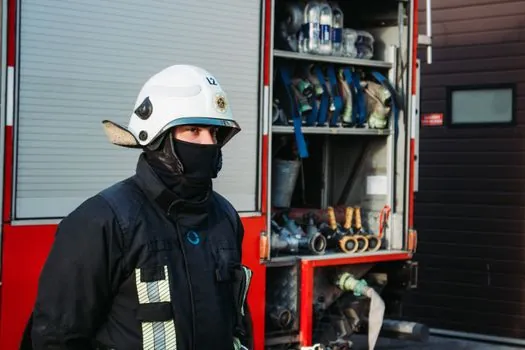
The 1000 to 1500 gpm flow through a 4½-inch pumper at 20 psi residual pressure is the published capacity envelope of a C502 hydrant, and 20 psi residual is the same benchmark that NFPA 291 uses as the lower bound for color-coding hydrant classification flows [S2]. Hydrants are also expected to be hydrostatically tested at the factory, with certified test records shipping in the submittal package on every AWWA C502 unit [S2].
For comparison against the wet-barrel C503 and the UK BS EN 14339 above-ground hydrant families, a C502 unit typically uses a 6-inch mechanical-joint or flanged shoe inlet, whereas a wet-barrel C503 hydrant uses an ASME B16.1 Class 125 or ASME B16.42 Class 150 flanged inlet because the barrel stays pressurized at all times [S2][S4]. Monitor-nozzle hydrants add a 4-inch or 6-inch monitor outlet for elevated industrial firewater streams and are typically built off the same C502/C503 envelope with a monitor flange attachment elbow [S2][S4].
Listing Stack: UL 246, FM 1310, ULC-S543, and AWWA
On a typical North American municipal project, a C502 hydrant is specified alongside one or more third-party listings: UL 246 for hydrants used on UL-insured properties, FM Approvals Class 1310 for FM Global and FM-insured commercial properties, and CAN/ULC-S543 for Canadian installations accepted by Toronto Fire Services, Toronto Water, and Montreal's Service de sécurité incendie [S2]. UK projects use a different standard, BS EN 14339, for above-ground hydrants, with UK building regulations Approved Document B governing fire and rescue service acceptance [S2].
AWWA Manual M-17 covers dry-barrel hydrant installation and testing, and is the field companion to C502, while NFPA 24 Chapter 7 governs private underground water-main hydrants and NFPA 25 Chapter 7 governs inspection, testing, and maintenance of the installed hydrant [S2]. On protection-system components more broadly, the fire hydrant and fire door families both sit inside the same UL/FM third-party listing framework that municipal AHJs rely on for acceptance.
What the 2024 Comment Cycle Actually Covers
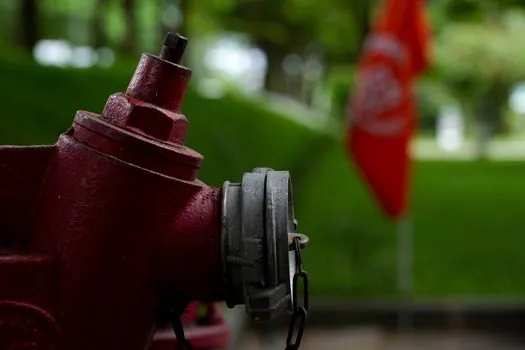
AWWA opened a public comment period on C502 on 20 May 2024, covering post-type, dry-barrel fire hydrants with compression shutoff (opening against or with the pressure) or gate shutoff, with the published intent of refreshing the existing minimum-requirements document on its standard revision cadence [S1]. Because AWWA's own disclaimer is that the document sets minimum requirements rather than a full engineering specification, real-world purchase specs typically pair C502 with a municipal supplement that defines coating systems, bury depth, nozzle thread standard, and operating-nut geometry on top of the base standard [S5][S7].
For example, a typical municipal flushing-assembly call-out reads as a 2-1/8-inch post or flush hydrant, dry-barrel type, meeting AWWA C502, with one 2-1/2-inch outlet, which is the lowest-tier hydrant the standard is designed to cover and is the smallest size the document is intended to govern [S7]. A reference architecture for the related fire extinguisher and fire door product families follows a similar minimum-requirements-plus-AHJ-supplement pattern that practicing engineers will recognize.
Selection Decision: C502 vs C503 vs Monitor Hydrant
Specify a C502 dry-barrel hydrant when the project is in any climate where the frost line penetrates below the hydrant base: Toronto, Montreal, Boston, New York, and the rest of the cold-climate United States and Canada [S2]. Specify a C503 wet-barrel hydrant only in frost-free regions such as coastal California, Florida, or parts of the southern UK coast, and only where the AHJ explicitly accepts a pressurized barrel at the outlet [S2].
Specify a monitor-nozzle hydrant on industrial sites (refineries, chemical plants, power stations) where long-range elevated firewater streams are required alongside standard pumper and hose outlets, typically built on a C502/C503 envelope with a 4-inch or 6-inch monitor flange attachment elbow [S2][S4]. Do not specify C502 where the barrel will sit under standing water with no drainage path; the weep-hole drain at the base assumes free-draining soil, otherwise the barrel will fill and defeat the freeze-protection logic.
Common Spec Errors and Field Failure Modes
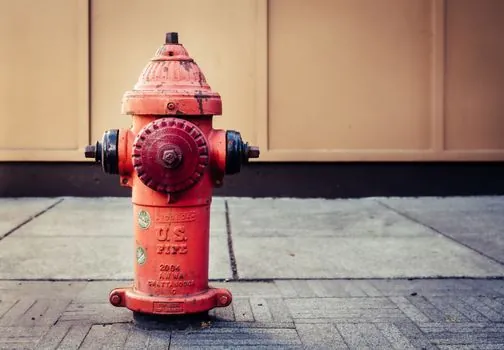
Specifying a 5-ft bury as a stock item when the installation needs 6 ft or 7 ft is the most common C502 spec error, because the standard explicitly flags hydrants with barrels longer than 5 ft as potentially requiring special design rather than catalog selection [S6]. A second common error is mixing FDNY 1¼-inch pentagonal operating nuts onto a stock 1½-inch hydrant without ordering the FDNY-configured variant, which produces a hydrant that city crews cannot operate [S2].
Coating system is a third frequent gap: AWWA C502 sets the minimum mechanical envelope, but the protective coating (typically E-coat primer with polyurethane enamel in safety red or safety yellow as standard) is left to the project specifier, and skimping on coating is the most common root cause of accelerated corrosion in coastal or de-icing-salt exposures [S4]. Pairing a fire hydrant with the wrong listing for the AHJ is the fourth common error, because UL 246, FM 1310, and CAN/ULC-S543 are not interchangeable in front of a fire-marshal review [S2].
Trackable signals for the next quarter: AWWA's publication of the consolidated C502 disposition of comments from the 20 May 2024 comment period, and any municipal spec calls (Toronto Water, NYC DEP, Boston Water and Sewer) that move to adopt the revised C502 envelope once it is published. For related protection equipment categories, the fire door and fire extinguisher reference pages follow the same minimum-requirement-plus-AHJ-supplement structure that C502 readers will already be working in.
See also our earlier report, Aluminum Window U-Value and SHGC per NFRC: A Spec-First Walkthrough.