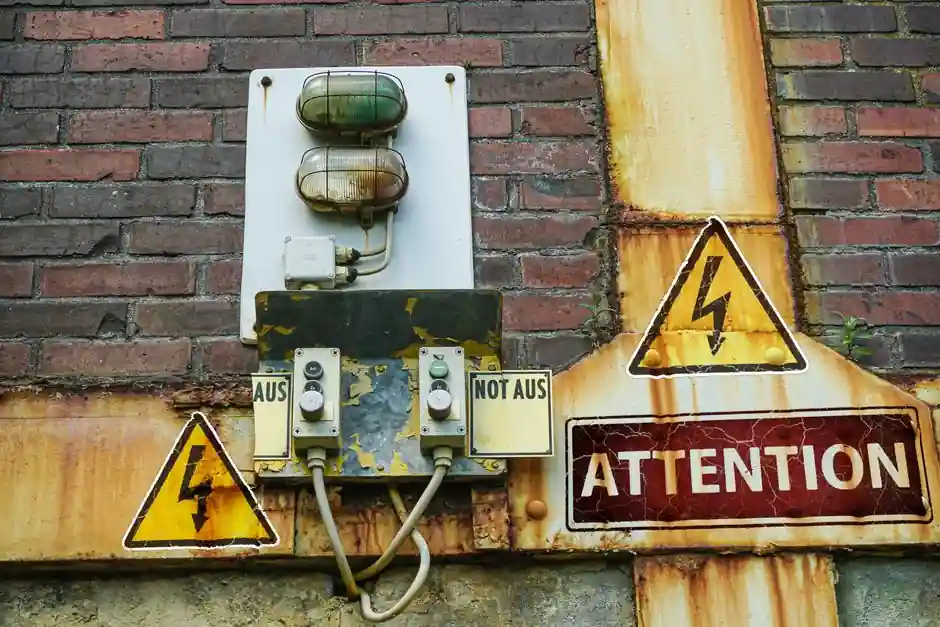
Schmersal rates the EX-SLC440 and EX-SLG440 series for zone 1/21 and zone 2/22, category 2GD explosive gas and dust atmospheres [S1]. SICK's UL Listed Ex enclosure line ships pre-mounted and pre-wired, with protective field heights of 600 mm, 900 mm, 1200 mm, and 1500 mm, a uniform 30 mm resolution, and 8-16 m scanning range depending on the curtain model [S2].
Three cabling architectures dominate the 2026 European process plant: factory pre-wired pigtails into Ex e certified junction boxes, Ex d flameproof housings with barrier cable glands, and panel-side OSSD-to-safety-relay wiring on dedicated shielded pairs [S5][S8]. The wiring decision sets the safety integrity level (SIL/PL) the system can reach and the inspection path under ATEX 2014/34/EU.
ATEX Category 2GD vs. EPL Gb vs. Zone 1: Marking Crosswalk
ATEX 2014/34/EU equipment group II category 2GD covers zones 1 (gas) and 21 (dust) and is the typical marking on a Zone 1 light curtain assembly [S1][S2]. The IECEx equivalent equipment protection level (EPL) is Gb for gas and Db for dust; the NEC/CEC parallel for North American builds is Class I Division 1 when the OEM supplies a UL Listed explosion-proof enclosure rather than a generic Classified one [S2]. A specifier choosing a Schmersal EX-SLC440 in Europe can map the same assembly to an EPL Gb variant for IECEx jurisdictions without re-validating the optical performance, but the wiring entry (Ex e vs Ex d) does change between the two marking sets [S1].
For a deeper crosswalk of the three lettering systems, see ATEX 2G vs EPL Gb vs Zone 1 equivalence decoded for specifiers. Confirm that the marking on the nameplate includes both the gas group (IIA, IIB, IIC) and the temperature class (T4, T5, T6) for the actual process fluid; a T4-only device on a solvent above its auto-ignition will be rejected by the notified body audit.
Selection Criteria: AOPD Type, Resolution, and Safety Distance
Safety light curtains are Active Opto-electronic Protective Devices (AOPD) per EN 61496-1, and the applicable AOPD type (Type 2 or Type 4) sets the attainable PL/SIL per EN ISO 13849-1 and IEC 62061 [S4]. Finger and hand protection normally specifies a 14 mm or 30 mm resolution curtain, while body detection uses multi-beam light grids with two, three, or four beams at wider spacing [S1][S4]. The SICK deTec4 Core Ex runs 14 mm resolution at finger-detection range; the 30 mm resolution used in the 600-1500 mm field-height enclosures targets hand detection [S2].
Three decision criteria dominate the wiring-side selection: the AOPD type, the EDM (external device monitoring) wiring, and the reset mode. The wiring diagram in the field guide confirms that EDM and manual/auto reset must be hardwired, not shared with an E-stop relay input, otherwise the safety function degrades below the declared category [S5][S8]. Reach distance from the hazard must be calculated per EN ISO 13855, factoring in curtain response time, safety relay response time, and machine stopping time measured in a stop-time analysis with at least ten measurements [S4].
Pre-Wired Ex e Junction Box vs. Ex d Enclosure: Side-by-Side

The pre-wired Ex e approach used by Schmersal and SICK pairs the light curtain with a certified junction box where the cable enters through increased-safety glands and the OSSD pairs are terminated on pluggable screw or spring-cage terminals [S1][S2]. The Ex d approach seals the optoelectronics in a flameproof housing that contains any internal ignition; cable entries are through Ex d barrier glands with compound-sealed conductors, and the user wires to a remote safe-area cabinet [S2][S9].
For chemical-plant retrofit work, the pre-wired Ex e pattern wins on maintenance turnaround; the Ex d pattern wins where the ambient gas group is IIC (hydrogen, acetylene) and temperature class T6 is mandatory [S1][S2][S9].
OSSD Wiring, EDM, and Reset: Getting the Field Side Right
The two OSSDs (output signal switching devices) on a Type 4 AOPD are push-pull semiconductor outputs that source a pulsed test signal to the safety relay; reversing polarity or shorting either OSSD to 24 V or 0 V must force a safe state [S8]. EDM is wired back from the safety contactor's N.C. feedback loop to pin 1 of the receiver, and its presence tells the AOPD to monitor the contactor on every cycle; removing EDM drops the system below PL e [S5][S8].
Manual reset requires a dedicated normally-open pushbutton wired to the reset input; tying the reset input to the same voltage that feeds the E-stop defeats the reset-check function, and the field guide calls this wiring out as a Category-drop trap [S5]. Cascading two curtains in series is allowed on Schmersal and SICK models, with the slave's OSSD pair feeding the master's input, but the response time of both units adds to the EN ISO 13855 safety distance [S7].
Real Use Cases: Painting Lines, Refineries, and ATEX Pharmaceutical

Automotive paint booths specify ATEX Zone 1 curtains at the booth entrance because solvent vapor in the flash-off zone crosses LEL during a booth purge; the typical install is a Schmersal EX-SLG440 four-beam grid with a 500 mm beam spacing and a 0.8-10 m range, mounted 900 mm above the floor to detect step-in [S1][S7]. Refinery loading racks use a 30 mm resolution finger-detection curtain at the coupler, with an Ex e junction box located 3 m above grade on the gantry; the wiring run to the safe-area panel is in 12-conductor shielded cable, with OSSD pair on twisted, overall-foil shielded conductors [S2][S9].
Pharmaceutical fluid-bed dryers carry combustible dust (zone 21) and the EX-SLC440 in 2GD form is used at the discharge port with cascaded muting through a polarized retroreflective sensor; muting lamps are wired into a separate safety controller channel, and the diagnostic output is read back to a SCADA tag for predictive maintenance [S1][S7]. ATEX-rated curtains are explicitly named as one of the application-specific product families (alongside cold-storage, IP69K, and shock-resistant variants) in the comprehensive 2024 guide, confirming that hazardous-area integration is a sustained, not a one-off, requirement [S7].
Limitations and Common Failure Modes
Light curtains are non-separating guards per EN ISO 13855 and therefore must be mounted at a calculated safety distance; the safety distance is meaningless without a stop-time analysis, and most stop-time analyses in the field are under-sampled [S4]. Reaching over, under, or around the protected field is a defeat path; supplementary guards or fixed barriers are required to close these gaps before the curtain can be approved [S4].
Wiring faults dominate real-world failure: sharing the E-stop input with one of the OSSDs, failing to wire EDM back to the receiver, using a standard cable gland where the marking requires Ex e or Ex d, and pinning the reset to a maintained switch instead of a momentary pushbutton [S5][S8]. Installation manuals for the PPG-series explicitly warn against wiring the safety output contacts to an external relay unless the external-relay-checking feature is enabled, otherwise a welded relay contact goes undetected [S6].
Standards, Sourcing, and Inspection Trail
EN 61496-1 is the umbrella electro-sensitive protective equipment standard; AOPD Type 4 is required for PL e / SIL 3, and the nameplate will show both the AOPD type and the EN ISO 13849-1 PL [S4]. The minimum cable specification for a hazardous-area install is stranded copper, 0.5-1.5 mm² conductor, overall foil plus braid shield, with drain wire terminated at the safe-area end only. Sourcing channels have stabilized in 2026: Schmersal, SICK, Keyence, and Banner all list ATEX or UL Listed Ex variants, with lead times of 6-10 weeks for non-stocked Ex e junction box assemblies.
Two trackable signals to watch over the next two quarters: the EN ISO 13849-1 revision ballot closure and any notified-body audit findings on Ex e vs Ex d gland selection for IIC gas groups. Both will show up in the OJEU list of harmonized standards before the next trade show cycle, and both will directly change the wiring choice on the next Zone 1 light curtain install.
For component-level specifications, see safety light curtain, wiring duct, and fire rated door.